Financial information is one of the most valuable assets of a business. Sales records, purchase details, customer information, supplier transactions, expenses, and payment records together provide a complete picture of business operations. Because of this, businesses need proper systems to manage and protect their confidential information. When financial information is maintained through notebooks, spreadsheets, or multiple files, controlling access and maintaining consistency can become difficult. A misplaced file, shared password, or incorrect data entry can create unnecessary risks for business information.
Vinimay helps businesses manage GST invoices, billing records, sales, purchases, inventory, customer and vendor information, payments, ledgers, and reports in a structured system. By organising financial records in one place, businesses can maintain better control over their accounting information and manage daily transactions more effectively.
Why Is Financial Information Confidential for Businesses?
Accounting records contain details that businesses usually do not want to share publicly. These records help owners understand revenue, expenses, customer relationships, supplier dealings, and overall business performance.
For example, sales records may show customer transaction details, while expense records may reveal business costs and operational decisions.
Protecting this information is important because unauthorised access can affect business privacy and decision-making.
How Does Accounting Software Help Protect Financial Data?
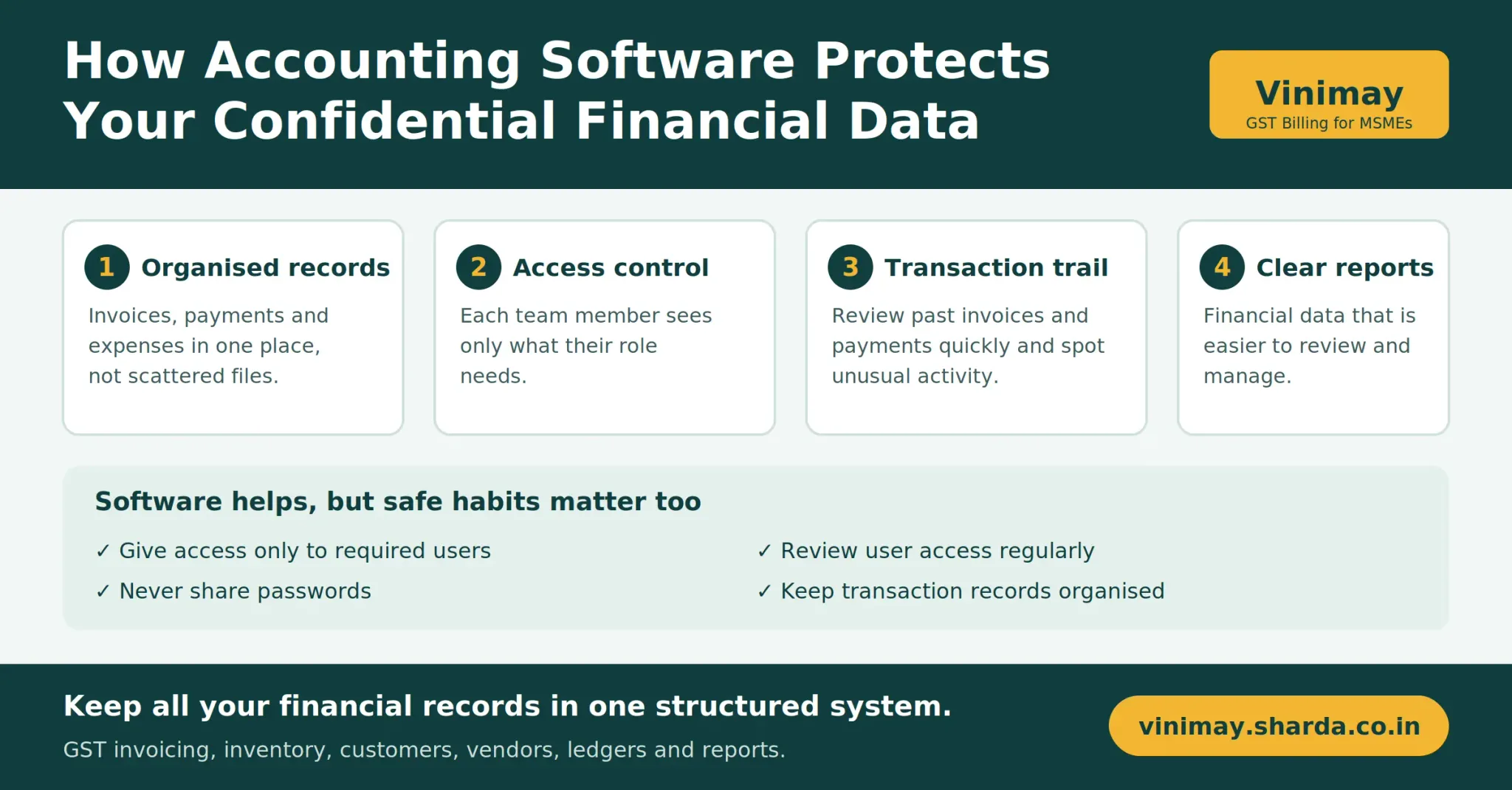
Accounting software helps businesses move away from scattered records and maintain financial information in a structured environment.
Instead of storing invoices, payments, and transaction details across multiple files, businesses can maintain organised records that are easier to manage.
Important areas that help improve data protection include:
The level of protection depends on the software system and how businesses manage access.
Why Is User Access Control Important?
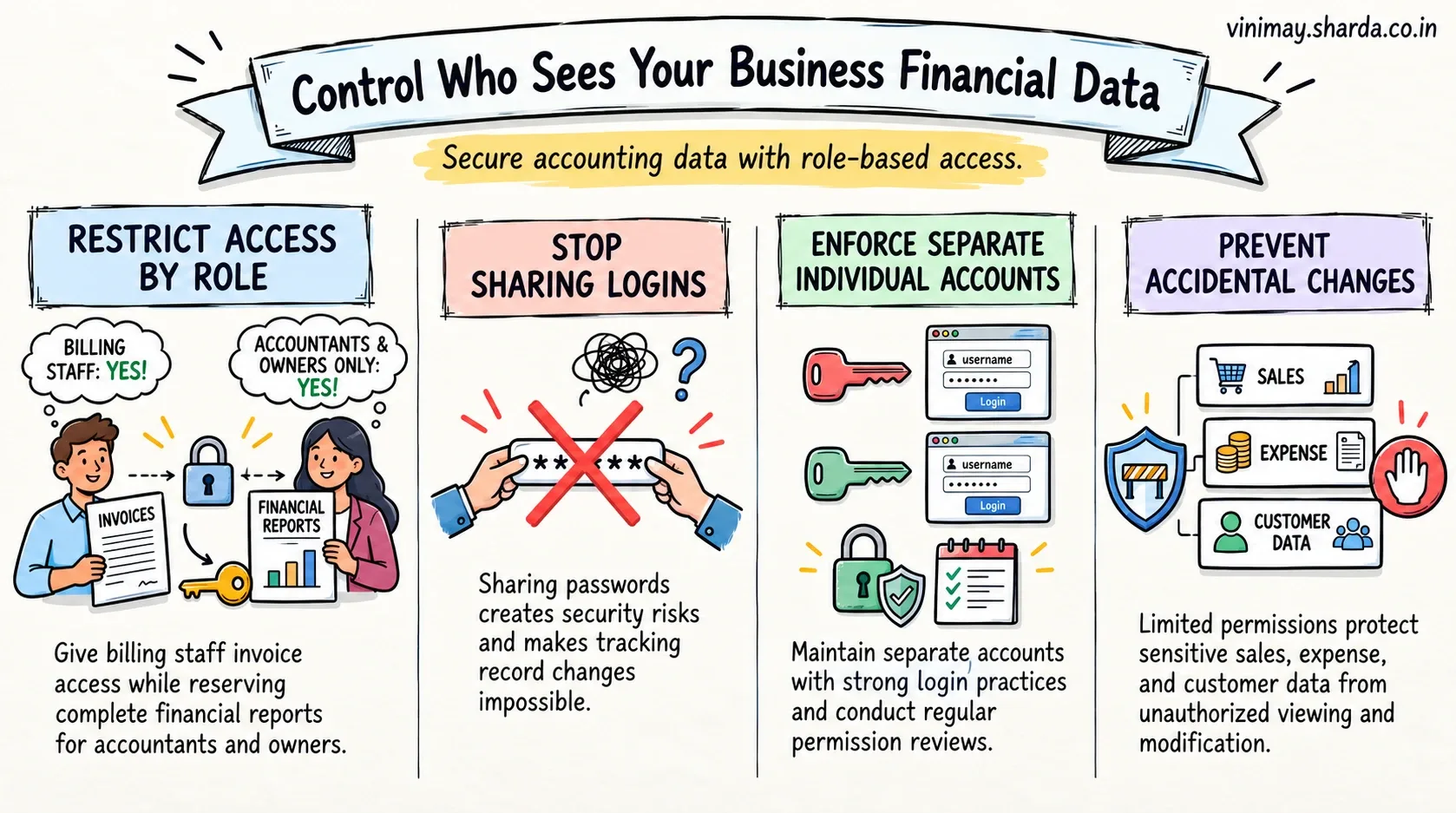
Not every employee needs access to complete financial information. A billing employee may only require invoice-related access, while an owner or authorised person may need broader business visibility.
Controlling access helps businesses ensure that users only work with information required for their responsibilities.
For example, a salesperson may need customer and invoice information but may not require access to complete expense details or financial reports.
Proper access management improves privacy and reduces unnecessary exposure of sensitive records.
How Do Digital Records Reduce Risks Compared to Manual Records?
Many businesses still maintain important information through paper files or spreadsheets. While these methods can work for small operations, they become harder to manage as transactions increase.
Digital accounting systems help businesses organise records more efficiently by keeping invoices, transactions, and financial information connected.
For example, instead of searching through multiple files to find a purchase entry or customer transaction, businesses can access organised records within the accounting system.
However, businesses should still follow proper security practices while managing digital information.
What Security Practices Should Businesses Follow?
Accounting software can support better data management, but businesses also play an important role in protecting their information.
Businesses should maintain good practices such as:
Providing access only to required users
Avoiding password sharing
Reviewing user access regularly
Keeping transaction records organised
Security is a combination of technology and responsible usage.
How Does Accounting Software Improve Financial Record Control?
Apart from protecting information, accounting software helps businesses maintain better control over their financial activities.
When sales, purchases, expenses, inventory, and payment records are maintained systematically, businesses can identify unusual activities more easily and review important transactions when required.
For example, if a business needs to check a previous invoice or payment record, organised accounting information makes the process easier compared to searching through separate documents.
What Should Businesses Check Before Choosing Accounting Software?
Businesses should consider data management and security along with accounting features.
Before selecting software, businesses should understand:
A suitable accounting system should help businesses manage financial records efficiently while supporting responsible data handling.
Keeping Financial Records Organised With Vinimay
As businesses grow, managing invoices, payments, expenses, inventory, and customer information separately can create confusion and reduce visibility.
Vinimay helps businesses manage GST invoices, billing records, sales records, purchase records, expense records, customer management, vendor management, inventory, stock tracking, payment tracking, receipt tracking, ledger management, and business reports.
For example, businesses can maintain invoice details, customer records, and transaction information in a structured system instead of depending on disconnected files.
The practical benefit is better organisation of financial information and easier management of daily accounting activities.
Conclusion
Confidential financial information requires careful management because it affects business decisions, customer relationships, and daily operations. Accounting software helps businesses maintain organised records, control access, and manage transactions in a structured way.
However, protecting financial information is not only about using software. Businesses also need responsible access practices and proper record management to maintain better control over their accounting data.
Frequently Asked Questions
1. How does accounting software protect financial information?
Accounting software helps protect financial information through organised records, controlled access, and better management of business transactions.
2. Can employees access all financial data in accounting software?
Not necessarily. Businesses can control access based on user responsibilities and requirements.
3. Is digital accounting safer than maintaining paper records?
Digital accounting can provide better organisation and control, but security depends on software practices and user management.
4. Why is access control important in accounting software?
Access control helps ensure that only authorised users can view or manage sensitive business information.
5. What type of information should businesses protect?
Businesses should protect customer details, sales records, purchase information, expenses, payments, and financial reports.
6. Can accounting software prevent all data security risks?
No. Software helps manage information securely, but businesses must also follow proper security practices.
7. How can small businesses protect financial records?
Small businesses can improve protection by using organised accounting systems and managing user access carefully.
8. Why should businesses avoid storing accounting information in multiple files?
Multiple files can make information difficult to manage and increase the chances of errors or missing records.
Related Topics
Published by Team Vinimay
Our editorial and compliance specialists create practical guides, tax calculation rules, and operational strategies to empower Indian small business owners and accountants.