Accounting data is one of the most valuable records for any business. It contains important information about sales, purchases, expenses, customers, suppliers, payments, inventory, and financial transactions. Losing this information can create serious difficulties because businesses depend on these records for daily operations and future planning.
Many small businesses still manage accounting information through spreadsheets, local computer files, or physical documents. In such cases, accidental deletion, device failure, unauthorised access, or poor record management can put important business information at risk. Data loss can happen due to several reasons, including hardware failures, human mistakes, software issues, or security incidents.
Vinimay helps businesses manage GST invoices, billing records, sales, purchases, inventory, customer and vendor information, payments, ledgers, and reports in a structured system. Organised digital records help businesses maintain better control over their daily transactions and reduce dependence on scattered files.
Why Is Accounting Data Important for Businesses?
Accounting records are not only used for calculating profits or preparing reports. They represent the complete financial history of a business.
For example, businesses rely on accounting data to understand:
When this information is unavailable, even simple business activities can become difficult.
What Problems Can Happen After Losing Accounting Data?
Losing accounting data can affect daily operations because businesses may no longer have easy access to previous transaction information.
A business may face difficulties in tracking customer payments, checking supplier balances, reviewing past purchases, or preparing financial reports.
For example, if a retailer loses previous sales records, it may become difficult to understand customer transaction history. Similarly, if purchase records are unavailable, the business may struggle to verify supplier-related information.
The impact depends on the type of data lost and whether the business has a proper recovery process.
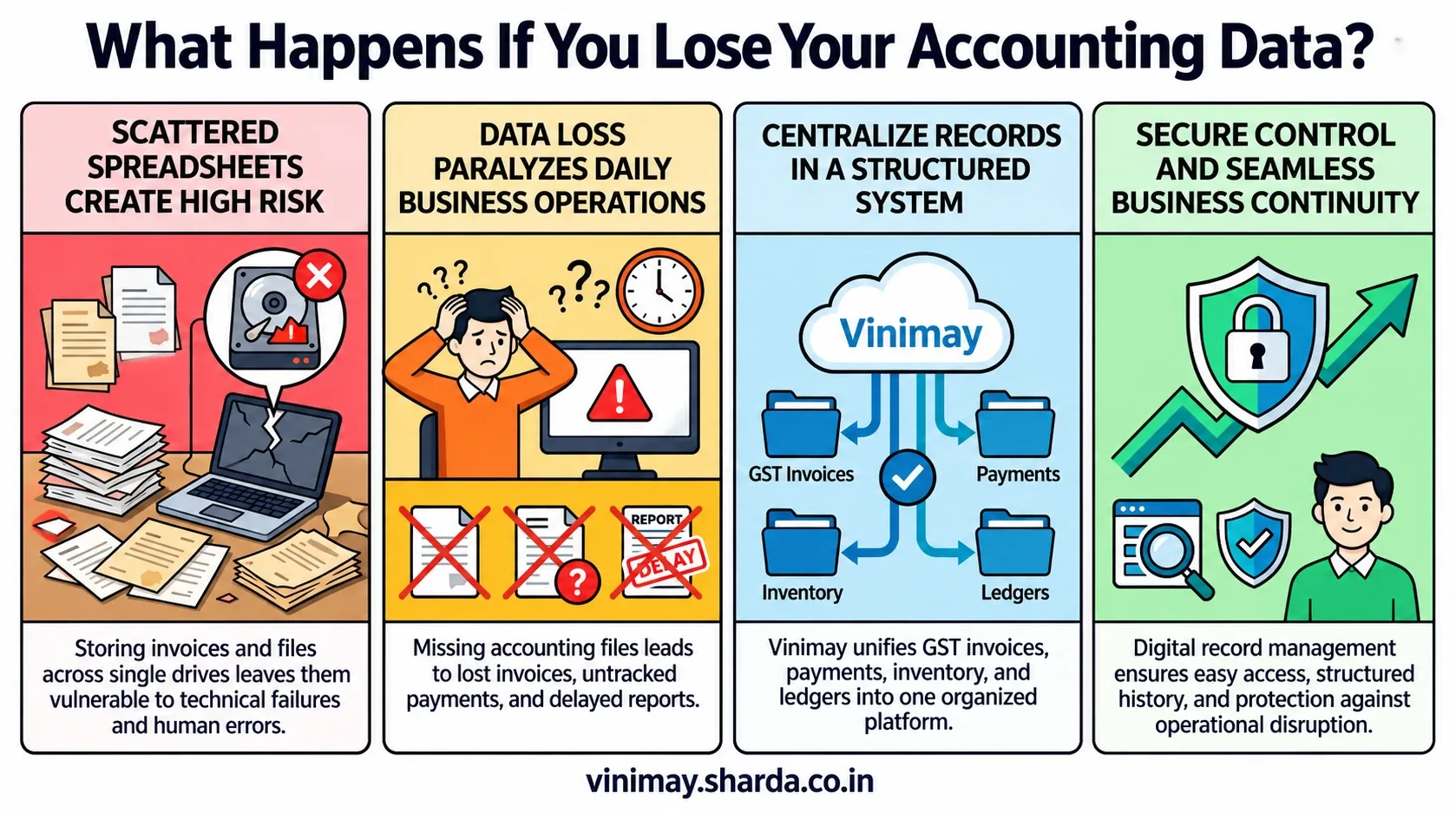
How Does Data Loss Affect Business Operations?
Accounting information supports many routine business decisions. When records are missing, businesses often need to spend additional time recreating information from available sources.
Some common challenges include:
Difficulty finding previous invoices
Problems tracking outstanding payments
Lack of clarity about expenses
Delay in preparing reports
For growing businesses, rebuilding lost records can require significant effort because transactions increase over time.
What Are the Common Reasons Behind Accounting Data Loss?
Accounting data can be lost for different reasons. Sometimes it happens because of technical problems, while in other cases it happens due to simple mistakes.
Common causes include:
Data protection requires both suitable technology and responsible business practices.
How Can Businesses Protect Their Accounting Data?
Protecting accounting information starts with maintaining organised records and following good data management practices. Businesses should focus on using reliable accounting systems, controlling access to financial information, and ensuring that important records are properly maintained.
Regular backup and recovery planning are important parts of protecting business data because backups help restore information after certain types of data loss events. A business should also ensure that employees follow proper practices when handling financial information.
Is Cloud Accounting Safer for Business Data?
Cloud accounting can provide a more structured way of managing business information compared to storing files only on individual computers. However, security depends on the software provider, access controls, and how users manage their accounts.
The main advantage of a structured accounting system is that business records are maintained in an organised environment instead of being scattered across multiple files and devices.
Businesses should evaluate factors such as data management practices, user access controls, and overall security approach before selecting accounting software.
What Should Businesses Check Before Choosing Accounting Software?
Businesses should not only look at billing features while selecting accounting software. They should also understand how the system helps maintain and manage important records.
Important areas to consider include:
The right system should support both daily operations and long-term record management.
Managing Business Records Better With Vinimay
Manybusinesses face data management problems because invoices, payments, customer details, inventory, and financial records are maintained separately.
Vinimay helps businesses manage GST invoices, billing records, sales records, purchase records, expense records, customer management, vendor management, inventory, stock tracking, payment tracking, receipt tracking, ledger management, and business reports.
For example, instead of maintaining invoice details in one file and customer information in another, businesses can manage their transaction records in a structured system. The practical benefit is better organisation of business information and easier access to important records during daily operations.
Common Mistakes Businesses Make With Accounting Data
Businesses often realise the importance of data protection only after losing important information.
Some common mistakes include:
Keeping only one copy of important records
Sharing accounting access without proper control
Not maintaining updated transaction records
Depending completely on manual files
A good accounting process requires both proper software and responsible data management habits.
Frequently Asked Questions
1. What happens if I lose my accounting data?
Losing accounting data can make it difficult to access invoices, transactions, customer records, supplier details, and financial information.
2. Why is accounting data important for businesses?
Accounting data helps businesses track sales, purchases, expenses, payments, inventory, and overall financial activity.
3. Can lost accounting data be recovered?
Recovery depends on the cause of data loss and whether proper recovery or backup measures are available.
4. How can businesses prevent accounting data loss?
Businesses can reduce risk through organised accounting systems, proper access management, and suitable backup practices.
5. Is storing accounting data on one computer risky?
Keeping data only on one device can create risks if the device fails or information becomes inaccessible.
6. Does accounting software protect business data?
Accounting software helps organise business records, while overall security depends on software practices and user management.
7. Why should businesses maintain digital accounting records?
Digital records help businesses organise transactions and access information more efficiently.
8. Can small businesses protect accounting data?
Yes, small businesses can improve data management by using structured accounting systems and following proper record practices
Related Topics
Published by Team Vinimay
Our editorial and compliance specialists create practical guides, tax calculation rules, and operational strategies to empower Indian small business owners and accountants.