General
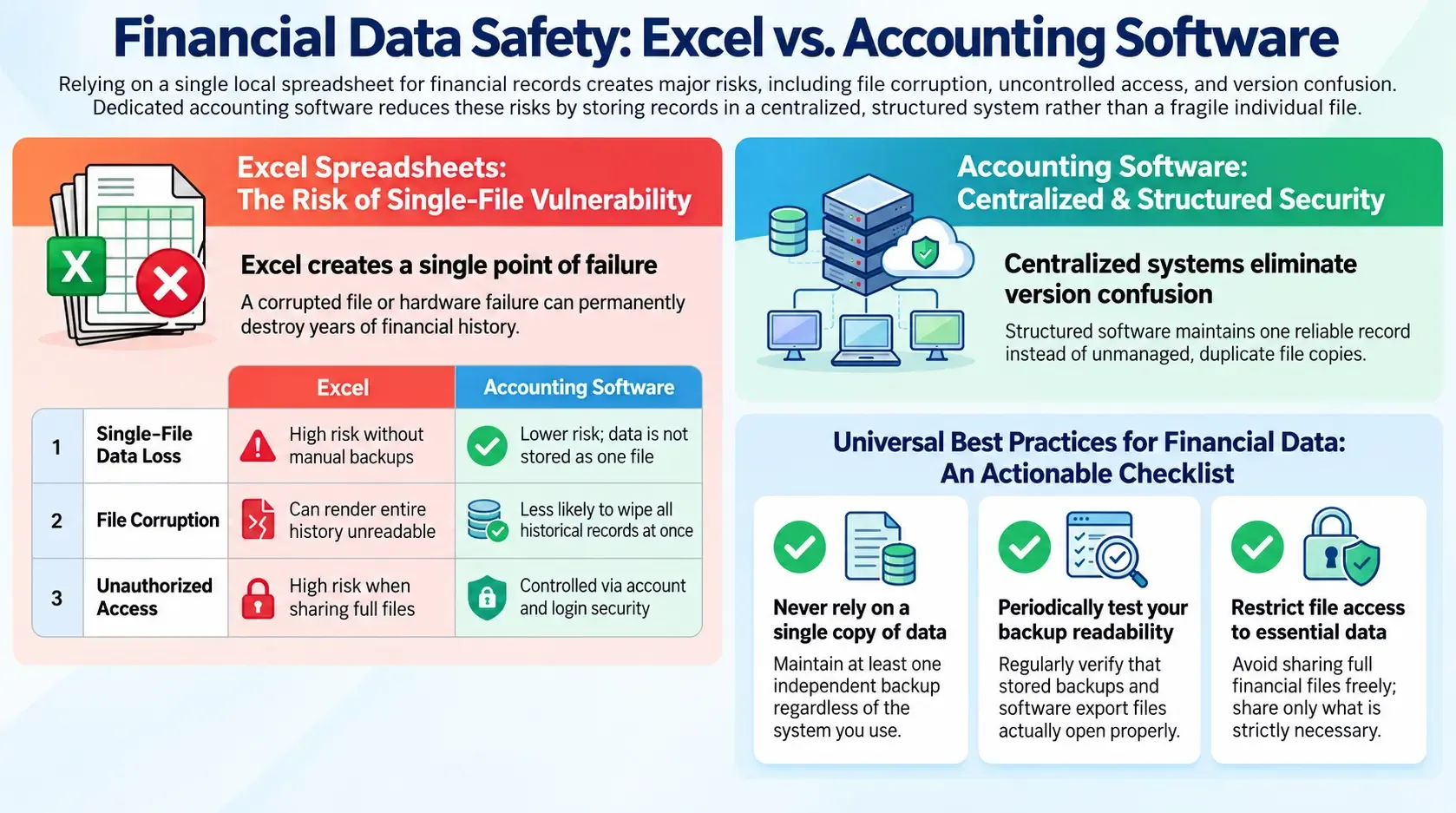
Read post Is Financial Data Safer in Accounting Software Than Excel?
Compare accounting software and Excel to understand which offers better financial data security, access control, backups, and protection against errors.
Compare accounting software and Excel to understand which offers better financial data security, access control, backups, and protection against errors.
Create professional GST-compliant invoices in under 30 seconds, send WhatsApp payment links, and track inventory effortlessly.
What Is an ASP in UAE E-Invoicing? Peppol Guide 2026 Quick Answer: An Accredited Service Provider (ASP) is a Ministry of Finance-approved company that helps UAE businesses exchange structured electronic invoices through the Peppol network and report tax data to the Federal Tax Authority (FTA). ASPs validate, transmit and securely process invoices under the UAE's five-corner e-invoicing model.
The UAE is introducing mandatory electronic invoicing to simplify business transactions and improve tax reporting.
Instead of emailing PDF invoices, businesses covered by the new requirements must use an approved electronic invoicing system.
Two important parts of this system are Accredited Service Providers (ASPs) and the Peppol network.
An ASP is a service provider officially accredited by the UAE Ministry of Finance (MoF) to provide electronic invoicing services.
It connects a business's accounting or ERP software with the UAE e-invoicing network.
An ASP generally helps businesses:
Exchange structured electronic invoices.
Validate invoice information.
Convert invoice data into the required format.
Transmit invoices securely.
Report prescribed tax information to the FTA.
Receive invoice validation and transmission status messages.
Businesses should check the official MoF accreditation list before selecting a provider.
Peppol is an international framework that allows different business systems to exchange electronic documents using common standards.
For example, a supplier using one accounting platform can send an electronic invoice to a buyer using a different platform.
Both businesses connect through their respective accredited service providers.
Peppol helps reduce manual invoice entry and improves interoperability between different accounting systems.
Under UAE e-invoicing, invoices use the country-specific PINT-AE XML specification.
A PDF or scanned invoice alone does not meet this structured electronic format requirement.
The UAE uses a decentralised five-corner model for electronic invoice exchange and tax reporting.
The process works as follows:
The supplier prepares invoice information.
The supplier's ASP validates and converts the data where necessary.
The invoice travels to the buyer's ASP through Peppol.
The buyer receives the invoice.
Both ASPs perform their applicable tax data reporting and exchange status messages.
This arrangement supports invoice exchange between businesses while enabling electronic tax reporting.
An accredited provider is an important part of complying with the UAE e-invoicing requirements.
Businesses generally need an ASP to exchange electronic invoices and report prescribed information.
The provider also supports technical requirements that ordinary accounting software may not handle independently.
For example, a Dubai trading company may already create invoices through its ERP system.
Instead of replacing its entire accounting system, it may connect that system to an accredited ASP, provided the necessary integration is supported.
The business remains responsible for accurate invoice information and applicable tax obligations.
The UAE has introduced different deadlines based on business revenue.
As of 21 October 2026, the ASP deadline for the first implementation phase is approaching.
Businesses should confirm their implementation category and arrange the required onboarding.
Before selecting a provider, businesses should compare technical capabilities, security and pricing.
Important considerations include:
Current MoF accreditation.
Support for PINT-AE XML.
Accounting and ERP integration.
Peppol connectivity.
Electronic credit note support.
Data security and business continuity.
Implementation costs and service fees.
Error handling and technical support.
Businesses should also confirm whether the provider can support their expected invoice volume.
Important: The UAE introduced an updated direct accreditation framework under Ministerial Decision No. 168 of 2026, effective from 1 October 2026. Businesses should distinguish fully accredited providers from providers still completing transitional accreditation requirements.
The general onboarding process is straightforward, although technical work varies.
Identify the applicable implementation deadline.
Select an MoF-accredited ASP.
Sign the commercial agreement.
Complete ASP selection and onboarding through the FTA's EmaraTax system.
Verify business and tax identifiers.
Connect the accounting or ERP system.
Test electronic invoices and credit notes.
Review error messages and confirm successful transmission.
Businesses should test realistic transactions before their mandatory go-live date.
Failure to appoint an ASP or implement the system within the applicable deadlines may result in an administrative penalty of AED 5,000 per month or part thereof.
Accurate accounting records are important before connecting a business to an ASP.
Vinimay provides general features for managing:
Sales invoices and customer information.
Purchase and supplier records.
Product and service details.
Payments and outstanding balances.
Inventory and financial reports.
These features can help businesses organise the transaction information needed when preparing for electronic invoicing.
However, Vinimay's UAE PINT-AE compatibility, accredited ASP integration, Peppol connectivity and automatic FTA tax reporting have not been independently verified.
Businesses should confirm the required technical integrations before relying on any accounting software for mandatory UAE e-invoicing.
Our editorial and compliance specialists create practical guides, tax calculation rules, and operational strategies to empower Indian small business owners and accountants.
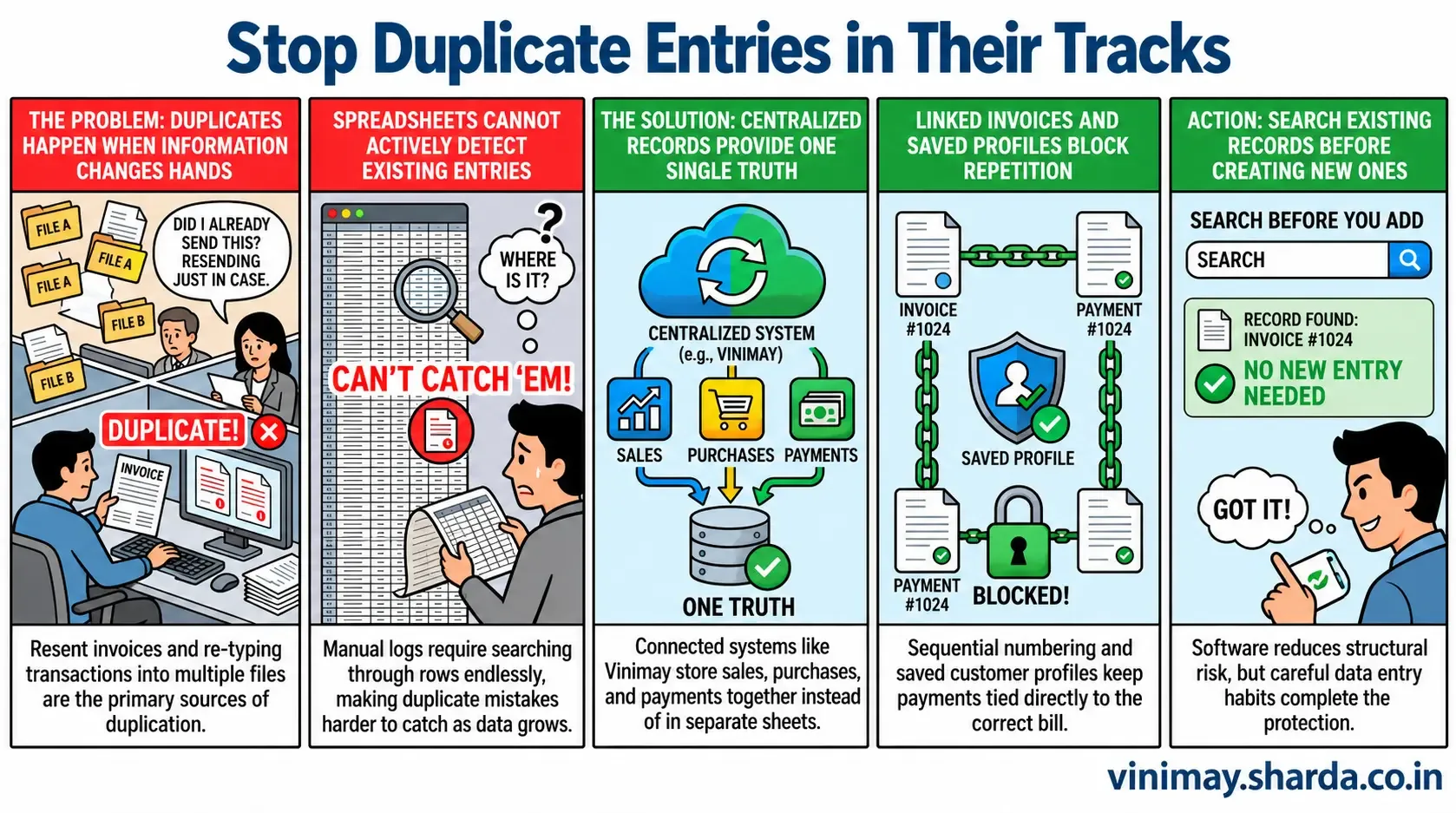
Learn how accounting software prevents duplicate entries using automated checks, unique transaction records, and validation to improve bookkeeping accuracy.
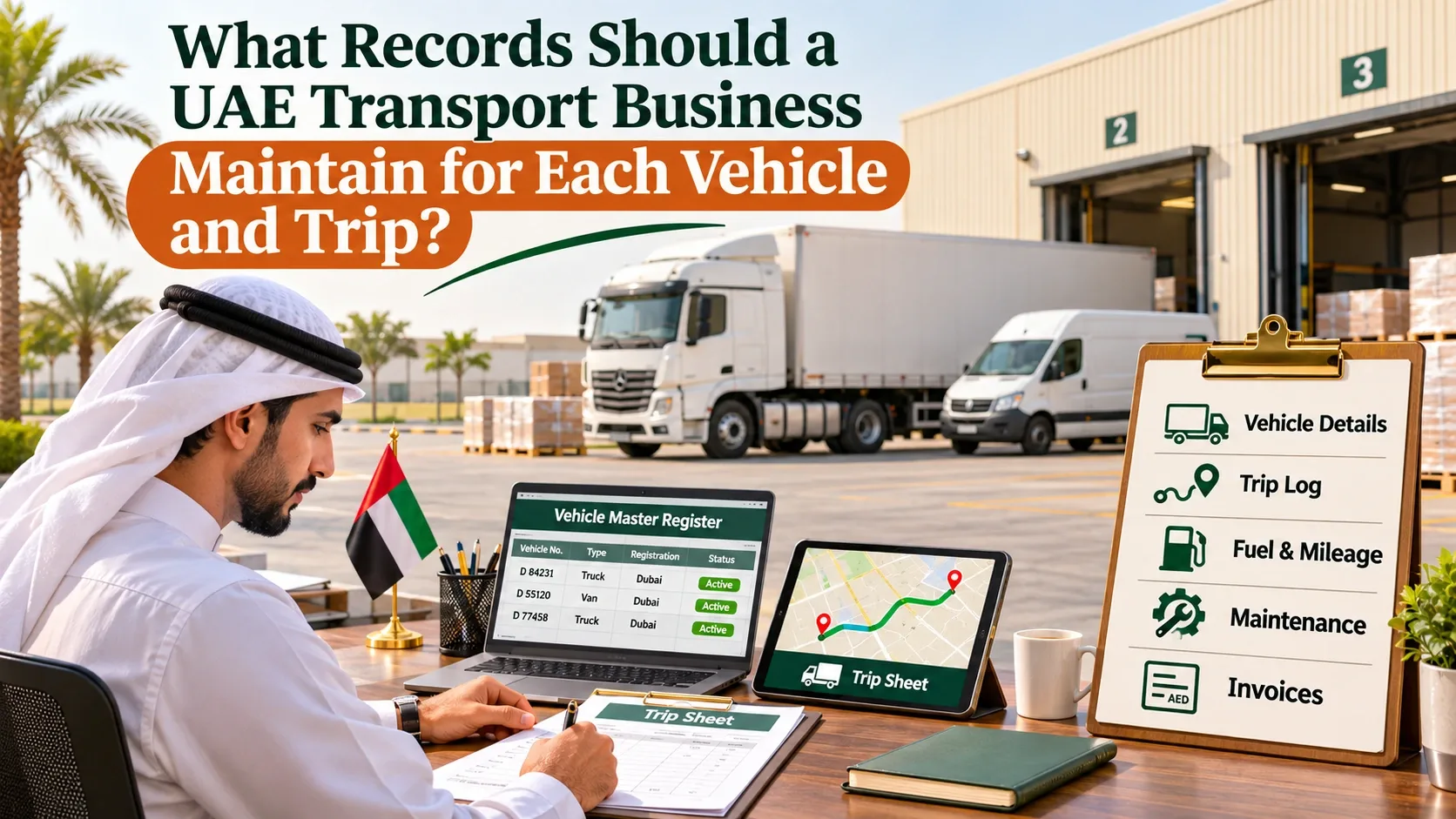
Learn which vehicle and trip records UAE transport businesses should maintain, including fuel, mileage, driver details, maintenance, expenses and VAT invoices.