How Do You Chase an Overdue Invoice Without Losing a Customer in Singapore?
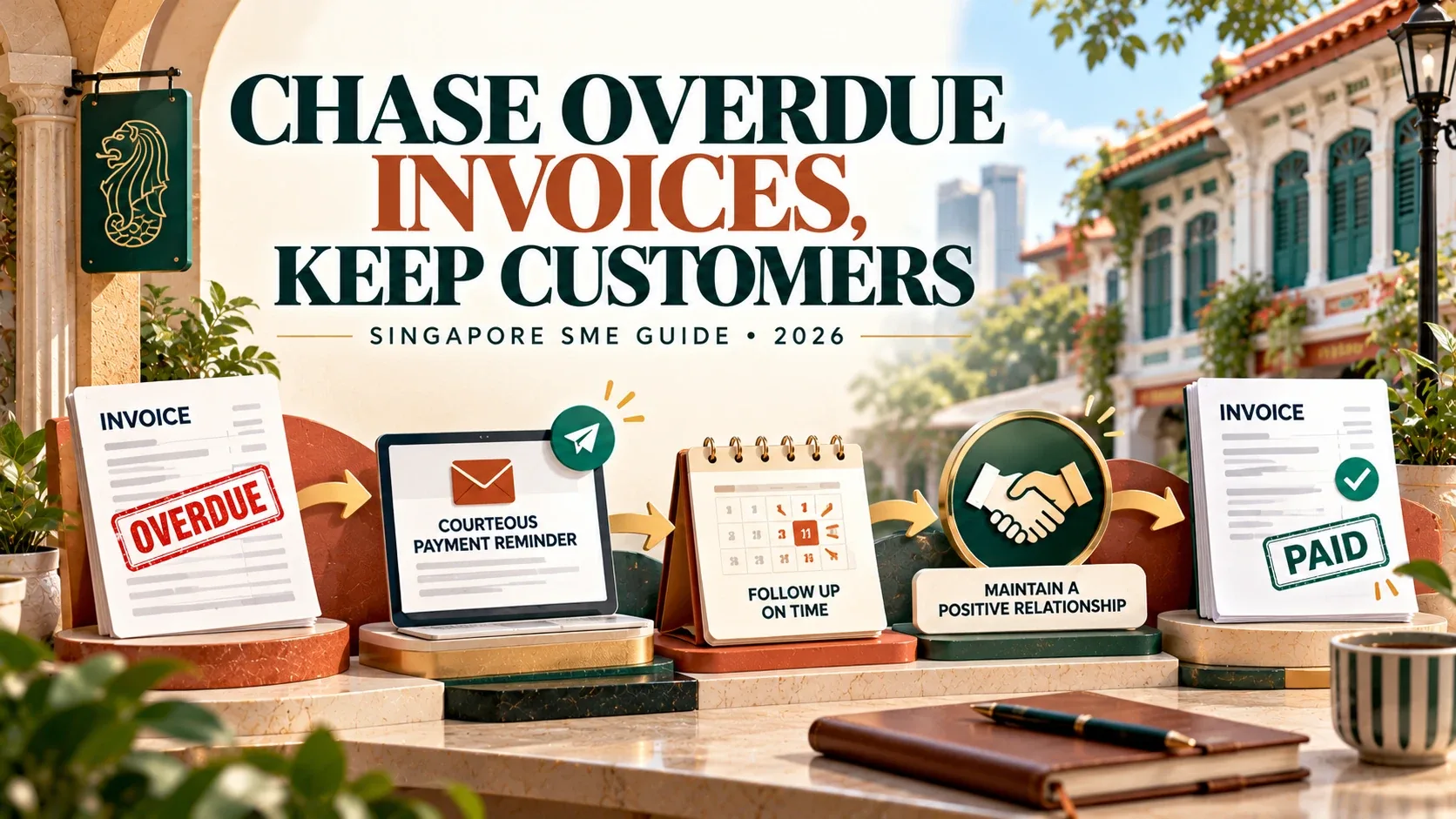
Quick Answer: To chase an overdue invoice without damaging a customer relationship, start with a friendly reminder, confirm the customer received the invoice, and ask whether any issue is delaying payment. Provide convenient payment options, agree on a realistic payment date, and escalate gradually if necessary. Keep every follow-up professional and documented.
Late payments are frustrating for Singapore freelancers, consultants, retailers, and small businesses. However, demanding payment too aggressively can damage relationships with customers who may otherwise continue doing business with you.
The best approach balances prompt payment collection with respectful communication.
Why Do Customers Delay Invoice Payments?
Customers may pay late because of missing invoices, administrative errors, approval delays, cash flow difficulties or genuine disputes.
For example, a Singapore marketing agency might have a S$3,000 invoice overdue because the customer's finance department has not approved it.
Before escalating, check that the invoice number, amount, due date, and payment instructions are correct.
Identifying the reason for non-payment often makes recovery easier.
When Should You Send a Payment Reminder?
A consistent reminder schedule prevents invoices from being forgotten.
This schedule is a business recommendation, not a legal requirement.
Customers with a history of timely payments may need only a gentle reminder. Repeated late payers may require closer credit monitoring.
What Should a Polite Reminder Email Say?
A good reminder should be short, courteous, and specific.
Example:
Subject: Friendly Reminder – Invoice INV-1024
Hi [Customer Name],
I hope you're doing well. Just checking on Invoice INV-1024 for S$2,500, which was due on 15 October 2026.
Could you please confirm the expected payment date? If payment has already been made, kindly disregard this reminder.
Thank you for your continued support.
Avoid accusatory language in the first follow-up.
How Should You Handle a Customer Who Replies but Cannot Pay?
If a customer acknowledges the invoice but is experiencing financial difficulties, discuss a realistic repayment arrangement.
For example, a customer owing S6,000 might agree to three monthly installments of S2,000.
Confirm the revised schedule in writing, including payment amounts and dates.
Businesses may also consider partial settlement or revised credit terms, depending on their circumstances.
A documented arrangement helps preserve trust while making the collection process more predictable.
How Can You Handle Invoice Disputes Professionally?
Sometimes an invoice remains unpaid because the customer disputes the amount or service quality.
For example, a customer may question an additional S$500 charge on a project invoice.
Review the signed quotation, purchase order, delivery confirmation and relevant correspondence.
Explain the charges clearly and correct genuine errors promptly.
Where appropriate, separate any undisputed amount from the disputed balance and seek an agreed resolution.
Do not issue a credit note simply to remove an unpaid debt unless the underlying transaction genuinely requires an adjustment.
How Can Better Payment Terms Prevent Late Payments?
Clear payment terms reduce confusion before an invoice becomes overdue.
Businesses can establish seven-day, 14-day, or 30-day terms, depending on their customers and commercial arrangements.
For larger orders, consider deposits, milestone payments, or agreed credit limits.
Convenient payment methods such as PayNow and bank transfer may also reduce payment friction.
Research on Singapore B2B payment practices in 2026 identifies digital payments, advance payments, and shorter credit terms among the approaches businesses use to manage payment risk.
When Should Businesses Escalate an Unpaid Invoice?
If polite reminders and direct discussions fail, businesses may consider a formal Letter of Demand, mediation, or legal recovery.
For eligible goods-and-services disputes, Singapore's Small Claims Tribunals can generally consider claims up to S$20,000, or S$30,000 with the required written consent.
Claims generally must be filed within two years of the event creating the cause of action.
Before taking action, consider the customer's response, the evidence supporting the debt, and whether further recovery costs are proportionate.
Legal action should usually follow a considered escalation process rather than being threatened in every reminder.
How Can Vinimay Help With Overdue Invoice Tracking?
Vinimay provides general accounting features for sales invoices, receipts, payments, customer ledgers and financial reporting.
These features can help Singapore SMEs maintain invoice histories and identify outstanding customer balances.
For example, a trading business can review recorded receipts against customer invoices before sending follow-up messages.
However, Vinimay's automated payment reminders, Singapore PayNow integrations, debt-recovery workflows, and GST bad debt relief calculations have not been independently verified.
Businesses should confirm these capabilities before choosing software for payment collection.
Frequently Asked Questions
Related Topics
Published by prachi kahar
Our editorial and compliance specialists create practical guides, tax calculation rules, and operational strategies to empower Indian small business owners and accountants.