Invoicing & Billings
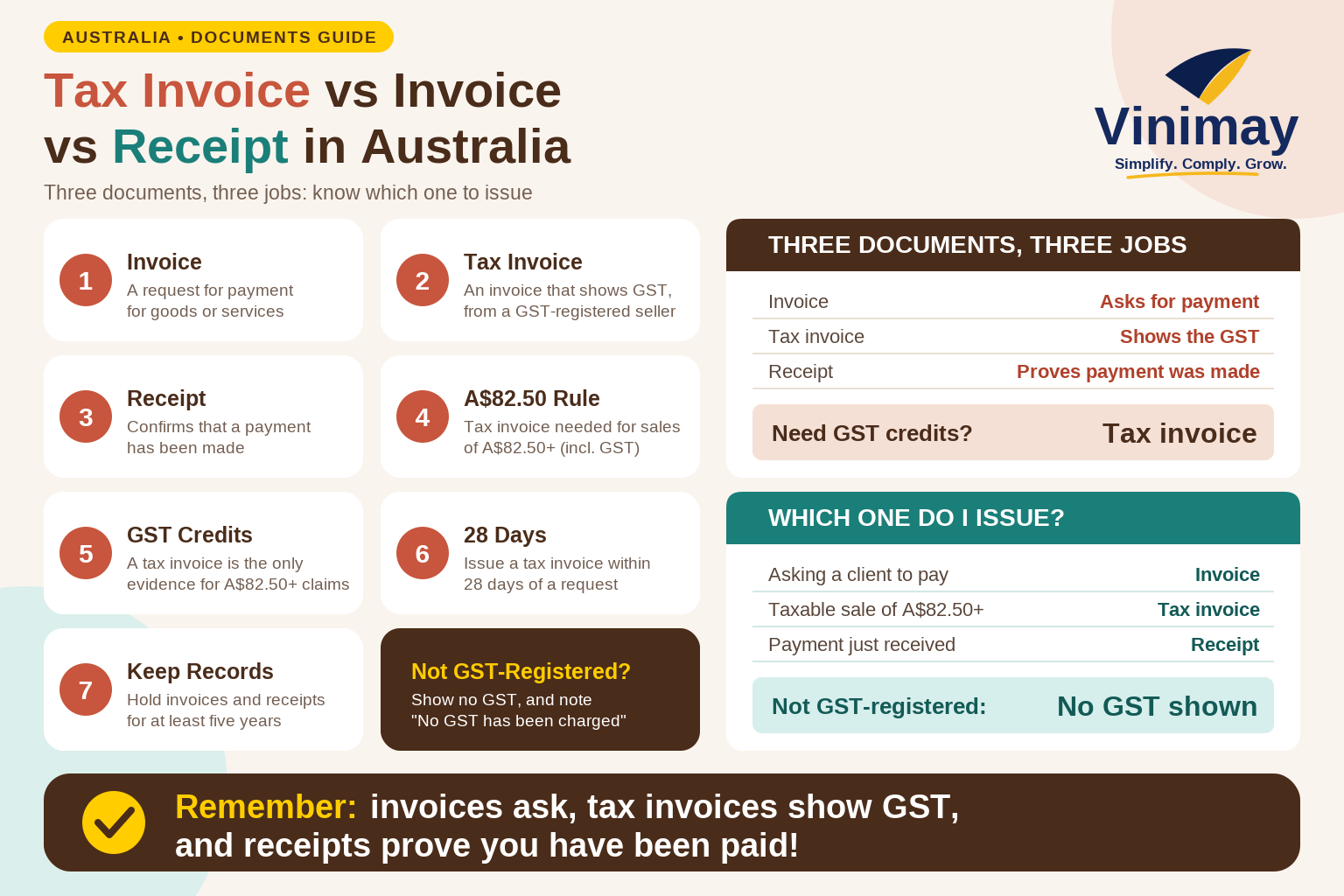
Read post Tax Invoice vs Invoice vs Receipt in Australia
Australian tax invoice requirements, difference between invoice and receipt, GST invoice Australia, business receipt, tax invoice format
Australian tax invoice requirements, difference between invoice and receipt, GST invoice Australia, business receipt, tax invoice format
Create professional GST-compliant invoices in under 30 seconds, send WhatsApp payment links, and track inventory effortlessly.
Learn how Irish businesses can invoice international customers in different currencies, handle exchange rates and understand Irish VAT requirements.
Multi-Currency Invoicing: How Irish Businesses Bill International Customers
Irish businesses increasingly work with customers outside Ireland. Freelancers may provide services to clients in the United States, online shops may sell to customers across Europe, and consultants may receive orders from businesses in different countries.
When customers operate in different currencies, businesses may want to issue invoices in US dollars, British pounds, or another currency instead of euros. This can make prices easier for international customers to understand and may simplify the buying process.
However, multi-currency invoicing involves more than changing the currency symbol. Irish VAT rules require businesses to consider how foreign-currency amounts are presented and converted for VAT purposes.
This guide explains how multi-currency invoicing works and what Irish businesses should check before billing international customers.
Yes. An Irish business can issue an invoice in a foreign currency. However, where a VAT invoice is issued in a foreign currency, the corresponding figures in euro must also be shown.
Revenue states that businesses should use the selling rate recorded by the Central Bank at the time the invoice is due to be issued, unless Revenue has agreed to an alternative exchange-rate method.
1. What Is Multi-Currency Invoicing?
Multi-currency invoicing means creating and sending invoices in currencies other than the business's main operating currency.
For example, an Irish consultancy might charge a customer in the United States in USD, while an online retailer might display prices to customers in the United Kingdom in GBP.
The business may still maintain its accounting records and report its financial information in euro.
A multi-currency invoicing system can help businesses display the customer's preferred currency while retaining the information needed for accounting and tax records.
Customers may prefer to see prices in their local currency. Displaying familiar currency values can make quotations and invoices easier to understand.
Without suitable software, businesses may need to calculate exchange rates manually for each invoice. This increases the risk of calculation and recording errors.
A customer may pay in a different currency from the one used in the business's main accounts. Businesses need a clear record of the invoice value, payment received, and any exchange difference.
Irish businesses that purchase stock, software, or professional services from overseas suppliers may also need to record foreign-currency transactions.
Follow a consistent process when preparing invoices for international customers.
Ask the customer which currency they expect to use. Common examples include EUR, USD and GBP.
Include the customer's legal or trading name and address, along with any VAT identification details required for the transaction.
Set out the price of the goods or services in the agreed currency. Clearly identify the currency rather than relying only on a symbol that could represent more than one currency.
Do not assume that an international customer automatically means the sale is VAT-free.
The VAT treatment depends on factors such as whether the customer is a business or consumer, where the customer is established, the type of supply, and the relevant place-of-supply rules.
For a VAT invoice issued in foreign currency, revenue requires the corresponding figures in euro.
Use the exchange-rate method required by Revenue for the transaction.
When the customer pays, record the amount received, currency, payment date, and any difference between the invoice value and the amount received in the business's accounting currency.
This is one of the most important points for Irish businesses.
Revenue's guidance states that if a VAT invoice is issued in a foreign currency, it must also show the corresponding figures in euro.
The selling rate recorded by the Central Bank at the time the invoice is due to be issued should be used. An alternative method may be used where Revenue has agreed to it, subject to the conditions Revenue sets.
Businesses should also ensure that the VAT amount and other invoice information are presented correctly.
For supplies where the reverse-charge mechanism applies, the invoice requirements differ. The VAT amount is not displayed as payable in the usual way, and the invoice should include the relevant reverse-charge wording.
5. Example of a Foreign-Currency Invoice
Imagine an Irish business provides a service to an international customer and agrees a fee of USD 1,000.
The invoice is issued in USD. If the transaction is subject to Irish VAT invoicing requirements, the corresponding euro figures must also be shown using the applicable exchange-rate method.
The exact euro amount will depend on the relevant exchange rate and the date the invoice is due to be issued.
This is an illustration of invoice presentation, not a calculation of the VAT due. The VAT treatment must be determined separately based on the nature and place of the supply.
When choosing software, Irish businesses should look for:
Support for multiple invoice currencies.
Clear currency labels on invoices.
Euro equivalents where required.
Exchange-rate records.
Customer and supplier currency settings.
Payment tracking in the original currency.
Exportable invoice and transaction records.
Appropriate VAT settings for the business's transactions.
It is also useful to check whether the software records the exchange rate used for each invoice rather than simply converting the amount using a changing live rate.
Vinimay provides invoicing and business management features, including customer and vendor management, payment tracking, PDF invoices, basic inventory and business reports.
For businesses handling regular billing and customer records, having these functions together can make everyday administration easier.
Before using any invoicing platform for international transactions, confirm that its multi-currency functionality, exchange-rate records, and Irish VAT invoice output meet the requirements of your business.
Explore: Vinimay—Business Invoicing Software
Multi-currency invoicing helps Irish businesses work with international customers and suppliers while presenting prices in familiar currencies.
However, businesses must pay attention to Irish VAT requirements. A VAT invoice issued in a foreign currency must also show the corresponding euro figures, using the exchange-rate method specified by Revenue.
Choose invoicing software that supports your currencies, records payments clearly and helps maintain accurate VAT and accounting information. This can make international billing more organised as your business grows.
Looking to organise invoices, customers and payment records? Explore Vinimay for its business invoicing and management features
Our editorial and compliance specialists create practical guides, tax calculation rules, and operational strategies to empower Indian small business owners and accountants.
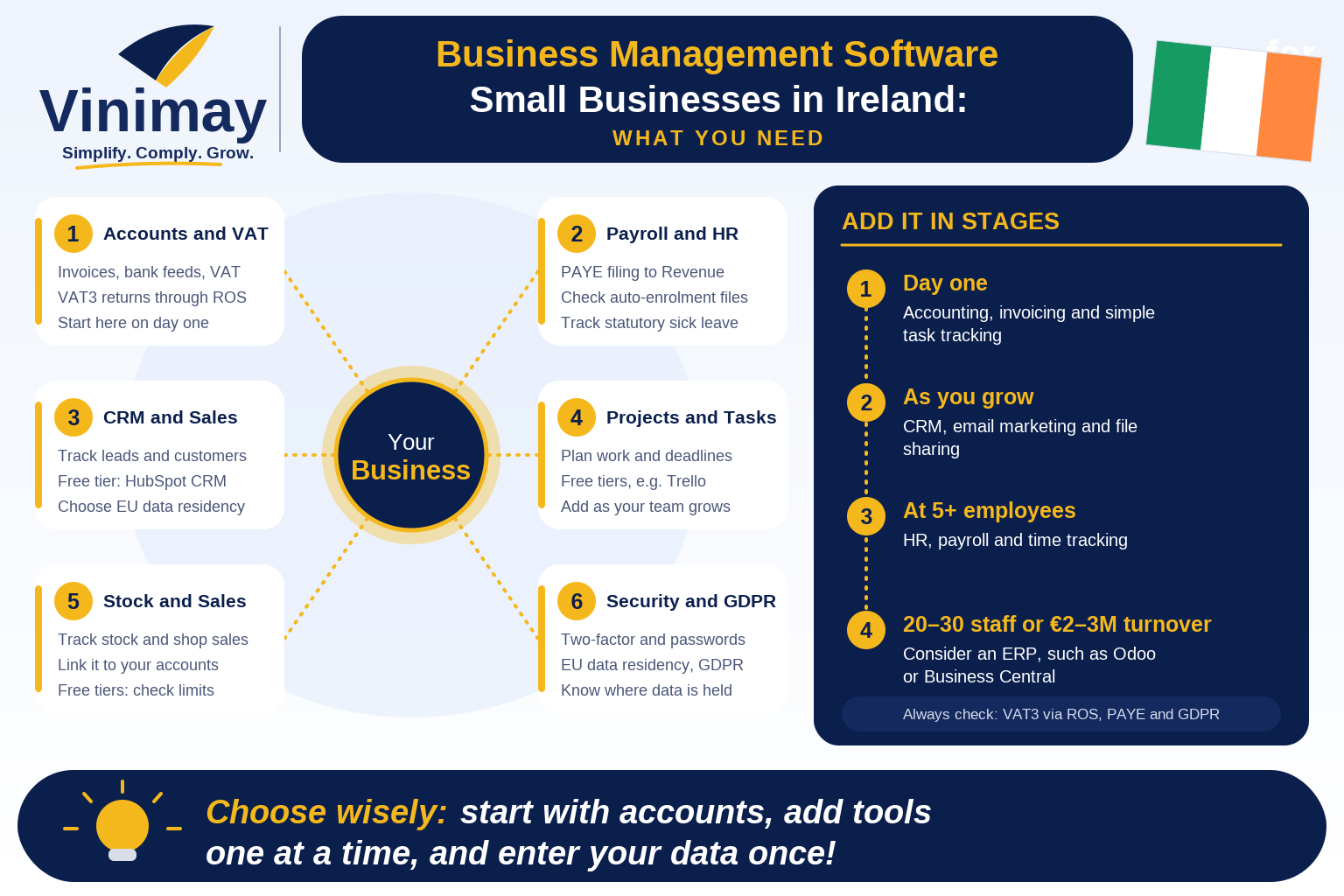
Managing a small business in Ireland involves handling multiple responsibilities, from preparing customer invoices to tracking expenses,
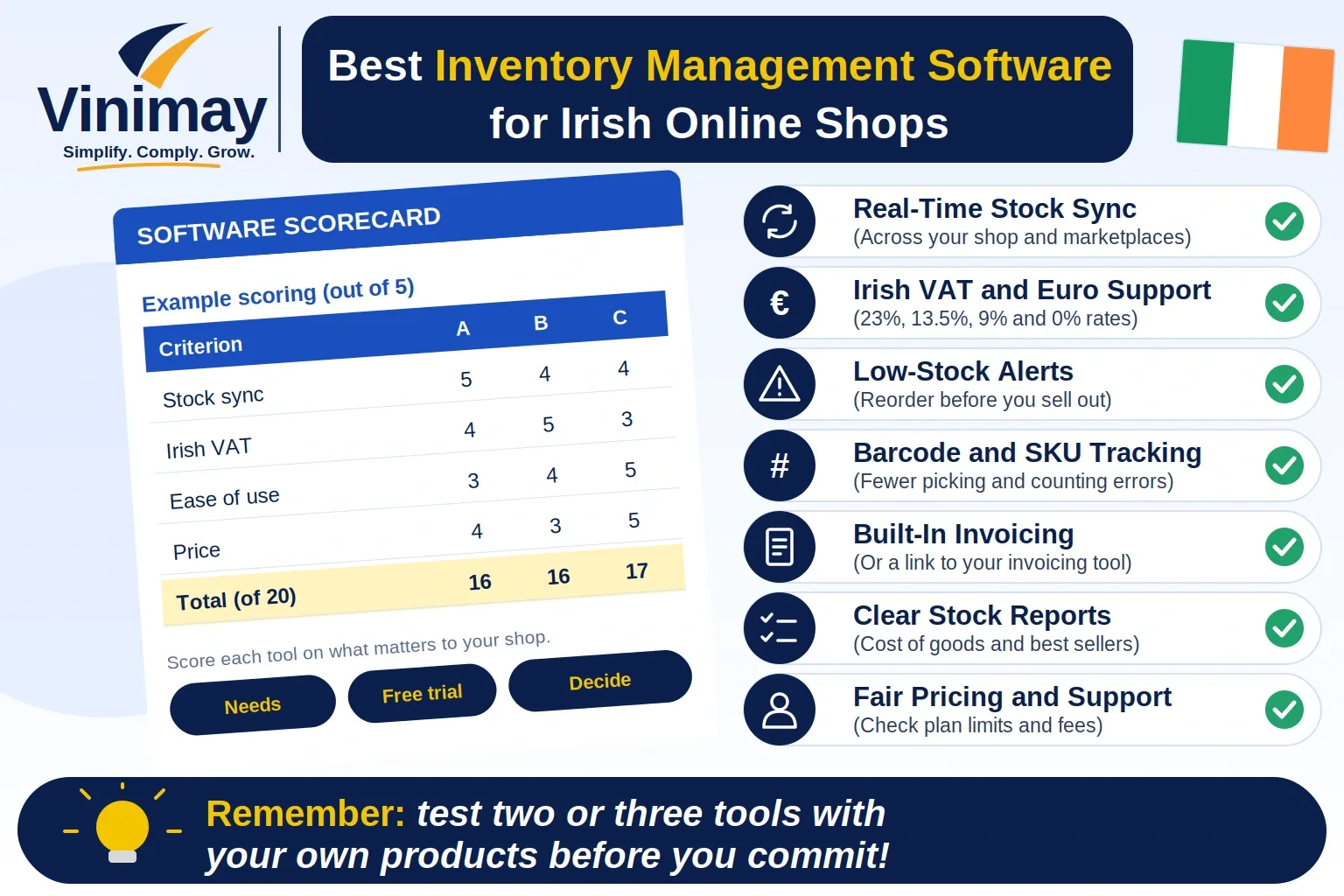
Compare the best inventory management software for Irish online shops. Explore stock tracking, order management, warehouse features and ecommerce integrations.