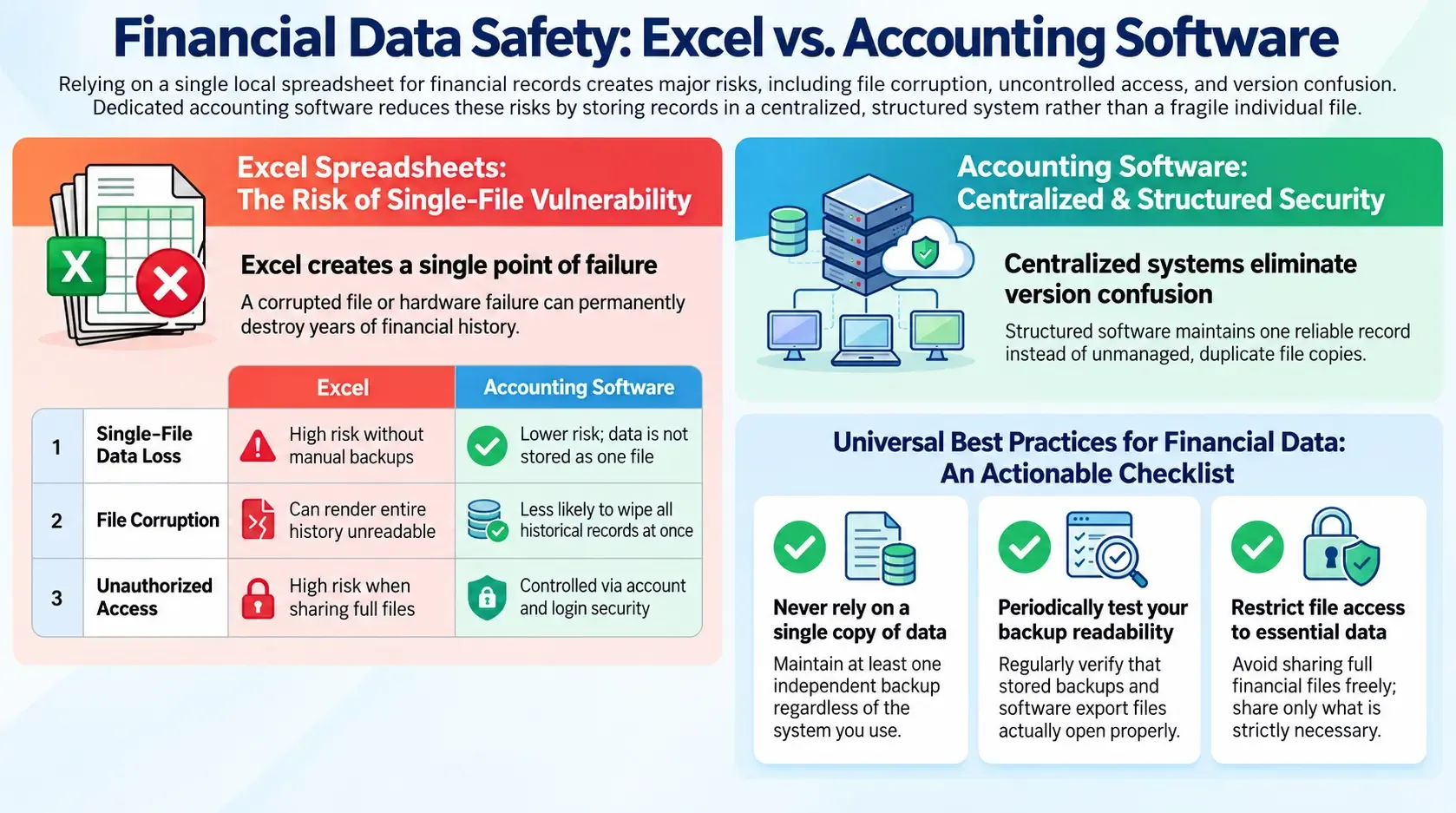
General
Read post Is Financial Data Safer in Accounting Software Than Excel?
Compare accounting software and Excel to understand which offers better financial data security, access control, backups, and protection against errors.
Compare accounting software and Excel to understand which offers better financial data security, access control, backups, and protection against errors.
Create professional GST-compliant invoices in under 30 seconds, send WhatsApp payment links, and track inventory effortlessly.
Quick Answer: A UAE transport business should maintain vehicle registration and permit details, driver information, trip dates, routes, customer details, goods or passengers transported, mileage, fuel consumption, tolls, delivery confirmations, maintenance records, invoices, and payment information. The exact mandatory records depend on the transport activity, emirate, permits, and applicable regulations.
Transport businesses in the United Arab Emirates manage numerous operational and financial activities every day. Whether a company provides goods transportation, courier delivery, logistics services, passenger transportation, or inter-emirate freight movement, maintaining accurate records for every vehicle and trip is essential.
A transport company may operate several trucks, vans, delivery vehicles, or passenger vehicles across Dubai, Abu Dhabi, Sharjah, Ajman, and other Emirates.
Each vehicle can generate multiple expenses, including fuel, toll charges, maintenance, parking, driver-related costs, and repairs. At the same time, businesses need to track customer bookings, transportation revenue, pending payments, and delivery completion.
Without structured records, transport operators may struggle to determine which vehicles are profitable, whether drivers have completed assigned trips, or why fuel and maintenance costs are increasing.
For example, a transport business may earn AED 50,000 in monthly revenue but experience unexpected cash shortages because of unrecorded fuel purchases, delayed customer payments, and frequent vehicle repairs.
Proper recordkeeping helps businesses monitor operations, control costs, prepare accurate accounts, and meet relevant UAE regulatory requirements.
The UAE's federal land transport framework includes recordkeeping requirements for relevant licensed operators, while emirate-level requirements may impose additional obligations.
The following eight sections explain the records UAE transport businesses should maintain for effective vehicle and trip management.
Every transport business should maintain a separate record for each vehicle it owns, leases, or operates.
A vehicle master register provides essential information about the fleet and helps business owners monitor registration, permits, operating capacity, and financial obligations.
The register should identify each vehicle through a unique internal vehicle code, registration number, chassis number, and other relevant details.
Useful information includes:
Vehicle registration number and emirate.
Vehicle type, model, and manufacturing year.
Chassis number and relevant identification details.
Vehicle ownership or lease information.
Permitted carrying capacity or passenger capacity.
Registration, insurance, inspection, and permit details.
Assigned driver, where applicable.
Vehicle purchase cost or lease arrangements.
Maintenance and inspection history.
For example, a Dubai logistics company may maintain records for ten delivery vans.
Each van should have its own profile containing its registration details, permit information, service records, and expenses.
This allows management to identify vehicles approaching registration renewal or scheduled maintenance.
UAE regulatory consideration: Dubai's commercial vehicle transport rules require relevant establishments to comply with licensing, inspection, and recordkeeping obligations. The federal land transport executive framework also provides for details of vehicles and their specifications to be recorded.
Transport companies should confirm the specific requirements applicable to their activity and licensing authority.
Maintaining a complete vehicle register helps prevent missed renewals, improves fleet visibility, and supports more reliable operational planning.
A trip register provides a detailed history of transportation activities performed by each vehicle.
Every trip should ideally have a unique trip identification number linked to the relevant vehicle, driver, customer, and transport service.
Businesses should maintain details such as the trip date, origin, destination, assigned vehicle, driver, goods or passenger information, and trip status.
For goods transportation, useful supporting details include the type of goods, quantity, weight where relevant, and delivery reference.
For passenger transportation, applicable passenger and booking records should be maintained according to the relevant transport regulations.
Trip detail | Example |
|---|---|
Trip ID | TRP-2026-0145 |
Vehicle | Dubai Truck 05 |
Driver | Driver A |
Trip Date | 20 October 2026 |
Starting Location | Dubai |
Destination | Abu Dhabi |
Customer | ABC Trading LLC |
Goods Transported | 150 cartons |
Opening Odometer | 82,350 km |
Closing Odometer | 82,610 km |
Distance Travelled | 260 km |
Trip Status | Completed |
The trip should also be linked to supporting documents such as delivery orders, customer bookings, and proof of delivery.
Under the federal land transport executive regulations, relevant licensees must maintain specified records of vehicles, employees, transported goods, and passenger lists for individual trips. International journeys require additional trip information.
A trip register helps operators identify completed journeys, pending deliveries, vehicle utilisation, and disputes involving transportation services.
It also creates a foundation for calculating trip-level profitability.
Fuel is often one of the largest operating expenses for transport businesses, particularly those running trucks, delivery vans, and commercial fleets over long distances.
If fuel purchases are recorded only as general business expenses, owners may struggle to identify which vehicles consume the most fuel.
Transport companies should maintain a vehicle-wise fuel register that records the date of refuelling, fuel quantity, amount paid, odometer reading, and assigned vehicle.
Where fuel is purchased for a specific trip, the expense should be linked to that trip when practical.
Suppose a truck completes a trip of 300 kilometres and consumes 50 litres of diesel.
Its fuel efficiency is:
If the fuel cost for the trip is AED 150, the fuel expense per kilometre is:
These calculations help operators compare vehicle performance.
Vehicle Fuel Efficiency Calculator
Fuel Efficiency
Fuel Cost per km
Regular fuel monitoring can help identify unusual consumption, potential wastage, and maintenance issues.
Businesses should compare fuel usage across similar vehicles and routes rather than assuming that every vehicle will achieve identical efficiency.
Every transport trip generates direct and indirect costs.
Common trip-related expenses include fuel, toll charges, parking, loading and unloading, driver allowances, and additional operational costs.
Vehicle-related expenses may also include insurance, maintenance, depreciation, lease payments, and fixed staff costs.
To understand the financial performance of a trip, businesses should record the revenue earned and identify the expenses attributable to that journey.
A UAE transport company completes a goods-delivery trip from Dubai to Abu Dhabi.
Particulars | Amount (AED) |
|---|---|
Transport Revenue | 1,500 |
Fuel Expense | 250 |
Toll Charges | 50 |
Driver Allowance | 100 |
Loading and Unloading | 80 |
Other Direct Expenses | 70 |
Total Direct Expenses | 550 |
Trip Contribution | 950 |
The trip contribution of AED 950 represents revenue remaining after the listed direct expenses.
It is not necessarily the final trip profit, because fixed vehicle and business overheads have not yet been allocated.
For example, a business may also incur vehicle depreciation, monthly insurance, office expenses, and salaries.
These expenses should be allocated using a reasonable and consistent method when preparing a full vehicle-wise profitability analysis.
Trip records are especially useful for identifying routes with high operating costs or customers whose transportation charges may not adequately cover expenses.
Businesses should also distinguish amounts billed to customers from payments actually received.
Trip-wise accounting helps transport operators evaluate pricing, control expenses, and make more informed operational decisions.
Driver and maintenance records are important for transport safety, operational reliability, and cost management.
Transport businesses should maintain relevant driver information, including the driver's identification reference, driving licence details, applicable permits, vehicle assignment, and employment or engagement details.
They should monitor licence and permit expiry dates and maintain records of relevant training, incidents, and driving-related issues where necessary.
Vehicle maintenance records should include service dates, odometer readings, maintenance descriptions, workshop details, replacement parts, costs, and upcoming service requirements.
For example, if a commercial vehicle requires an oil change every specified number of kilometres according to its maintenance plan, the business should monitor the odometer and schedule servicing accordingly.
Unexpected breakdowns can interrupt deliveries, increase repair costs, and damage customer relationships.
Maintenance histories also help operators identify vehicles that frequently require expensive repairs.
Transport operators must follow applicable vehicle technical, inspection, and licensing requirements.
For example, Dubai's commercial transport regulatory framework includes obligations concerning vehicle inspections, permits, and prescribed records for licensed establishments.
In Abu Dhabi, the Asateel commercial transport platform supports relevant permit and vehicle tracking requirements for commercial transport activities.
The specific obligations depend on the transport activity, location, vehicle category, and relevant authority.
Maintaining organised records helps businesses monitor compliance and reduce the risk of avoidable operating interruptions.
Transport companies should maintain appropriate records connecting each completed service to the customer and the corresponding invoice.
For goods transportation, useful records may include transport bookings, delivery instructions, consignment notes, goods descriptions, pickup records, delivery receipts, and proof of delivery.
These documents help confirm what was transported, which customer requested the service, and whether delivery was completed.
For example, a logistics business may transport 200 cartons of electronic accessories from a warehouse in Dubai to a customer in Sharjah.
The business should maintain documentation connecting the shipment to the customer order and delivery confirmation.
If the customer disputes receiving the complete quantity, delivery records may help investigate the issue.
Each invoice should be linked to the relevant trip or transportation contract.
Businesses should record the customer name, invoice number, billing date, chargeable amount, applicable VAT treatment, payment terms, and outstanding balance.
Transport services can have different VAT implications depending on their nature and circumstances.
For example, qualifying international transportation may receive different VAT treatment from domestic transportation.
Therefore, businesses should not assume that every transport trip is automatically subject to the same VAT rate.
VAT-registered operators should verify the correct treatment and preserve relevant supporting documentation.
Accurate billing records help prevent missed invoices, duplicate charges, and customer payment disputes.
Transport businesses need reliable financial records to understand operating costs, prepare financial statements, and meet applicable tax requirements.
A transport company may receive customer payments through bank transfers, credit arrangements, or other agreed payment methods.
It may also incur expenses relating to fuel, repairs, spare parts, insurance, driver allowances, vehicle leases, and office administration.
These transactions should be recorded in appropriate accounts and linked to vehicles or trips where useful.
For example, a transport business owning five trucks should ideally be able to identify fuel and repair expenses attributable to each vehicle.
This makes financial reporting more useful than a single consolidated expense total.
The Federal Tax Authority states that VAT-registered persons generally must retain VAT invoices issued and received for a minimum of five years, subject to applicable rules and extensions.
Transport businesses should therefore preserve relevant customer invoices, supplier invoices, credit notes, and supporting transaction information.
Under Article 56 of the UAE Corporate Tax Law, relevant records and documents generally must be maintained for seven years following the end of the tax period to which they relate.
These records should support the information reported for tax purposes and allow taxable income to be determined.
Some land transport records are required by federal or emirate-level transport regulations independently of tax recordkeeping.
The exact records and retention requirements may vary according to the transport activity and licensing authority.
Businesses should therefore maintain a documented record-retention policy that considers both tax legislation and applicable transport regulations.
Accurate records support tax compliance, reliable financial statements, and better visibility over the true cost of operating each vehicle.
As the number of vehicles and trips increases, maintaining records through separate notebooks and spreadsheets can become difficult.
Accounting and transport management software can help businesses organise vehicle information, trip transactions, expenses, customer accounts, and financial reports.
A suitable system may enable businesses to associate trips with specific vehicles and drivers, record transportation charges, track fuel expenses, and monitor customer payments.
For example, a transport company operating eight trucks may want to review the monthly revenue and expenses associated with each vehicle.
By recording transactions consistently against vehicle or trip references, the business can prepare more useful financial analyses.
Owners should evaluate whether the software supports their actual transport operations, including trip assignment, route details, trip expense entries, customer billing, driver records, and vehicle-wise profitability.
Specialised features such as GPS tracking, automated mileage capture, maintenance reminders, or integration with regulatory tracking systems should be checked separately.
UAE transport businesses exploring digital accounting solutions may evaluate Vinimay Accounting Software for organising operational and financial transactions.
Vinimay includes accounting workflows for sales, receipts, payments, parties, ledgers, and a trip transportation industry module.
These workflows are relevant to businesses that need to maintain financial records connected to transport operations.
Before implementation, operators should verify the currently available capabilities for vehicle-wise and trip-wise records, driver assignments, fuel expenses, trip profitability, UAE currency handling, and financial reporting.
Businesses should also confirm whether any required specialised transport compliance or GPS tracking integrations are supported.
The most useful system is one that connects transport operations with accurate financial records without creating unnecessary manual duplication.
Our editorial and compliance specialists create practical guides, tax calculation rules, and operational strategies to empower Indian small business owners and accountants.
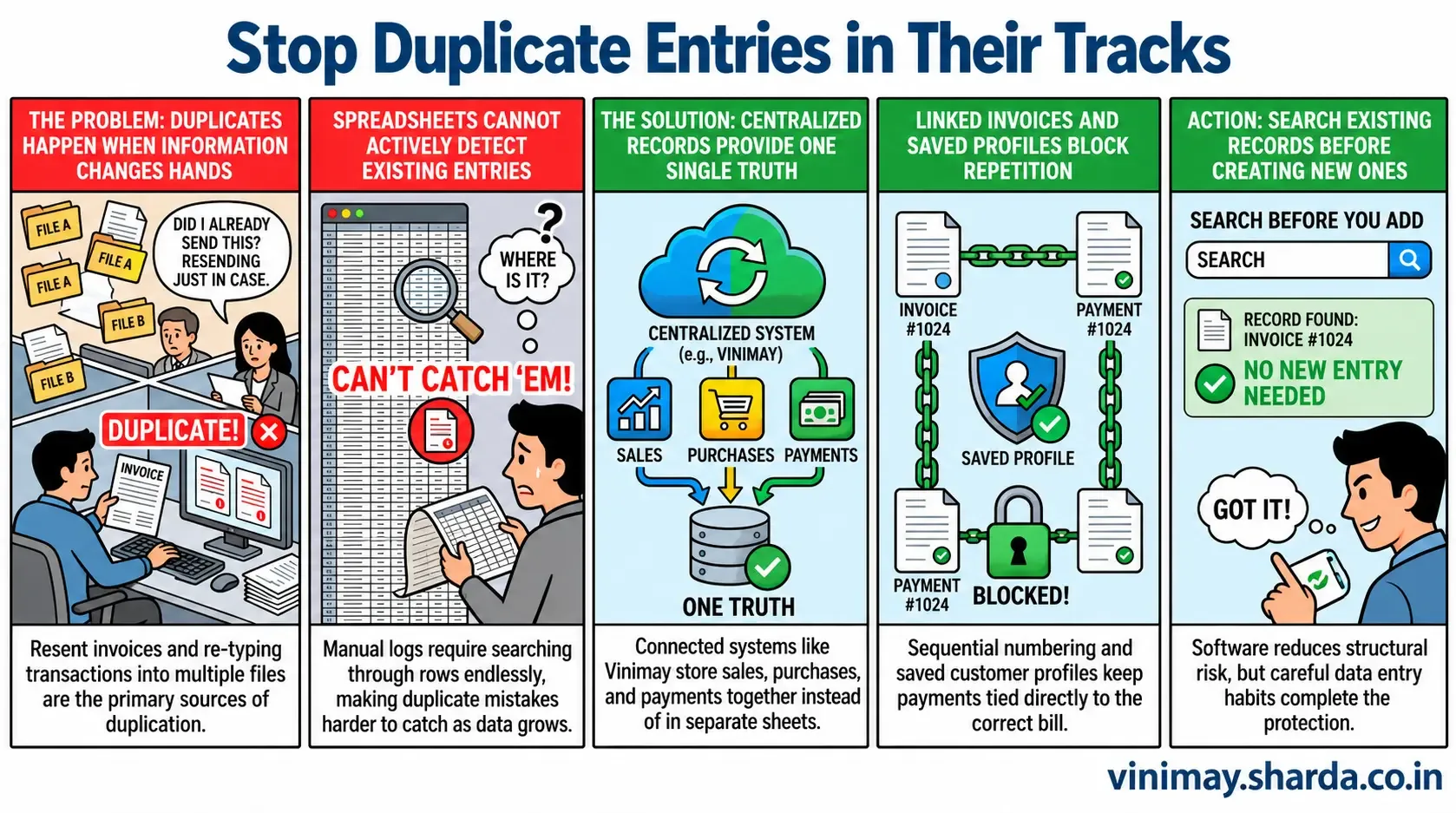
Learn how accounting software prevents duplicate entries using automated checks, unique transaction records, and validation to improve bookkeeping accuracy.
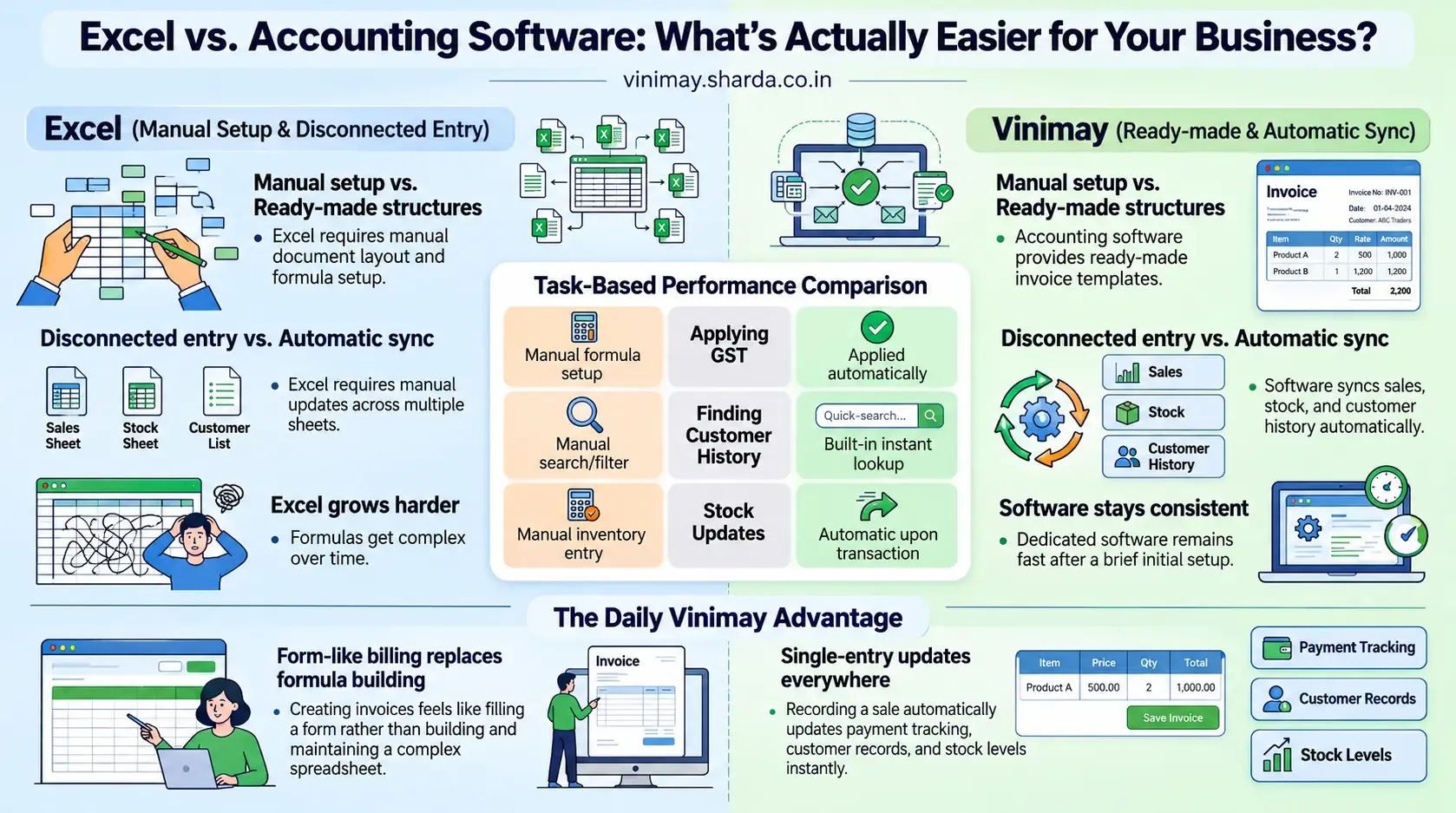
Compare Excel and accounting software to find which is easier for bookkeeping, invoicing, expense tracking, financial records, and daily business accounting.
Create and download professional, GST-compliant tax invoices in under 30 seconds.
Create Free Invoice Now →