Should Singapore Small Businesses Focus on Attracting New Customers?
Quick Answer: Yes. Singapore small businesses should attract new customers to increase sales, reduce dependence on existing buyers, and support long-term growth. However, customer acquisition must be balanced with retaining loyal customers. Effective strategies include digital marketing, referrals, local partnerships, and providing a consistently good customer experience.
For Singapore retailers, cafés, service providers, and online businesses, relying entirely on existing customers can limit growth. Customer preferences, competition, and buying habits can change.
The goal is not simply to attract more buyers but to acquire profitable customers who return and recommend the business.
Why Do Singapore Small Businesses Need New Customers?
New customers create opportunities to increase revenue and expand into different market segments.
They also reduce customer concentration risk.
For example, a consultancy earning 60% of its revenue from one client could experience financial difficulties if that customer leaves.
Attracting customers from different industries or sales channels makes the business less dependent on a single revenue source.
However, growth should remain sustainable. Spending heavily on advertising without generating profitable sales can weaken cash flow.
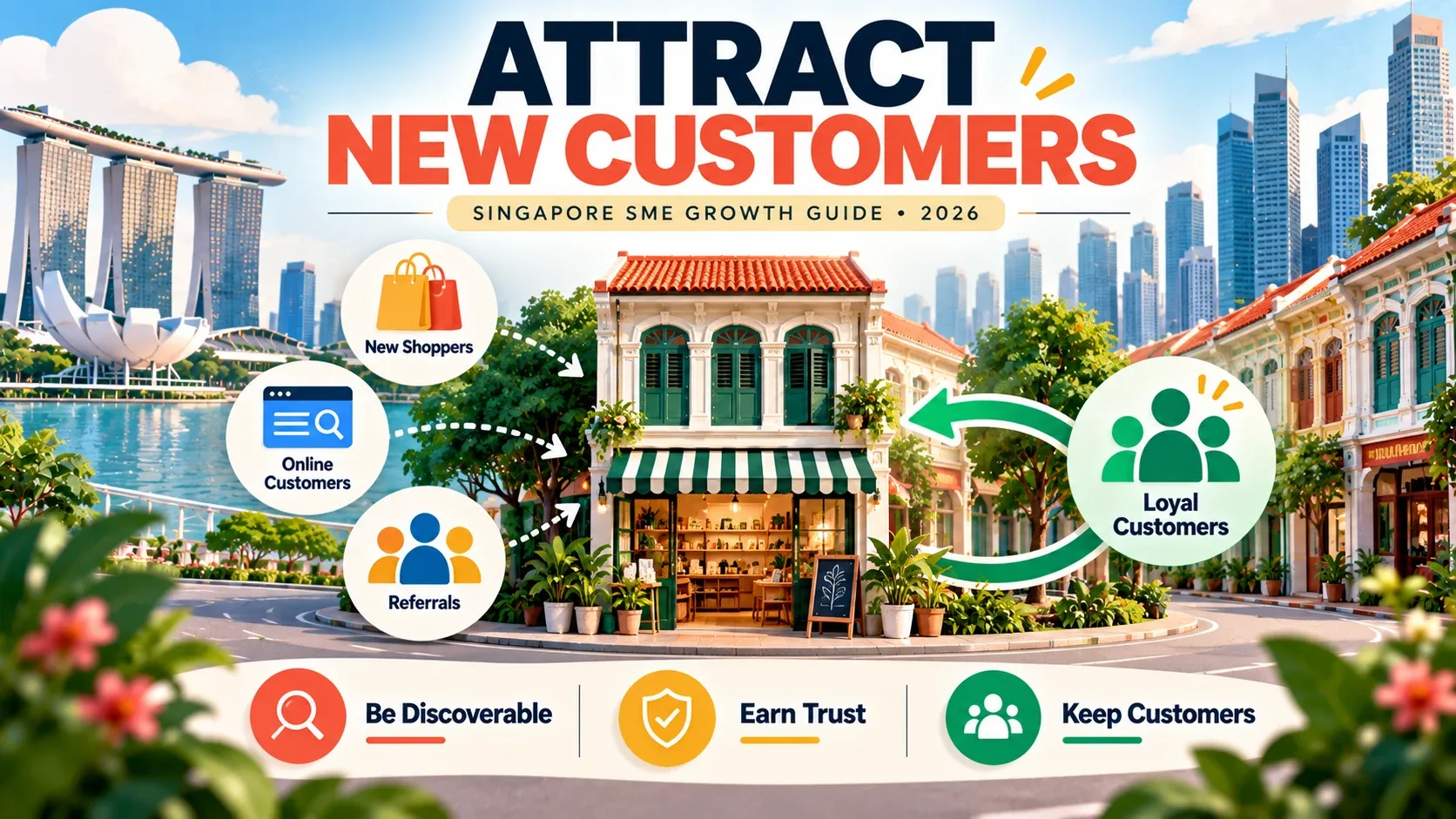
Should SMEs Focus on New Customers or Existing Customers?
Both are important, but they serve different purposes.
For example, a Singapore bakery could attract first-time customers through a local promotion while offering returning customers consistent service and repeat-purchase benefits.
A balanced strategy avoids neglecting loyal buyers while pursuing new sales.
How Can Small Businesses Find New Customers?
Start by identifying the audience most likely to need your product or service.
Enterprise Singapore recommends understanding your target customers and communicating why your business is different from competitors.
Potential acquisition channels include:
Google Search and Google Business Profile.
Social media content and targeted advertising.
Customer referrals and reviews.
Local business partnerships.
Marketplaces and eCommerce websites.
A neighborhood cleaning company, for example, might prioritize local search visibility instead of expensive nationwide advertising.
Which Marketing Methods Are Cost-Effective?
The best approach depends on where potential customers discover and evaluate businesses.
SMEs should test a small marketing budget before increasing spending.
A campaign that produces many inquiries but few paying customers may need improvement.
How Can Businesses Turn First-Time Buyers Into Repeat Customers?
Attracting a new customer is only the beginning.
Businesses should deliver what they promise, communicate clearly and resolve complaints promptly.
For example, an online seller can build trust through accurate product descriptions, reliable delivery and transparent return policies.
Appropriate follow-up messages may also encourage repeat purchases.
Where personal data is used for marketing, businesses should comply with Singapore's Personal Data Protection Act (PDPA) and relevant Do Not Call requirements.
How Much Should SMEs Spend on Customer Acquisition?
There is no single suitable advertising budget for every Singapore business.
Instead, measure Customer Acquisition Cost (CAC):
CAC = Customer Acquisition Spending ÷ New Customers Acquired
For example:
If each customer produces only S$12 of gross profit and rarely buys again, the campaign may not be commercially worthwhile.
Compare acquisition costs with gross margin, repeat purchases and expected customer value.
How Can Singapore SMEs Grow Without Overspending?
Begin with clear targets, such as acquiring 20 new paying customers over a month.
Use a simple enquiry tracker to identify where customers come from and which enquiries turn into sales.
Review sales results rather than focusing only on social media followers or website visits.
Businesses may also explore relevant digitalisation support. Enterprise Singapore and IMDA refreshed the Retail Industry Digital Plan in May 2026 to guide retailers in adopting suitable digital tools.
Eligibility for any financial assistance should be verified separately.
How Can Vinimay Support Customer Growth?
Vinimay provides general invoicing, customer ledger, sales recording, payment tracking, inventory and financial reporting functions.
These features can help businesses organise transactions after attracting customers and understand buying patterns through available sales records.
For example, a retailer can review customer purchases and outstanding payments while planning inventory for future orders.
However, Vinimay's marketing automation, customer acquisition analytics, loyalty programme management, Singapore eCommerce integrations, and PDPA-specific compliance capabilities have not been independently verified.
Businesses should confirm these features before relying on the software for marketing or customer relationship management.
Frequently Asked Questions
Related Topics
Published by prachi kahar
Our editorial and compliance specialists create practical guides, tax calculation rules, and operational strategies to empower Indian small business owners and accountants.