How Accountants Can Manage Multiple SME Clients in Singapore Quick Answer: Singapore accountants can manage bookkeeping for multiple SME clients by maintaining separate company records, standardising accounting workflows, automating repetitive tasks and tracking deadlines centrally. Secure access controls, monthly reconciliations, client document collection and suitable multi-client accounting software help firms improve accuracy, efficiency and compliance.
Accounting firms in Singapore often serve several businesses simultaneously, including retailers, freelancers, consultancies, trading companies and startups.
Managing different transactions, GST obligations and financial year-ends can become challenging without an organised system. A structured bookkeeping process helps accountants handle more clients without compromising accuracy.
1. What Makes Multi-Client Bookkeeping Challenging?
Each client has different business activities, transaction volumes and reporting requirements.
For example, an accounting firm may manage a GST-registered retailer, a non-GST-registered consultancy and an eCommerce company with overseas sales.
Their accounting needs differ even though they use similar ledgers.
Common challenges include delayed documents, missing invoices, incorrect tax classifications and overlapping filing deadlines.
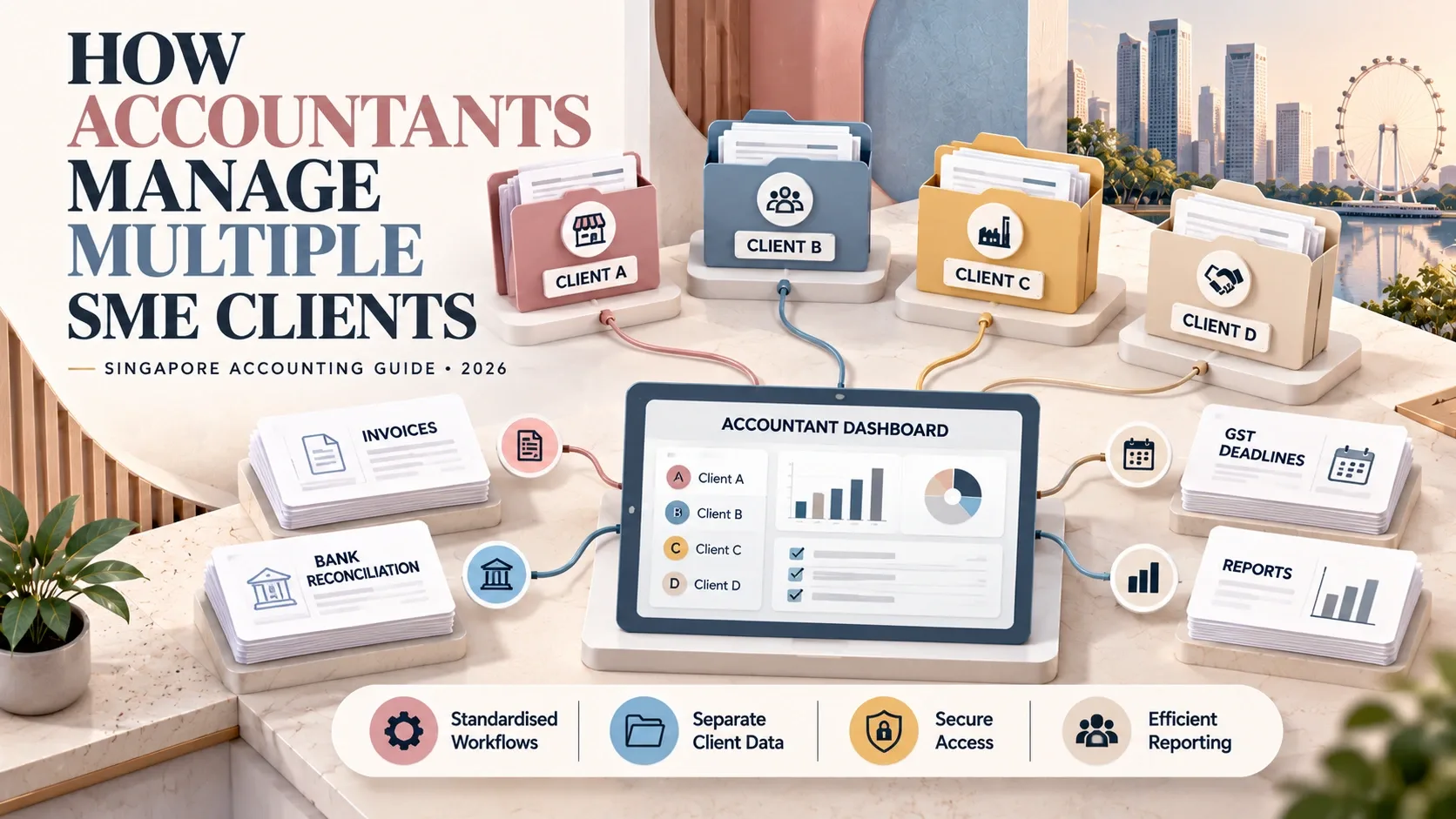
Accountants should maintain a separate accounting environment and checklist for each client.
2. How Should Accountants Organise Multiple Client Accounts?
Start by creating a standard client profile containing the business name, UEN, financial year-end, GST status, assigned accountant and reporting requirements.
A central client tracker can provide an overview.
Each company's transactions, bank accounts, supporting documents and financial reports should remain separate.
Standardised naming conventions and folder structures make records easier to retrieve.
3. What Bookkeeping Tasks Should Be Completed Every Month?
A monthly closing routine ensures that accounting information remains accurate throughout the year.
A typical workflow includes:
Collect sales invoices, purchase bills and bank statements.
Record income, expenses and payments.
Reconcile bank and payment gateway transactions.
Review customer receivables and supplier payables.
Check inventory movements where applicable.
Review GST classifications and tax balances.
Prepare reports and resolve client queries.
For example, a trading client's inventory ledger should agree with recorded purchases, sales and approved stock adjustments.
Regular reviews reduce the workload at financial year-end.
4. How Can Accountants Manage GST and Tax Deadlines?
Accountants should maintain a central compliance calendar for every client.
For YA 2026, the Corporate Income Tax filing deadline is 30 November 2026.
Clients can have different GST accounting periods, and some have different financial year-ends.
Accountants should therefore track deadlines individually rather than assuming every client follows the same calendar.
5. How Should Accountants Handle GST InvoiceNow?
Singapore is progressively making GST InvoiceNow mandatory.
Businesses applying for voluntary GST registration from 1 April 2026 are generally covered, while other GST-registered businesses enter the programme in phases through April 2031.
Accounting firms should identify each client's implementation date, confirm the software's InvoiceNow readiness and check that required invoice-data submission to IRAS is activated.
An accountant managing several clients may need to coordinate onboarding with different accredited service providers.
InvoiceNow does not replace GST F5 filing. Accountants must still review GST returns and supporting records.
6. How Can Firms Protect Client Data and Control Access?
Accountants handle sensitive business information, including bank statements, customer details and financial records.
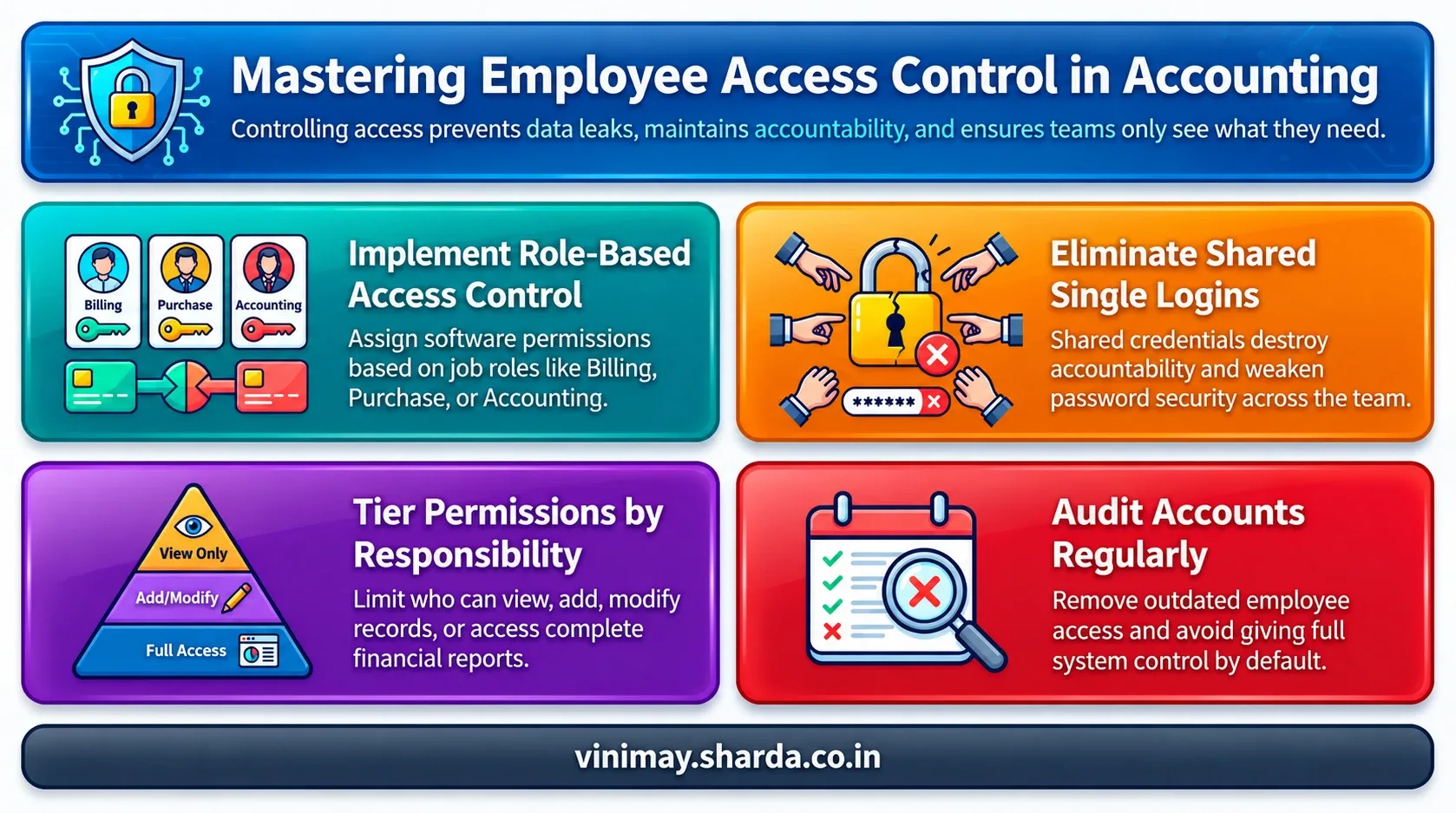
Suitable controls include multi-factor authentication, role-based permissions, secure document sharing and regular backups.
Employees should access only the client accounts necessary for their responsibilities.
For tax submissions, IRAS requires appropriate authorisation through Corppass.
Accounting firms providing regulated corporate services must also assess whether ACRA's Corporate Service Providers framework applies to their activities.
The Corporate Service Providers Act 2024 took effect on 9 June 2025.
Ordinary bookkeeping and performing regulated corporate filing services should not automatically be treated as identical activities.
7. How Can Accounting Firms Improve Efficiency?
Efficiency comes from consistent workflows rather than processing more transactions without review.
Accountants can use recurring task lists, standard document requests, monthly reporting templates and automated reminders.
For example, a firm serving 25 SMEs can assign every client a monthly document collection date and reconciliation deadline.
A central dashboard can help managers identify overdue work, missing documents and clients requiring attention.
Singapore companies generally must retain supporting tax records for at least five years from the relevant Year of Assessment.
Firms should also establish clear procedures for returning or transferring client records when an engagement ends.
8. How Can Vinimay Help Accountants Manage SME Clients?
Vinimay provides general accounting functionality for sales invoicing, purchases, expenses, payments, inventory, customer and supplier ledgers, and financial reporting.
Its accountant-led operating structure and client/user roles may help accounting professionals organise records for multiple businesses, depending on the deployment and permissions configured.
For example, accountants can use structured client accounting records to review transactions, balances and supporting financial information.
However, Vinimay's Singapore-specific GST F5 filing, multi-client IRAS integration, ACRA filing, InvoiceNow accreditation and Singapore regulatory compliance capabilities have not been independently verified.
Accounting firms should test client separation, access permissions, exports and reporting requirements before adoption.
Frequently Asked Questions
Related Topics
Published by admin
Our editorial and compliance specialists create practical guides, tax calculation rules, and operational strategies to empower Indian small business owners and accountants.