How Can I Identify My Best-Selling Products
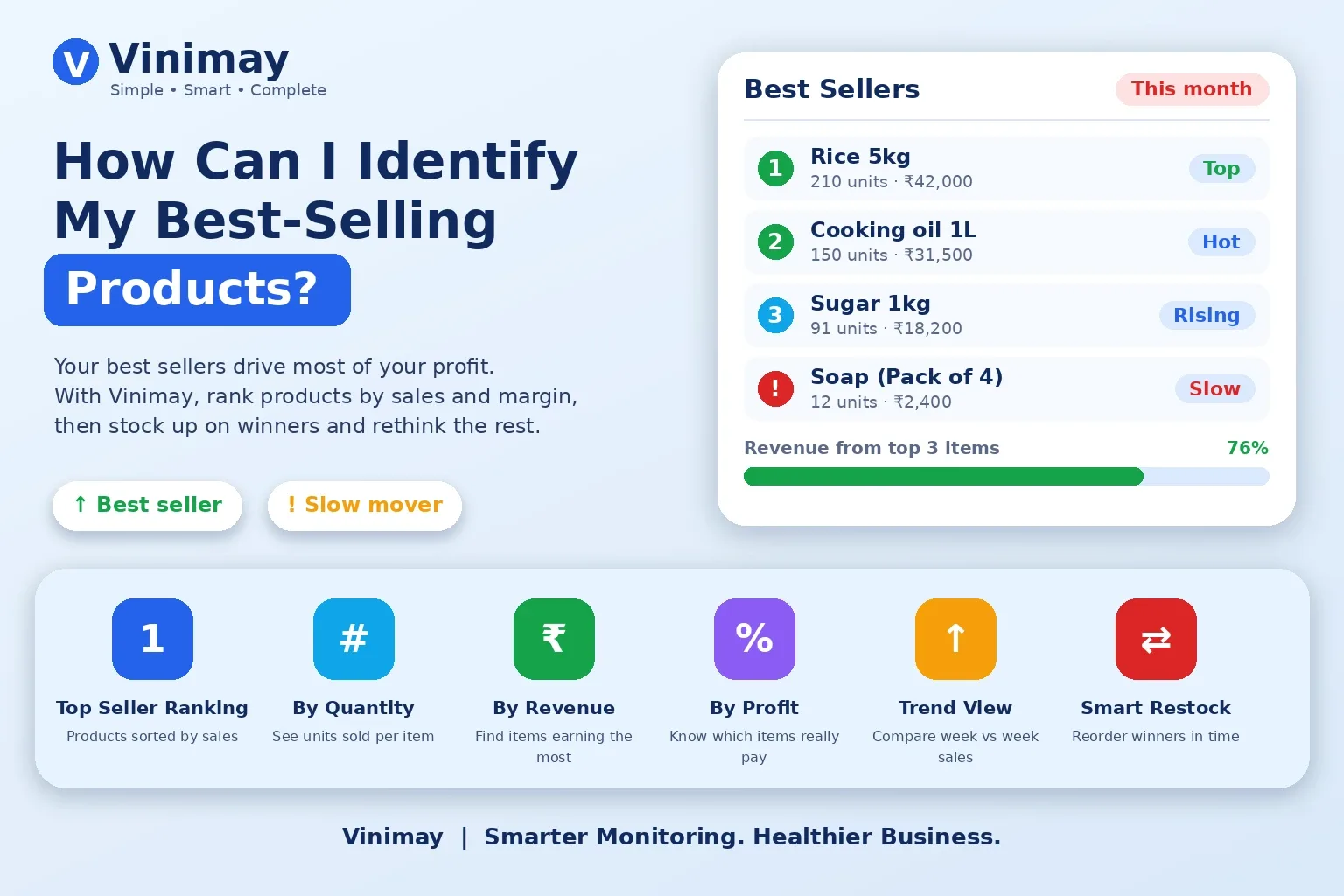
Asking "what are my best-selling products"seems like a simple question, but it actually hides an ambiguity. Does "best" mean the product sold in the highest quantity, the one generating the most total revenue, or the one purchased most frequently across the most individual transactions? These three measures often point to different products entirely, and picking the wrong one can lead a business to focus attention on the wrong items.
A product that sells 500 units a month at a low price might generate less total revenue than a product selling only 50 units a month at a much higher price, yet the first would look like the clear "best-seller" by volume alone. Understanding which measure actually matters for a specific business decision changes what counts as a genuine top performer.
This article breaks down the different ways to measure "best-selling," how to choose the right one for your situation, and a simple method for actually ranking products once you've decided.
Three Different Ways to Measure "Best"
Choosing the Right Measure for Your Business
Direct answer: The right measure depends on the decision you're trying to make, use units sold for stock and reorder planning, use total revenue for understanding which products matter most to overall sales, and use purchase frequency for understanding how widely a product appeals across your customer base.
A business focused mainly on avoidingstockouts should prioritize units sold. A business trying to understand where its revenue actually comes from should prioritize total revenue instead, since a high-volume but low-price item might not be as commercially important as it first appears.
A Simple Method to Rank Products
Pull sales data for a defined period, a month or a quarter works well for most businesses
Sort products by your chosen measure, units sold, revenue, or frequency
List the top 10, this is usually a manageable, meaningful number to actually act on
Cross-check this list against the same period last year, if data exists, to confirm it's a consistent pattern and not a one-off spike
What to Do Once You Know Your Best-Sellers
Prioritize stock availability for these specific products above others, since a stockout here has the biggest impact
Review whether these products are being given adequate visibility, in a physical shop or however customers browse your offerings
Consider whether pricing on these top performers could be adjusted without hurting demand, since even a small margin improvement on high-volume items adds up
Don't ignore products just outside the top 10, sometimes a rising product is close behind and worth watching
Conclusion
Identifying best-selling products starts with recognizing that "best" isn't one fixed measure, units sold, total revenue, and purchase frequency each tell a different story and suit different decisions. Choosing the right measure for your specific goal, then ranking and periodically reviewing the results, turns a vague sense of "what sells well" into a specific, actionable list that can genuinely guide stock and pricing decisions.
FAQs
1. Why isn't "units sold" always the right way to measure best-selling products?
Because a product selling in high volume at a low price might generate far less total revenue than a lower-volume, higher-priced product, so units sold alone can be misleading dependingon what decision you're trying to make.
2. What's the difference between total revenue and purchase frequency as a measure?
Total revenue shows which product contributes the most money overall, while purchase frequency shows how many different customers or orders included that product, which is more about broad appeal than total sales value.
3. How many top products should I actually focus on identifying?
A list of around the top 10 is usually specific enough to be actionable, without being so long that it becomes difficult to focus attention on any particular item.
4. Should best-seller rankings be checked against a previous period?
Yes, comparing the current ranking against the same period last year or the previous month helps confirm the pattern is consistent, rather than reacting to a temporary spike that might not repeat.
5. What should I actually do differently once I know my best-selling products?
Prioritizing their stock availability, reviewing their visibility or placement, and considering pricing adjustments are all practical actions that follow directly from knowing which products genuinely perform best.
Related Topics
Published by Team Vinimay
Our editorial and compliance specialists create practical guides, tax calculation rules, and operational strategies to empower Indian small business owners and accountants.