Singapore Mein GST Registration Kab Zaroori Hai (S$1 Million Limit)?
Quick Answer: Singapore mein GST registration mandatory hota hai jab business ka taxable turnover calendar year mein S$1 million se zyada ho, ya agle 12 months mein is limit se upar jaane ki reasonable expectation ho. Eligible smaller businesses voluntarily bhi register kar sakte hain.
Agar aap Singapore mein startup, trading company, retail store, ya service business chala rahe hain, toh GST registration ki correct timing samajhna zaroori hai.
Kai business owners sochte hain ki GST registration sirf financial year complete hone ke baad required hota hai. Lekin IRAS ke rules mein future expected turnover bhi important hai.
Singapore Mein GST Registration Limit Kitni Hai?
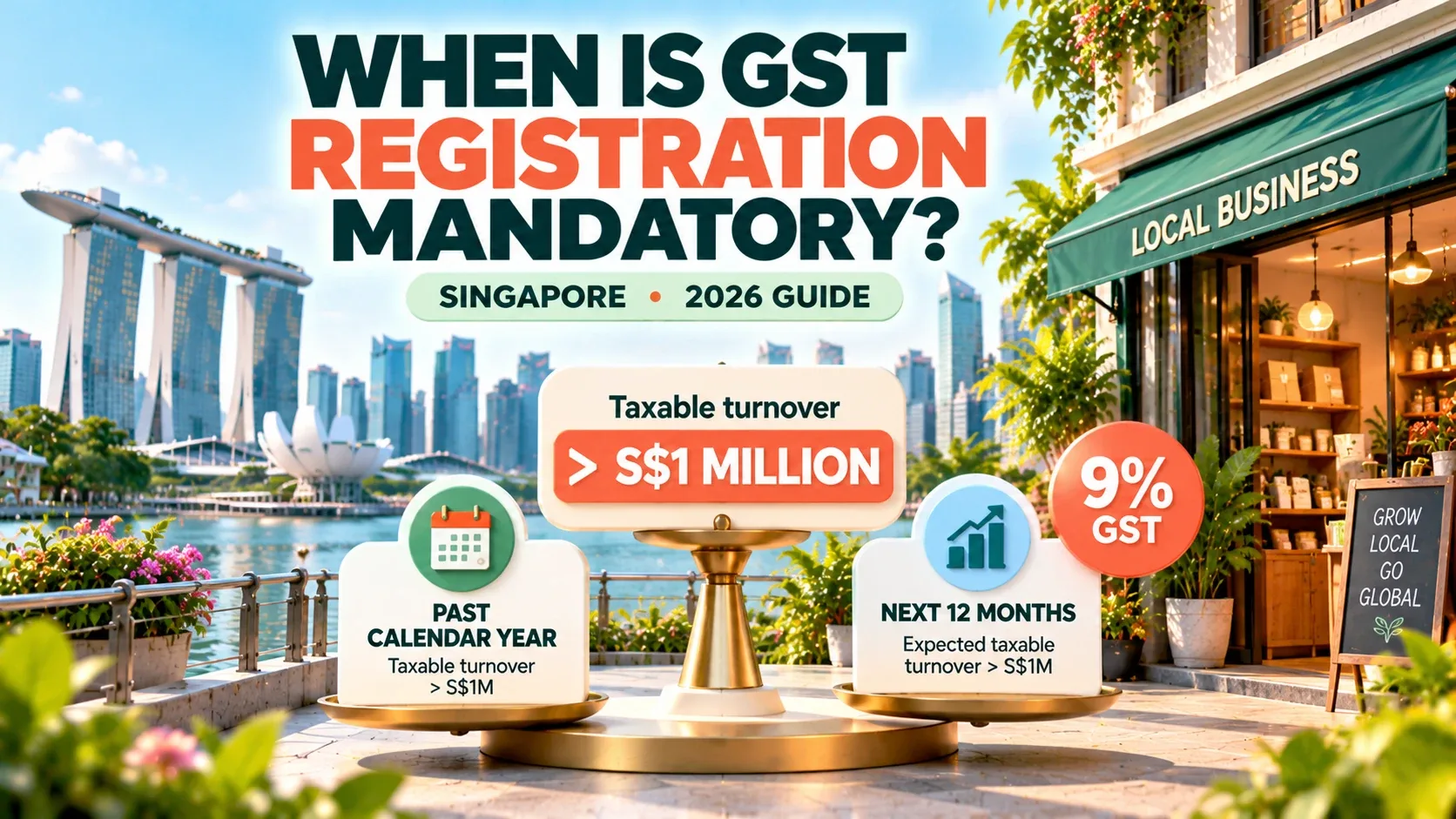
Singapore mein general compulsory GST registration threshold S$1 million taxable turnover hai.
Taxable turnover mein normally standard-rated aur zero-rated sales include hoti hain. Exempt supplies generally exclude ki jaati hain.
Lekin S$1 million se neeche turnover hone ke bawajood prospective test ke through registration mandatory ho sakta hai.
Retrospective GST Registration Rule Kya Hai?
Retrospective test mein IRAS previous calendar year ka taxable turnover check karta hai.
Agar 1 January se 31 December ke beech taxable turnover S$1 million se zyada hai, toh generally GST registration apply karna zaroori hai.
Example:
Ek Singapore trading company ka January–December 2026 taxable turnover S$1.25 million hai.
Registration application: 1–30 January 2027
Normal effective registration date: 1 March 2027
Isliye business ko January 2027 mein hi application submit karna chahiye.
Prospective GST Registration Rule Kya Hai?
Prospective test tab apply hota hai jab business reasonably expect karta hai ki agle 12 months mein taxable turnover S$1 million exceed karega.
Is expectation ke liye objective evidence chahiye, jaise signed contracts, confirmed purchase orders ya accepted quotations.
Business ko forecast date ke 30 days ke andar application submit karni hoti hai.
1 July 2025 se applicable prospective cases mein effective registration date generally forecast date ke two months baad hoti hai.
Sirf sales target ya uncertain business plan compulsory registration trigger nahi karta.
GST Registration Ke Liye Turnover Kaise Calculate Karein?
Business owners ko taxable sales aur exempt income ko separately identify karna chahiye.
Is example mein taxable turnover S$1.1 million hai, kyunki exempt supplies threshold calculation mein generally include nahi hoti.
Special aggregation rules related businesses aur certain transactions par apply ho sakte hain.
GST Registration Online Kaise Karein?
Singapore mein registration generally IRAS myTax Portal ke through hota hai.
Business ki taxable turnover eligibility check karein.
Sales statements aur supporting contracts prepare karein.
IRAS myTax Portal open karein.
Authorised Singpass/Corppass access se login karein.
GST → Register for GST select karein.
Compulsory ya voluntary registration category choose karein.
Application aur supporting documents submit karein.
IRAS approval aur effective registration date check karein.
Registration effective hone se pehle GST charge nahi karna chahiye.
S$1 Million Se Kam Turnover Par GST Register Kar Sakte Hain?
Haan. Eligible businessesvoluntary GST registration choose kar sakte hain.
Iska potential benefit is eligible purchases par input GST recovery hai.
Lekin voluntary registration ke baad generally minimum two-year commitment, GST filing, GIRO aur other compliance conditions apply hoti hain.
Agar customers mainly individuals hain, toh 9% GST final selling price ya business margin affect kar sakta hai.
Isliye voluntary registration financial benefit evaluate karne ke baad hi choose karein.
GST Registration Ke Baad Kya Responsibilities Hoti Hain?
GST registration effective hone ke baad business ko:
Standard-rated supplies par 9% GST charge karna.
Required tax invoices issue karna.
GST F5 returns file karna.
Eligible input tax claims maintain karna.
Generally five years tak relevant records retain karna.
Applicable GST InvoiceNow rules follow karna.
New voluntary GST applicants ke liye 1 April 2026 se InvoiceNow generally mandatory hai, subject to exclusions.
New compulsory GST applicants ka InvoiceNow phase 1 April 2028 se begin hota hai.
Vinimay GST Registration Ki Preparation Mein Kaise Help Kar Sakta Hai?
GST registration threshold monitor karne ke liye accurate sales aur purchase records important hain.
Vinimay ke general accounting tools invoice creation, sales records, purchases, customer balances aur financial reporting organise karne mein help kar sakte hain.
Isse accountant ko turnover review karne aur supporting business information arrange karne mein convenience mil sakti hai.
Important: Vinimay ki Singapore-specific GST calculation, IRAS integration aur InvoiceNow compliance capabilities are independently verified nahi hain.
Businesses ko statutory GST filing ke liye required functionality separately confirm karni chahiye.
Frequently Asked Questions
Related Topics
Published by prachi kahar
Our editorial and compliance specialists create practical guides, tax calculation rules, and operational strategies to empower Indian small business owners and accountants.