Invoicing & Billings
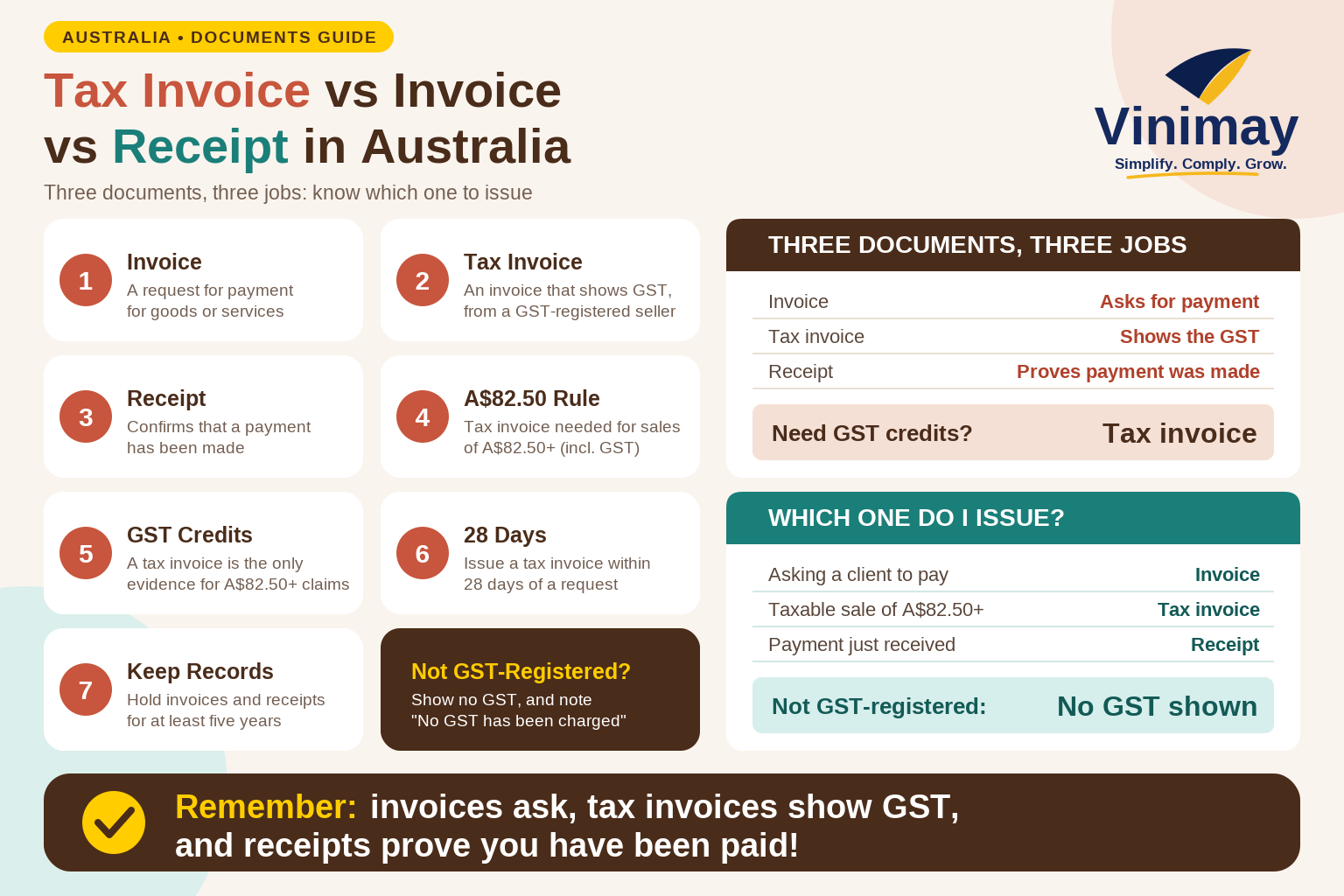
Read post Tax Invoice vs Invoice vs Receipt in Australia
Australian tax invoice requirements, difference between invoice and receipt, GST invoice Australia, business receipt, tax invoice format
Australian tax invoice requirements, difference between invoice and receipt, GST invoice Australia, business receipt, tax invoice format
Create professional GST-compliant invoices in under 30 seconds, send WhatsApp payment links, and track inventory effortlessly.
Compare the best inventory management software for Irish online shops. Explore stock tracking, order management, warehouse features and ecommerce integrations.
Best Inventory Management Software for Irish Online Shops
Running an online shop in Ireland involves more than listing products and processing customer orders. Business owners also need to monitor stock levels, manage suppliers, record purchases, and make sure products are available when customers place orders.
When sales come through multiple channels, such as an online store, marketplace, and physical shop, managing stock manually becomes difficult. A product may appear available on one platform even though it has already sold through another channel.
Inventory management software helps businesses maintain more accurate stock records, manage orders, and plan replenishment. Some platforms also connect with e-commerce stores, accounting systems, and shipping providers.
This guide compares inventory management software options for Irish online shops and explains which features are worth considering before choosing a system.
The best software depends on the size of your shop and the number of sales channels you use.
Wine: Worth considering for small businesses that need basic inventory management alongside invoicing and customer records.
Zoho Inventory: Suitable for businesses needing product, warehouse, order, and multichannel inventory management.
Cin7 Core: Designed for growing retailers, wholesalers, and e-commerce businesses with more complex stock operations.
Linnworks: Suitable for larger multichannel sellers that need centralized stock and order management.
Shopify inventory tools: A practical starting point for shops operating primarily through a Shopify store.
Vinimay is a business management platform that combines invoicing with customer, vendor, payment and basic inventory management.
For a small online shop, keeping product records and billing information organised can be just as important as managing sales. Vinimay brings several of these everyday activities together in one platform.
Basic inventory management.
Customer and vendor records.
Invoice creation and PDF downloads.
Payment and outstanding balance tracking.
Business reports.
Web, mobile and desktop access.
A small shop may not need a complex warehouse management system. If the main requirement is to organise product records, billing and customer payments, a simpler business platform may be sufficient.
Vinimay is worth considering for businesses that want these basic functions together without adding a monthly software subscription.
Best for: Small businesses and online sellers with straightforward inventory and invoicing requirements.
Pricing: Free, according to its published pricing page.
Website: Visit Vinimay
Note: If you sell through Shopify, Amazon or multiple marketplaces, check whether the inventory system supports the specific integrations and automatic stock synchronisation you require. Do not assume that basic inventory tracking includes multichannel syncing.
Zoho Inventory provides inventory and order management features for businesses that sell products through different channels.
It includes tools for monitoring stock, handling purchase orders and managing warehouse operations.
Product and item management.
Purchase orders and vendor records.
Multi-warehouse management.
Barcode generation and scanning.
Batch and serial number tracking.
Sales order management.
Multichannel selling features.
Inventory reports.
Businesses can also explore its supported integrations and currency features.
Best for: Online retailers that need more detailed stock and order management.
Cin7 Core—Best for Growing Ecommerce Businesses
Cin7 Core is designed for product-based businesses that need to connect inventory, sales orders, purchasing and fulfilment.
It supports integrations with platforms such as Shopify, Amazon and WooCommerce, helping businesses manage product operations across different channels.
Centralised inventory management.
Purchase order management.
Sales order processing.
Multi-warehouse inventory.
Ecommerce integrations.
Cost of goods sold tracking.
Multi-currency support.
Reporting and analytics.
Cin7 can be useful when a business has a larger product catalogue or sells through multiple sales channels.
Best for: Growing ecommerce retailers, wholesalers, and businesses with more complex inventory requirements.
Linnworks—Best for Multichannel Online Sellers
Linnworks focuses on inventory, order and fulfilment management across multiple ecommerce channels.
It is particularly relevant for retailers selling through marketplaces and online stores who need stock levels to remain consistent.
Centralized product catalogue.
Multichannel stock synchronization.
Replenishment and reorder support.
Warehouse and third-party logistics management.
Shipping integrations.
Inventory reporting.
By connecting sales channels to a central inventory record, Linnworks helps businesses reduce manual stock updates and the risk of overselling.
Best for: Established online retailers selling through several marketplaces and stores.
Shopify Inventory Management – Best for Shopify-Based Shops
Shopify includes inventory tools within its ecommerce platform. These tools can help merchants manage product quantities and monitor stock associated with their online store.
For businesses that mainly sell through Shopify, using its built-in inventory functionality may be a practical starting point before investing in a separate inventory platform.
Product and variant management.
Stock quantity tracking.
Inventory adjustments.
Stock monitoring across supported locations.
Product availability management.
Connections to additional inventory applications.
Businesses with more complex warehouse operations or several external marketplaces may need additional apps or a dedicated inventory management system.
Best for: Small and growing businesses that primarily operate through a Shopify store.
Inventory Management Software Comparison
The comparison focuses on the main use cases rather than claiming that every feature is included in every subscription. Check current plan limits, integrations, and pricing before selecting a platform.
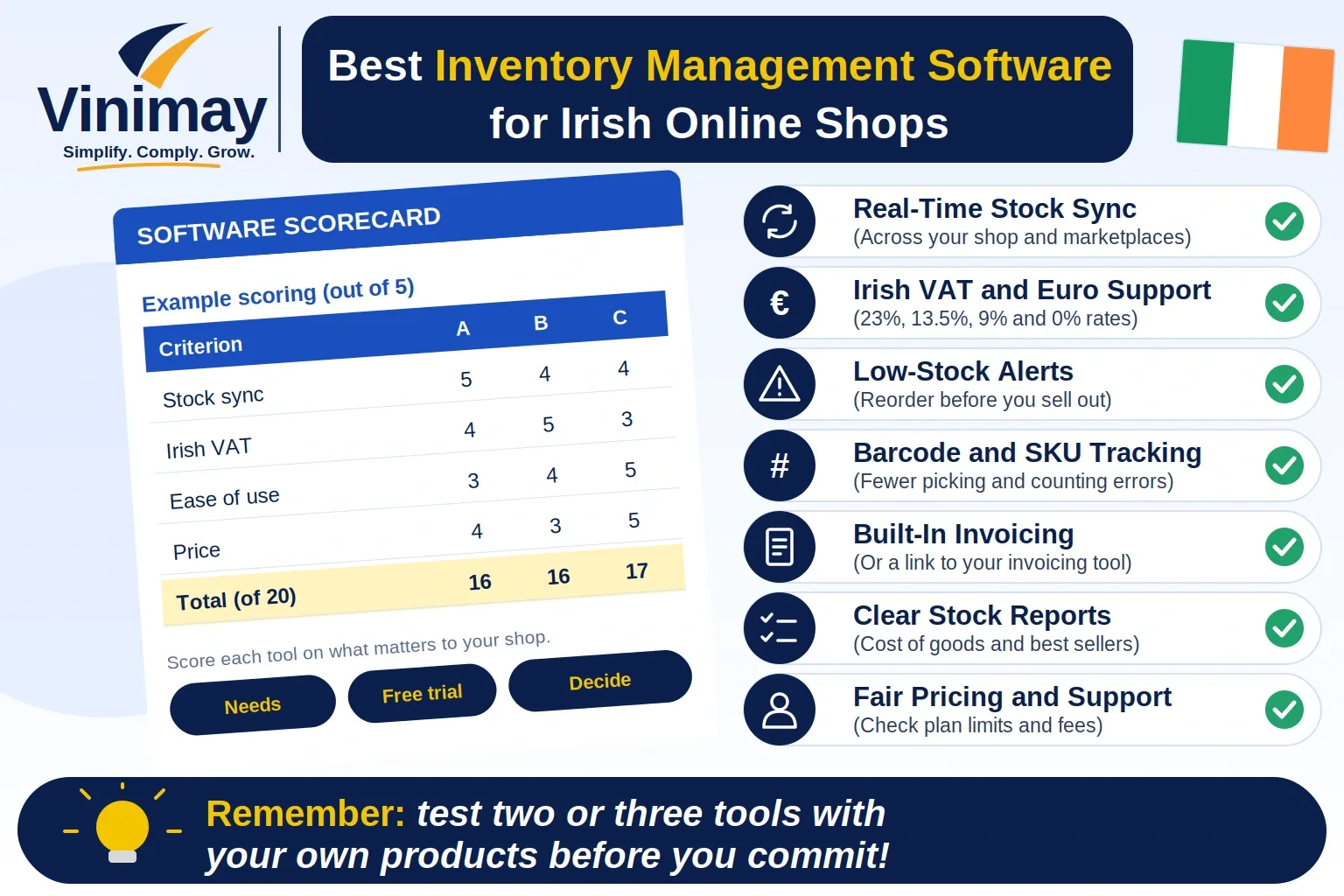
Choose software that updates product quantities accurately when orders are placed, fulfilled, returned or cancelled.
If you sell through more than one channel, check whether stock updates automatically across all connected stores.
Low-stock alerts can help you identify products that need replenishment before they sell out.
Some systems also provide reorder points and purchase order tools to help businesses plan supplier purchases.
If your shop sells products in different colours, sizes or models, the software should support product variants and unique stock-keeping units (SKUs).
This helps prevent stock records from becoming mixed up.
Businesses storing products in different locations need to know how much stock is available at each warehouse.
A suitable system should make it easier to record transfers, dispatch products and monitor stock by location.
Check whether the software connects with the platforms where you sell, such as Shopify, WooCommerce, Amazon or eBay.
The integration should ideally synchronise product quantities and orders without requiring repeated manual updates.
Inventory software should help maintain accurate product and transaction records. However, stock management and VAT accounting are not the same thing.
Check whether the platform supports the VAT settings relevant to your products and integrates with your accounting system where needed.
How to Choose the Right Inventory Software for Your Online Shop
Start by identifying the main inventory problem you want to solve.
If you sell a limited number of products through one online store, basic stock tracking may be enough. If you operate several marketplaces, manage multiple warehouses, or process a high volume of orders, a dedicated inventory platform may be more suitable.
Before choosing, compare:
Number of products and SKUs supported.
Monthly order limits.
Ecommerce integrations.
Warehouse and location management.
Barcode and batch tracking.
Purchase order features.
Accounting integrations.
Subscription costs and additional charges.
It is also useful to test the software with a small product catalogue before transferring all your stock records..
Inventory management software can help Irish online shops maintain accurate stock records, process orders efficiently, and reduce manual administration.
Vinimayis worth considering for small businesses that want basic inventory management alongside invoicing, customer records and payment tracking. Zoho Inventory offers more detailed product and warehouse management, while Cin7 Core and Linnworks are designed for businesses with more complex ecommerce and multichannel operations. Shopify's built-in tools can be a practical starting point for shops using that platform.
Before selecting a system, consider your product range, sales channels, warehouse requirements and budget. The right platform should make stock management easier today while supporting your business as it grows.
Want to organise invoices, customer records, payments and basic inventory in one place? Explore Vinimay and its free business management features.
Our editorial and compliance specialists create practical guides, tax calculation rules, and operational strategies to empower Indian small business owners and accountants.
Managing a small business in Ireland involves handling multiple responsibilities, from preparing customer invoices to tracking expenses,
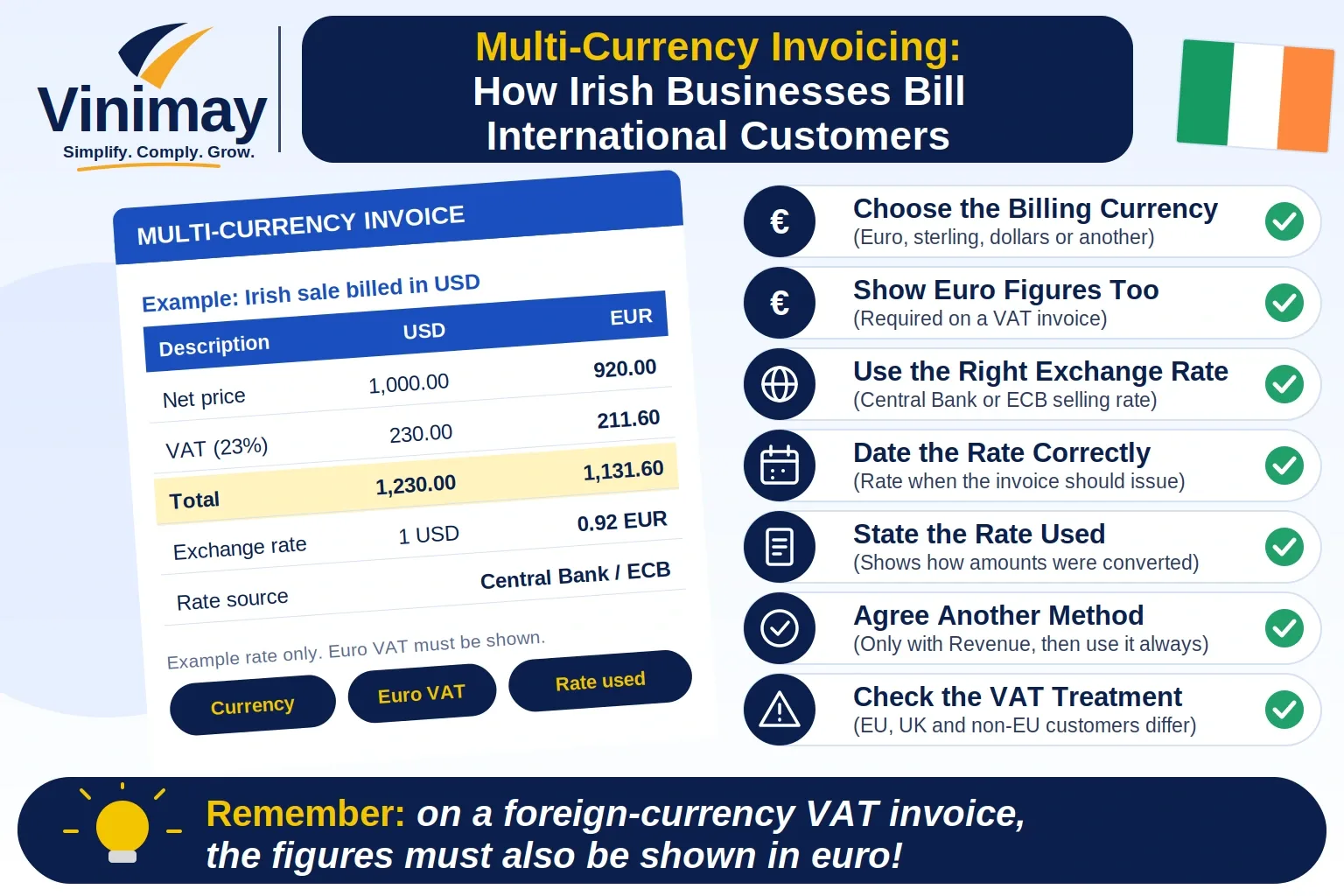
Learn how Irish businesses can invoice international customers in different currencies, handle exchange rates and understand Irish VAT requirements.