Invoicing & Billings
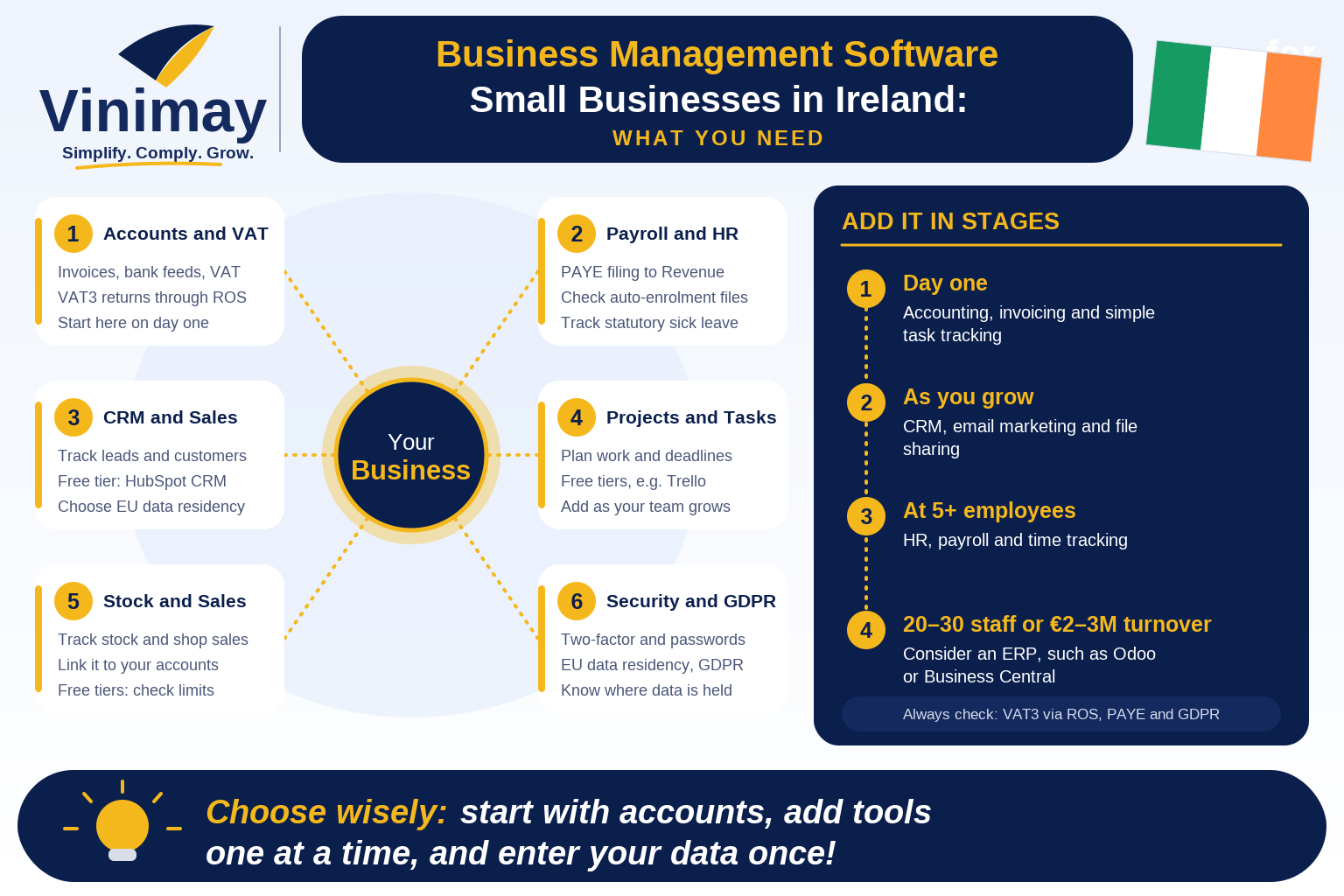
Read post Business Management Software for Irish Small Businesses
Managing a small business in Ireland involves handling multiple responsibilities, from preparing customer invoices to tracking expenses,
Managing a small business in Ireland involves handling multiple responsibilities, from preparing customer invoices to tracking expenses,
Create professional GST-compliant invoices in under 30 seconds, send WhatsApp payment links, and track inventory effortlessly.
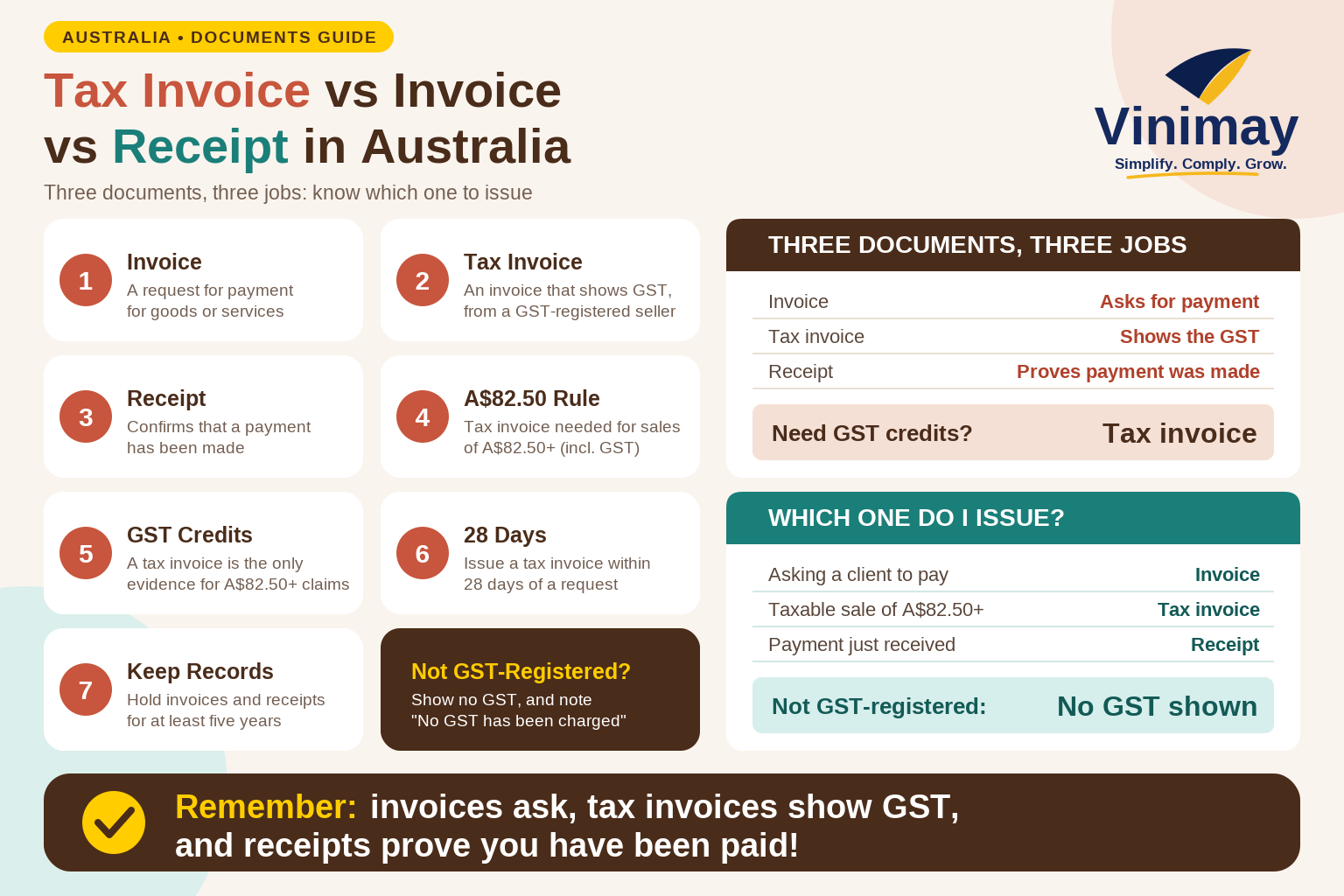
Australian businesses use invoices, tax invoices and receipts to document sales and payments. Although these documents may look similar, they serve different purposes in everyday business transactions.
Using the correct document is particularly important for businessesregistered for Goods and Services Tax (GST). It helps suppliers communicate payment details and allows customers to maintain appropriate financial records.
Understanding the difference can help business owners avoid incorrect GST information and improve their record-keeping process.
An invoice requests payment from a customer, a tax invoice contains the information required for GST purposes and a receipt confirms that payment has been made. A GST-registered business issues tax invoices for relevant taxable supplies, while a business not registered for GST should issue ordinary invoices and must not charge GST.
An invoice is a document sent by a business to request payment for products or services supplied to a customer.
It usually contains the supplier's details, customer information, invoice number, date, description of the supply, amount payable, and payment terms.
Businesses can issue ordinary invoices whether or not they are registered for GST, provided they use the correct document description and follow applicable requirements.
A tax invoice is a document that contains the information required under Australian GST law for a taxable supply.
A GST-registered supplier issues a tax invoice when required. It helps the customer establish whether they can claim a GST credit, provided the purchase and other eligibility conditions are satisfied.
A tax invoice generally includes the supplier's identity and ABN, date, description of the goods or services, price and GST information.
A receipt confirms that a customer has paid for goods or services. It acts as evidence of a payment transaction.
For example, when a customer pays an invoice through a bank transfer, card or cash, the business may issue a receipt to confirm the amount received.
A receipt should clearly identify the transaction and payment details. It does not automatically replace a tax invoice where one is required.
The following table highlights the main differences between the three documents.
| Feature | Invoice | Tax invoice | Receipt |
|---|---|---|---|
| Main purpose | Requests payment | Documents a supply for GST purposes | Confirms payment |
| When issued | When payment is requested | For relevant taxable supplies by GST-registered suppliers | After payment |
| GST information | Depends on supplier status | Includes required GST details | May show GST details |
| Payment status | Payment may be pending | Payment may be pending or completed | Confirms payment received |
| GST credit support | Not automatically sufficient | Can support a GST credit claim if valid | Does not automatically replace a required tax invoice |
Yes. A businessthat is not registered for GST can issue an ordinary invoice for its products or services.
However, it should not charge GST or describe the document as a tax invoice. This distinction is important because customers should not assume that GST has been charged when the supplier is not registered.
Businesses should also monitor their GST turnover and register when required under Australian rules.
A tax invoice must contain sufficient information to identify the supplier, the transaction and the GST treatment.
Common requirements include:
The words "Tax Invoice".
Supplier's identity and ABN.
Date of issue.
Description of goods or services.
Price of the supply.
GST amount or required GST statement.
Recipient's identity or ABN where the total price is at least $1,000.
The exact requirements can depend on the transaction and the nature of the supply.
Businesses should maintain an organised record of invoices issued, payments received and expenses paid.
A simple record-management process can help businesses:
Find customer invoices quickly.
Identify unpaid amounts.
Match receipts with transactions.
Review sales and expenses.
Prepare information for bookkeeping and tax reporting.
Vinimay can be considered for organising invoices and business transaction records, depending on the features available in your version. Confirm its GST, receipt and reporting capabilities before relying on it for Australian compliance.
Invoices, tax invoices, and receipts are important documents for Australian businesses, but each serves a different purpose. An invoice requests payment, a tax invoice records relevant GST information, and a receipt confirms that payment has been received.
Businesses should understand their GST registration status before preparing these documents. Incorrectly charging GST or using the wrong document heading can create confusion for both suppliers and customers.
Using organized invoicing and transaction-management software such as Vinimay can help businesses maintain accessible records. Always check that the software supports the Australian tax information your business needs.
Our editorial and compliance specialists create practical guides, tax calculation rules, and operational strategies to empower Indian small business owners and accountants.
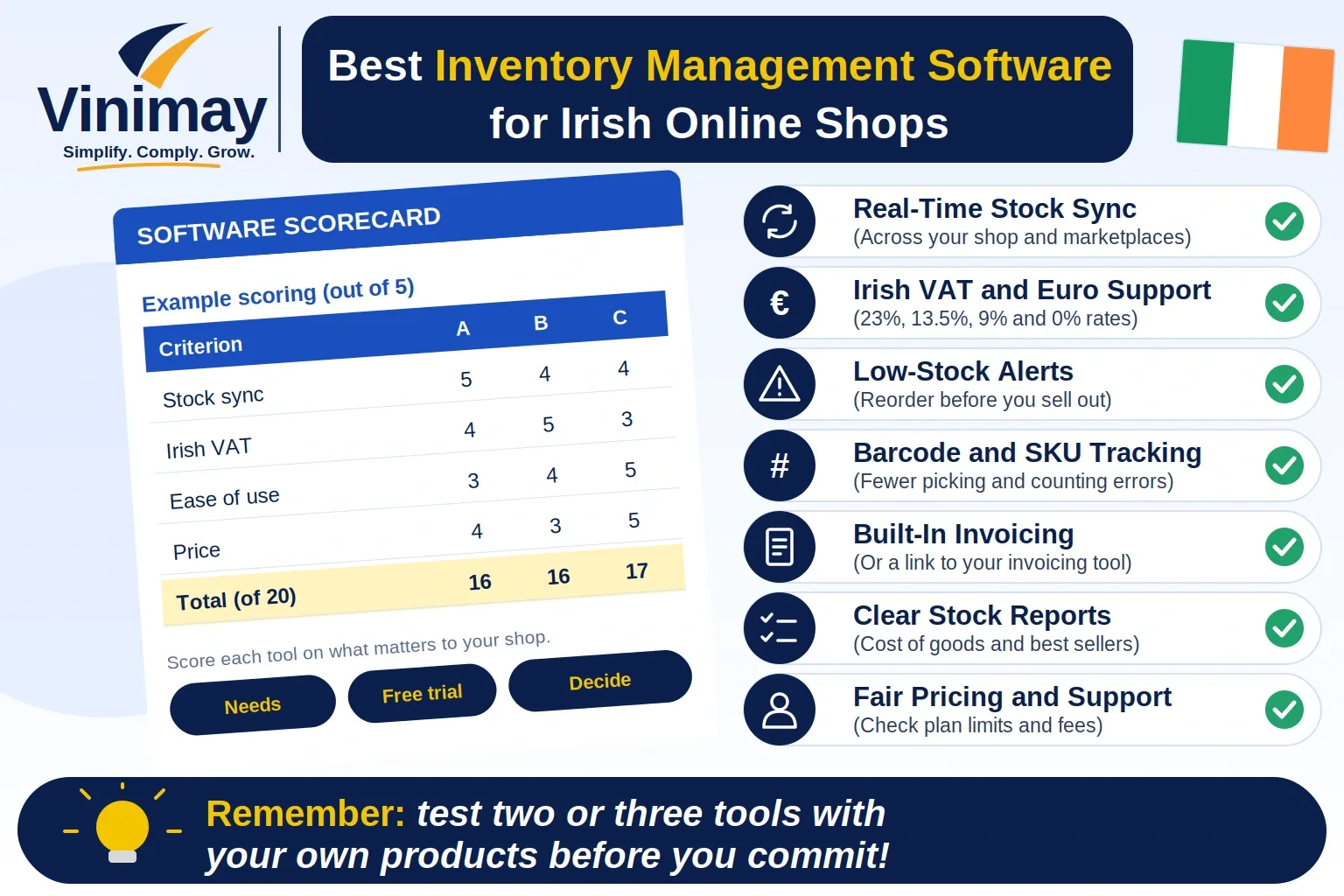
Compare the best inventory management software for Irish online shops. Explore stock tracking, order management, warehouse features and ecommerce integrations.
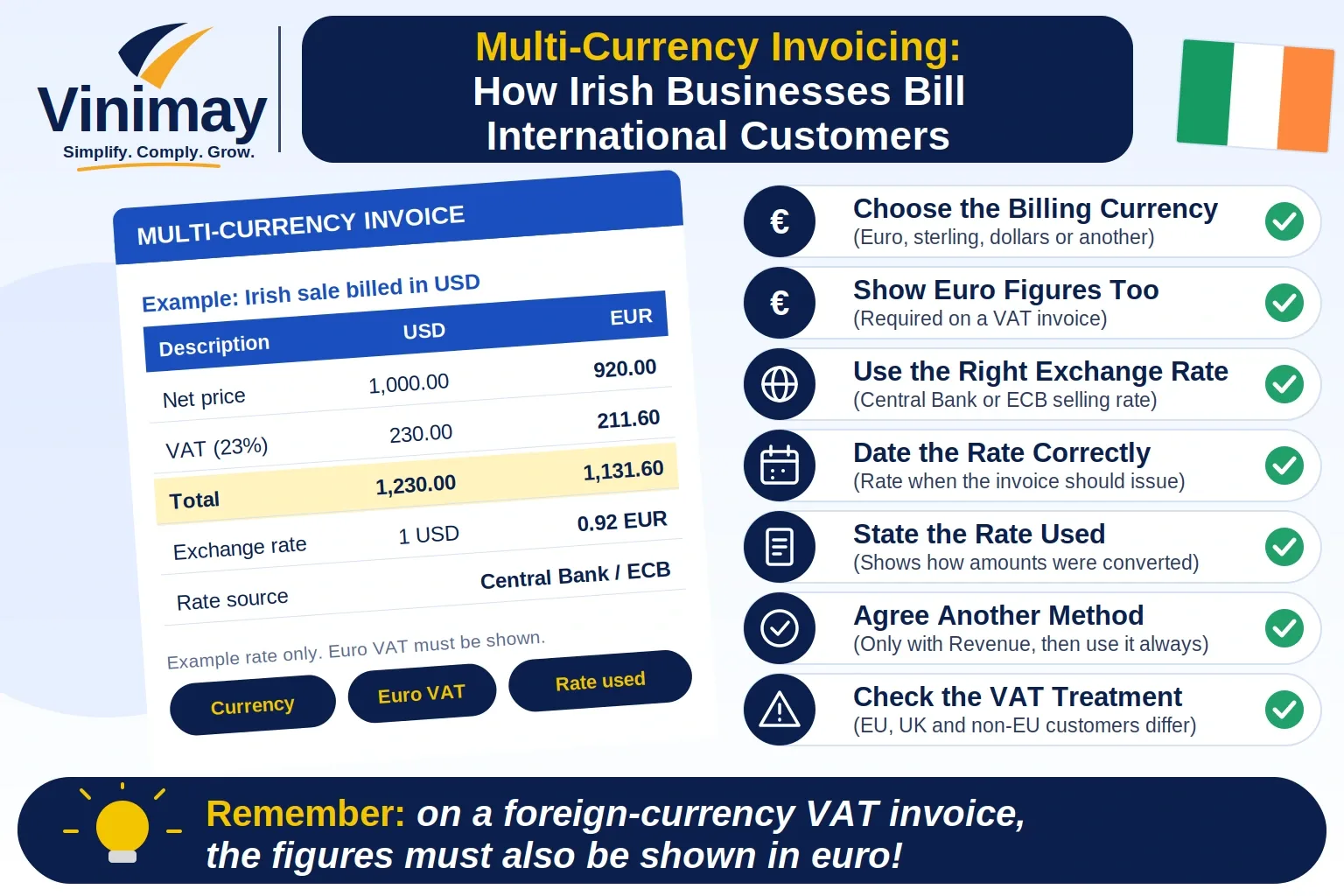
Learn how Irish businesses can invoice international customers in different currencies, handle exchange rates and understand Irish VAT requirements.