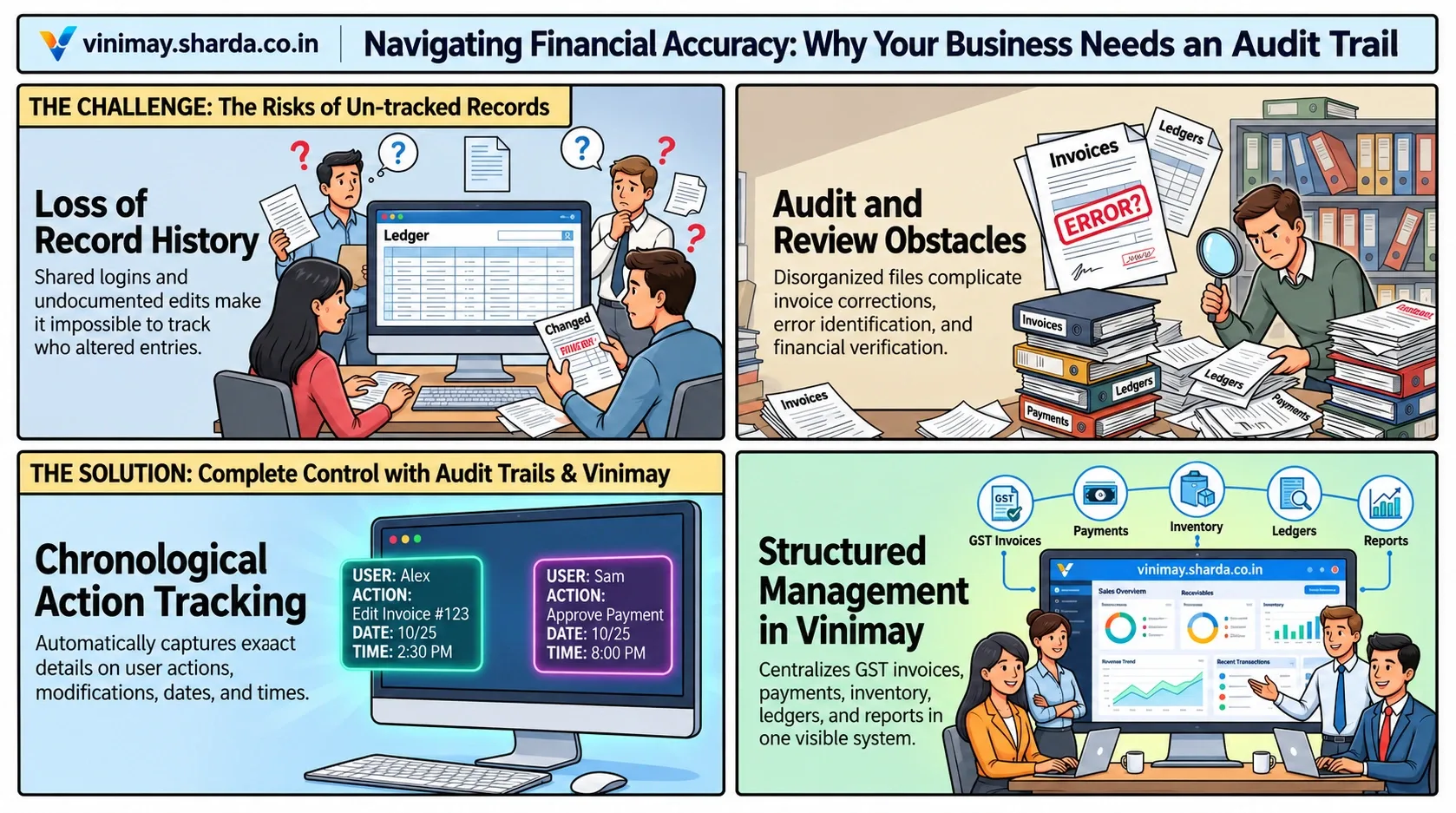
Accounting records often go through multiple changes during daily business operations. An invoice may need correction, a purchase entry may require modification, or a payment record may need updating. When several people handle accounting activities, businesses need a clear way to understand what changes were made and when they happened. This is where an audit trail becomes important. An audit trail is a chronological record of activities or changes made within a system. It helps track details such as who performed an action, what was changed, and when the change occurred.
Vinimay helps businesses manage GST invoices, billing records, sales, purchases, payments, inventory, customer and vendor information, ledgers, and reports in a structured system. Maintaining organised transaction records helps businesses improve visibility over their daily accounting activities and manage financial information more effectively.
What Is an Audit Trail in Accounting?
An audit trail is a record that shows the history of activities performed on financial information. Instead of only showing the final version of a transaction, an audit trail helps understand the sequence of events that led to that final record.
For example, if an invoice amount is changed after creation, an audit trail can help businesses understand:
What information was changed
When the change happened
Which user performed the action
This makes financial records easier to review and improves accountability within the organisation.
Why Is an Audit Trail Important for Businesses?
As businesses grow, more people become involved in accounting activities. Owners, accountants, billing teams, and managers may all interact with financial records.
Without proper transaction history, businesses may face difficulty understanding:
Why a record was modified
Who updated the information
Whether an error occurred
How the final amount was calculated
An audit trail creates better transparency because businesses can review the history behind important financial activities.
How Does Accounting Software Maintain Transaction History?
Accounting software can maintain records of business activities by storing transaction details and changes made within the system. However, the exact type of audit information available depends on the software and its features.
A business should understand what activities are recorded before selecting accounting software.
For example, useful tracking information may include:
Changes made to records
User activity information
Date and time of modifications
The purpose of maintaining such records is to make financial information easier to verify and manage.
Why Is User Activity Tracking Important?
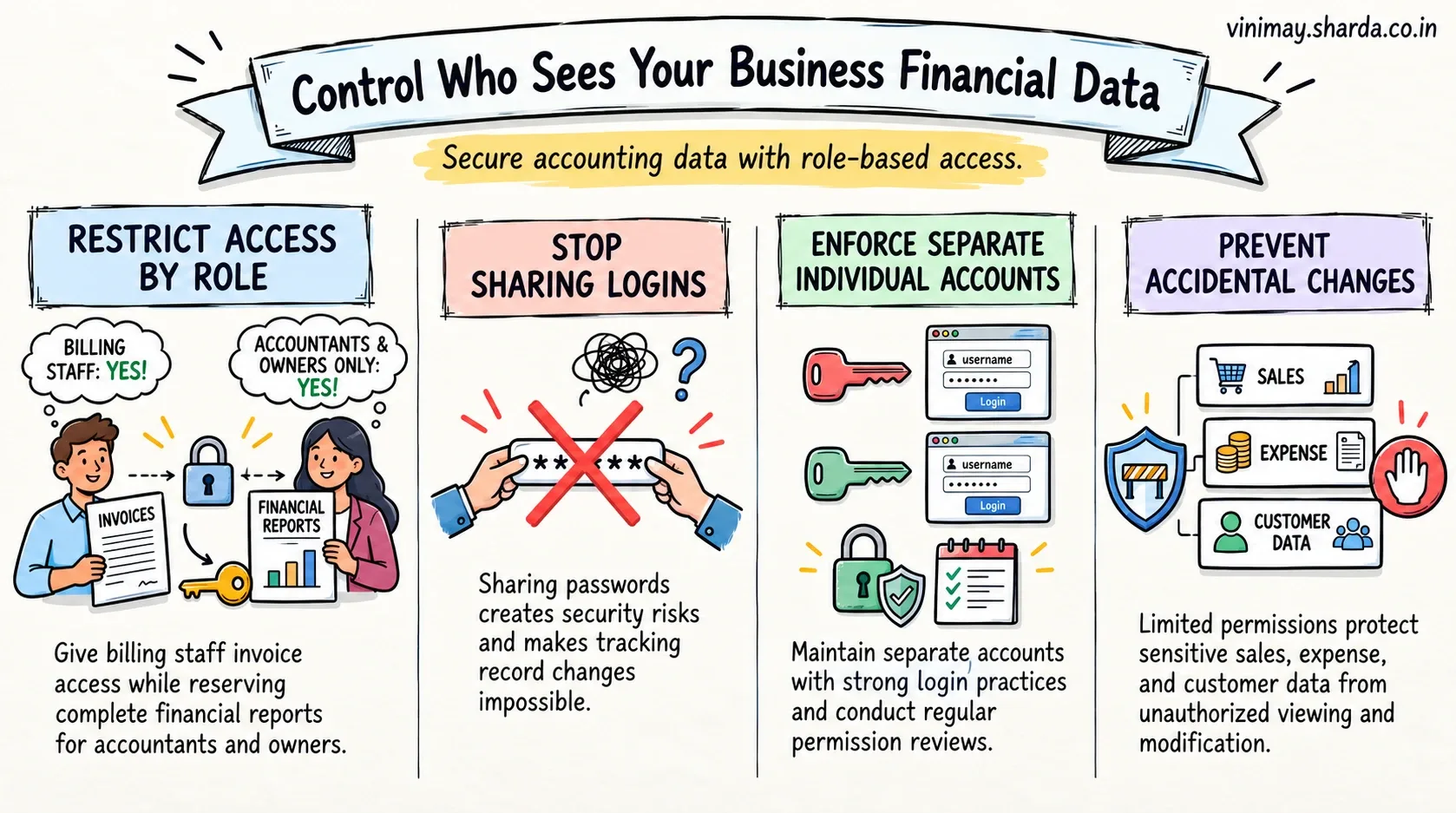
In many businesses, multiple people handle accounting tasks. One employee may create invoices, another may update purchases, and an accountant may review financial information.
When different users work on the same system, knowing who performed a specific action becomes important.
For example, if a sales invoice amount changes unexpectedly, businesses need a way to review the activity instead of manually searching through multiple files.
User activity tracking helps businesses maintain better control over their accounting process.
Can an Audit Trail Help During Audits?
Accounting reviews and audits require businesses to provide reliable financial information. A clear record of transactions and changes can make the review process more organised. An audit trail helps connect financial records with the activities that created or modified them. This provides better visibility into how transactions moved through the accounting system. However, maintaining an audit trail is only one part of proper accounting practices. Businesses also need accurate entries, proper documentation, and regular review of their records.
What Should Businesses Check Before Choosing Accounting Software?
Businesses should not only look at invoice creation or reporting features while selecting accounting software. They should also understand how the system manages financial records.
Important areas to consider include:
The right system should help businesses maintain organised records and improve control over financial information.
Common Mistakes Businesses Make With Accounting Records
Many businesses focus on recording transactions but overlook the importance of maintaining a clear and consistent record history. Common challenges include sharing a single login among multiple users, making changes without proper documentation, maintaining financial records across multiple files, and failing to review transaction changes regularly. A structured accounting process with organised records and proper access controls helps businesses maintain greater transparency, accountability, and accuracy.
Managing Accounting Records Better With Vinimay
Businesses often manage invoices, payments, purchases, inventory, and customer information across different sources. As transactions increase, maintaining complete visibility becomes more challenging.
Vinimay helps businesses manage GST invoices, billing records, sales records, purchase records, customer management, vendor management, inventory, stock tracking, payment tracking, receipt tracking, ledger management, and reports. By maintaining business information in a structured system, businesses can better organise their daily accounting activities and access important transaction information when required. The practical benefit is improved record management and better visibility into business operations.
Conclusion
An audit trail helpsbusinesses maintain transparency by recording the history of financial activities and changes made within an accounting system. As businesses grow and more users handle transactions, having clear records becomes important for accountability and better financial management.
Accounting software should not only help create invoices and record transactions but also support organised record keeping so businesses can understand their financial activities more effectively.
Frequently Asked Questions
1. What is an audit trail in accounting software?
An audit trail is a record of activities and changes made within an accounting system that helps track transaction history.
2. Can accounting software track changes made to invoices?
This depends on the software features. Some systems maintain records of changes made to transactions and user activities.
3. Why is an audit trail important for businesses?
An audit trail improves transparency by helping businesses understand who made changes, what was changed, and when it happened.
4. Does every accounting software have an audit trail?
No, audit trail capabilities vary between software systems. Businesses should check available features before selecting software.
5. Can audit trails help identify accounting mistakes?
Yes, transaction history can help businesses review changes and understand where mistakes may have occurred.
6. Why should businesses avoid shared accounting logins?
Shared logins make it difficult to identify which user performed a particular action.
7. Is an audit trail useful for small businesses?
Yes, as businesses grow and more people handle financial records, maintaining transaction history becomes increasingly useful.
8. Does an audit trail replace proper accounting practices?
No, an audit trail supports accounting control but does not replace accurate entries and proper record management.
Related Topics
Published by Team Vinimay
Our editorial and compliance specialists create practical guides, tax calculation rules, and operational strategies to empower Indian small business owners and accountants.