How to Track Business Expenses Accurately
Business expenses rarely go untracked because of one big missed cost—they go untracked because of dozens of small ones: a courier charge paid in cash, a supplies purchase that never made it into any record, a recurring cost that's just assumed to be accounted for somewhere. Individually, none of these feel significant enough to note down carefully, which is exactly why they add up to a genuinely inaccurate expense picture over time.
Accurate expense tracking isn't about tracking every rupee obsessively—it's about having a consistent, reliable system where a cost is recorded close to when it happens, categorized sensibly, and easy to review later without reconstructing it from memory or scattered receipts. Without this, tax filing becomes a stressful scramble, and understanding whether the business is actually profitable becomes a rough guess rather than an informed answer.
This guide covers what accurate expense tracking genuinely requires, why small missed expenses distort the bigger picture more than expected, and the practical habits that keep records reliable.
What Does Accurate Expense Tracking Actually Involve?
Direct answer: Accurate expense tracking means recording every business cost close to when it happens, categorizing it consistently, and keeping it connected to the business's other financial records—rather than reconstructing expenses later from memory, receipts, or bank statements.
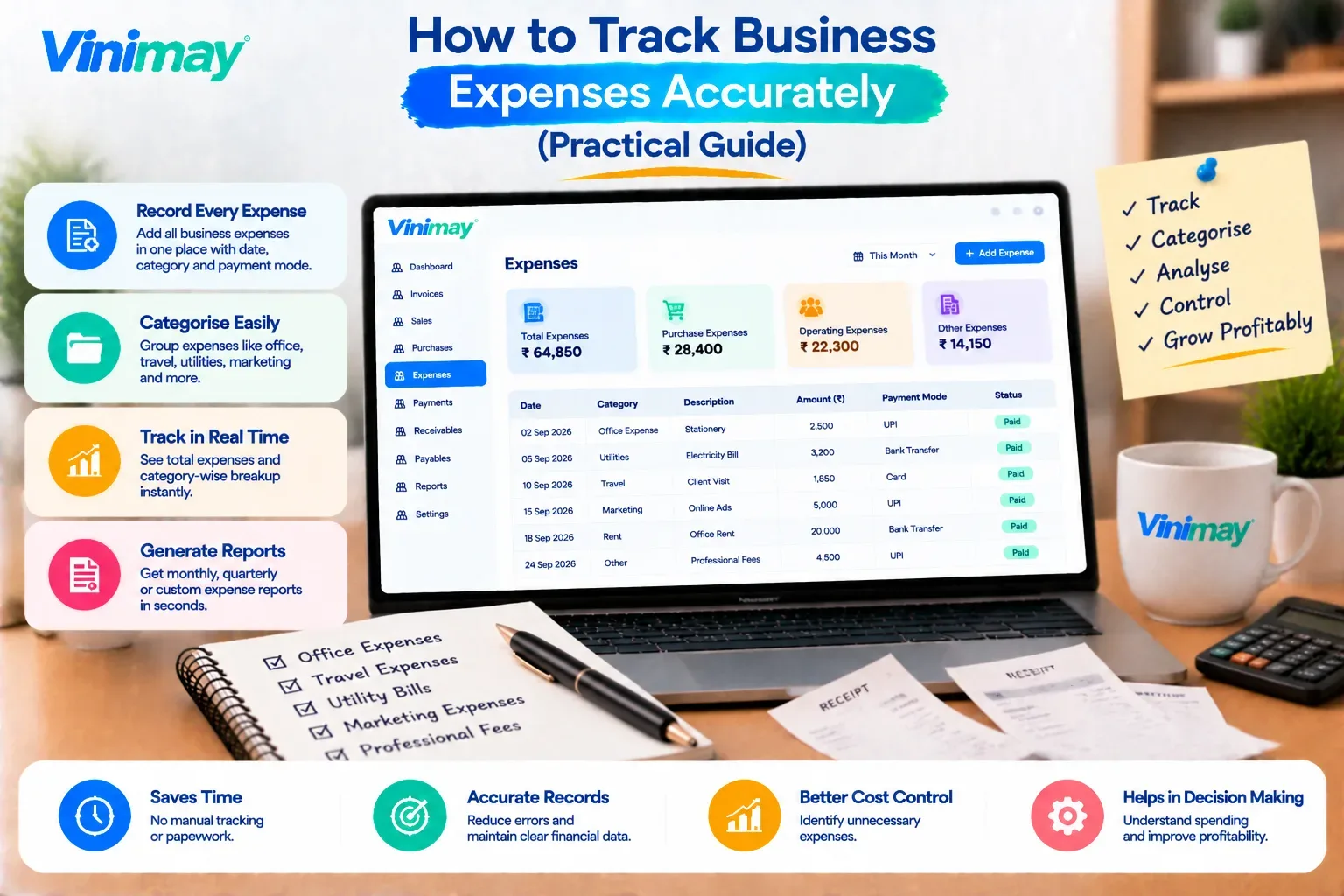
Every expense should be logged with a date, amount, and category
Recording should happen promptly, not batched weeks later
Expenses should be reviewable alongside income for an accurate profitability picture
Why Small, Forgotten Expenses Distort the Bigger Picture
It's tempting to assume that only large expenses matter for an accurate financial picture, but the opposite is often true—small, recurring costs are the ones most likely to be forgotten, precisely because they don't feel worth the effort of recording individually. A handful of missed small expenses each month doesn't sound significant, but over a year, this can meaningfully understate actual business costs, which in turn overstates profitability and can lead to poor decisions based on a rosier picture than reality. It also creates a specific tax-time problem: legitimate, deductible expenses that were never recorded simply can't be claimed, which means the business ends up paying more tax than necessary, not because of a rule it didn't know, but because of a cost it forgot to log in the first place.
What an Accurate Expense-Tracking System Needs
Practical Habits That Keep Expense Records Reliable
Record an expense the same day it happens, rather than relying on a receipt sitting in a drawer until "later"
Use consistent categories every time—inconsistent labelling makes expense reports far less useful
Separate business and personal expenses clearly—mixing the two makes accurate profitability tracking difficult
Review expense records monthly, not just before tax filing — a monthly check catches a missing entry while it's still easy to trace
Keep even small cash expenses logged — these are the ones most likely to be forgotten and most likely to add up
Reconcile recorded expenses against actual bank or cash outflows periodically to confirm nothing was missed or duplicated
How Vinimay Organizes Your Expenses
Maintains expense records as part of a business's connected financial picture, alongside sales and purchase records
Keeps expenses categorised consistently, supporting accurate, reviewable reports over time
Connects expense records to overall business reports, giving a more accurate view of profitability than income figures alone
Supports vendor management for recurring supplier-related expenses, keeping those records organised by party
Provides ledger management, so expense entries stay part of a dependable, ongoing financial record rather than an isolated list
Conclusion
Accurate expense tracking depends on recording costs promptly and consistently, not on tracking every detail obsessively
Small, recurring expenses are the ones most often forgotten, and they distort profitability more than expected over time
An accurate system connects expenses to income and uses consistent categorisation, turning entries into something genuinely useful
Vinimay keeps expense records organized and connected, supporting a more accurate financial picture
FAQs
How can I track business expenses accurately?
By recording every cost close to when it happens, using consistent categories, and keeping expenses connected to your income records for an accurate financial picture.
Why do small business expenses often go untracked?
They feel insignificant individually, so they're skipped in the moment—but they accumulate into a meaningfully understated expense picture over time.
Does missing small expenses affect my tax filing?
Yes, legitimate deductible expenses that were never recorded can't be claimed, which can mean paying more tax than necessary.
Should personal and business expenses be tracked separately?
Yes, mixing the two makes it difficult to get an accurate view of business profitability and complicates tax filing.
How often should I review my expense records?
A monthly review is a practical habit, catching missing or miscategorized entries while they're still easy to trace back.
What's the best way to track small cash expenses?
Logging them the same day they occur, even briefly, is more reliable than trying to reconstruct them later from memory.
Can expense tracking help me understand if my business is actually profitable?
Yes, accurate expense records connected to income figures give a much clearer, more reliable profitability picture than income alone.
Should expenses be categorised consistently every time?
Yes, inconsistent categorisation makes expense reports far less useful for spotting patterns or reviewing costs by type.
Is it necessary to track expenses if I already have a bookkeeper or CA?
Yes, accurate day-to-day tracking gives your bookkeeper or CA reliable data to work with, rather than reconstructing costs from scattered receipts later.
What happens if business expenses are only tracked at tax time?
Reconstructing months of expenses from memory or scattered receipts is time-consuming and increases the risk of missed or inaccurate entries
Related Topics
Published by Team Vinimay
Our editorial and compliance specialists create practical guides, tax calculation rules, and operational strategies to empower Indian small business owners and accountants.