
accounting software
Read post UAE Restaurant & Café Daily Sales and Purchase Records
Learn how UAE restaurants and cafés can track daily sales, record supplier purchases, reconcile payments, manage food inventory and maintain accurate VAT.
Learn how UAE restaurants and cafés can track daily sales, record supplier purchases, reconcile payments, manage food inventory and maintain accurate VAT.
Create professional GST-compliant invoices in under 30 seconds, send WhatsApp payment links, and track inventory effortlessly.
Can free accounting software generate GST invoices in India? See the mandatory Rule 46 fields, a worked CGST/SGST example and a free-plan checklist.
Businesses registered under GST must include specific mandatory details in every sales invoice. Preparing invoices manually through notebooks or basic spreadsheets can increase the chances of missing important fields, incorrect calculations, or inconsistent formats. GST invoices, billing software helps businesses create structured invoices with required details while reducing manual effort.
Vinimay helps businesses manage GST invoices, billing, and transaction records together in one system. This guide explains the key requirements of a GST-compliant invoice, whether free accounting software can support GST billing needs, and the important factors businesses should evaluate before choosing a free plan for their invoicing process.
Business owners raise this question for a few common reasons:
They've used a free tool and aren't sure if the invoice format is actually compliant
They're comparing free options and want to know if GST fields are a "basic" or a "paid" feature
They've received a notice or query about invoice formatting and want to avoid repeating the mistake
They're setting up billing for the first time and don't know what GST compliance actually requires
Understanding the requirement itself is the first step, before evaluating any software against it.

| Required Field | Why It Matters |
|---|---|
| GSTIN of supplier | Identifies the registered business issuing the invoice. |
| Name and address of supplier | Shows who issued the invoice and where they are registered. |
| GSTIN of buyer (if registered) | Required for the buyer to claim input tax credit. |
| Name and address of buyer | Identifies the customer; needed in full for unregistered buyers when the invoice value is ₹50,000 or more. |
| Invoice number and date | A consecutive serial number (maximum 16 characters) that makes the billing record traceable. |
| HSN/SAC code | Classifies goods (HSN) or services (SAC) for tax purposes. The number of digits depends on turnover. |
| Description, quantity and unit | Shows what was sold and how much. |
| Taxable value and GST rate | Shows the tax calculation clearly. |
| CGST/SGST or IGST breakup | Separates tax components as required. |
| Place of supply | Decides whether CGST/SGST or IGST applies. |
| Reverse charge indication | States whether tax is payable on reverse charge. |
| Signature | Signature or digital signature of the supplier or authorised person. |
An invoice missing any of these fields is not fully GST-compliant, regardless of how professional it looks.
Many free accounting and billing tools do include basic GST invoice fields, since this is often considered a baseline feature rather than an advanced one. However, the depth of support varies:
Some free plans generate GST-compliant invoices without restriction on the fields shown
Others include GST fields only on certain invoice templates
Some restrict GST invoicing to a limited number of invoices per month, after which upgrading is required
Problem: A business assumes any free tool automatically produces compliant invoices.
Reason: GST field support is not standardised across every free plan — some cover only the basics.
Solution: Generate a sample invoice and check it against the required field list before relying on it for actual billing.
Prevention: Confirm GST field support directly with the provider or in their documentation before onboarding your business.
Even when basic GST invoice generation works, free plans commonly lack:
Advanced GST-related reports or summaries
Support for multiple tax rates within a single invoice at scale
Bulk invoice generation
Integration between GST invoices and inventory or ledger records
This means invoices may be technically valid but disconnected from the rest of the business's records, requiring manual reconciliation later.
Using outdated invoice templates that don't include current mandatory fields
Manually copying HSN/SAC codes incorrectly across invoices
Missing sequential invoice numbering, which can raise compliance questions
Not maintaining a consistent format across all customers and transactions
Software helps reduce these errors mainly by standardising the format every time an invoice is created.
Does the generated invoice include GSTIN, HSN/SAC, and tax breakup by default?
Is there a monthly limit on GST-compliant invoices?
Can invoices be downloaded as PDF and shared easily?
Are GST invoices recorded alongside payment and customer records, or separately?
It's usually enough when:
Your invoice volume is low
You issue similar types of invoices repeatedly
You don't need GST invoices linked with inventory or detailed reports
It often falls short when:
You need invoices connected to stock and ledger records
Your invoice volume increases beyond the free cap
You need consistent, audit-ready formatting across a growing customer base
Businesses often create GST invoices in one tool and track sales, purchases and payments somewhere else, which makes it harder to see the full picture later. Vinimay keeps GST invoicing together with billing, customer and vendor records, and payment tracking in one system. Vinimay offers GST invoicing with CGST, SGST and IGST, PDF download, and printing in A4, A5 or thermal sizes. Its inventory management updates stock automatically when you record a purchase or a sale, and its payment ledger with automated payment reminders helps you follow up on dues. You can try Vinimay with a free account, no credit card required. You can also use the free GST invoice generator without signing up.
Our editorial and compliance specialists create practical guides, tax calculation rules, and operational strategies to empower Indian small business owners and accountants.
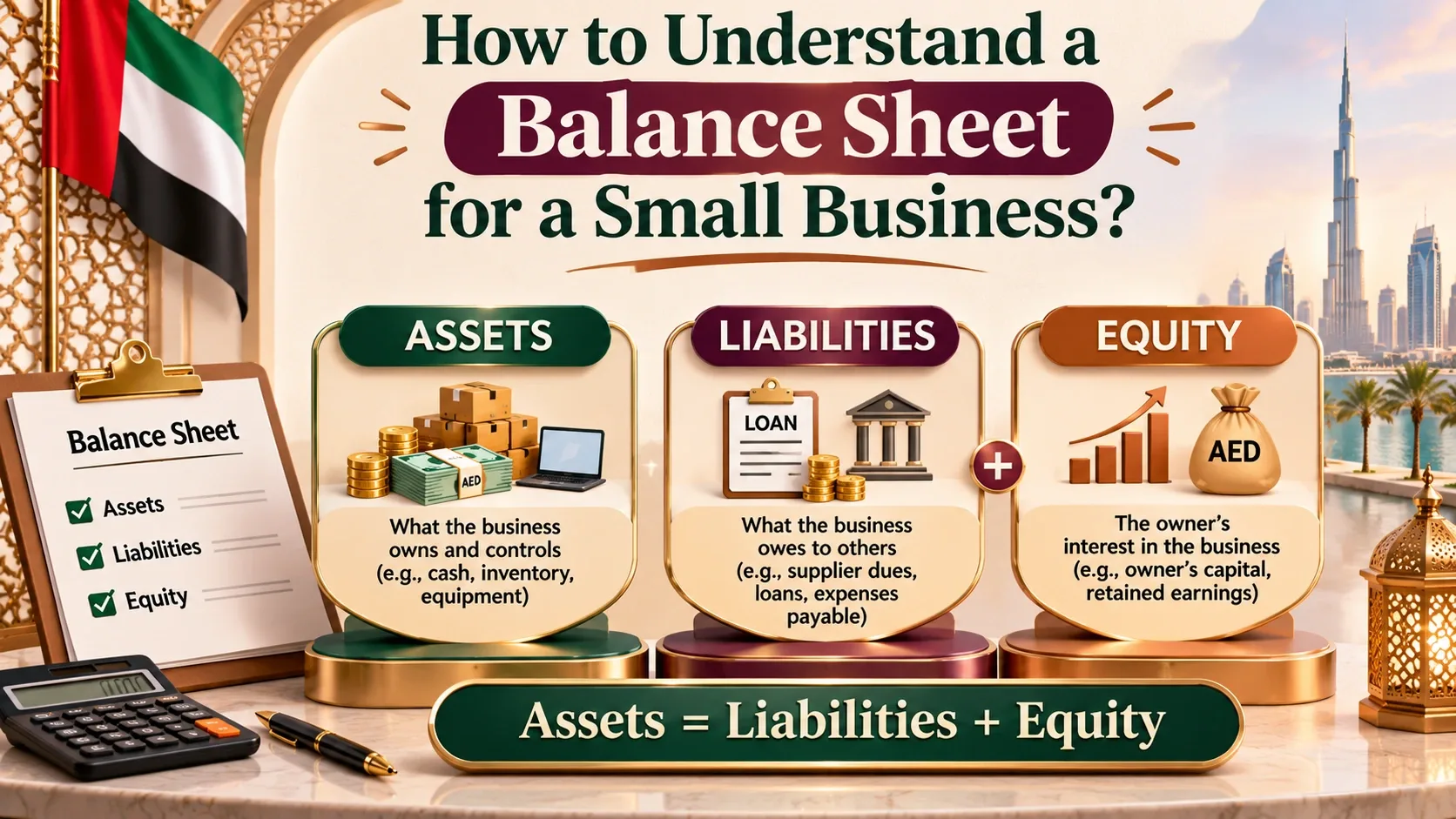
Learn how to understand a small business balance sheet in the UAE, including assets, liabilities, equity, working capital and financial health.
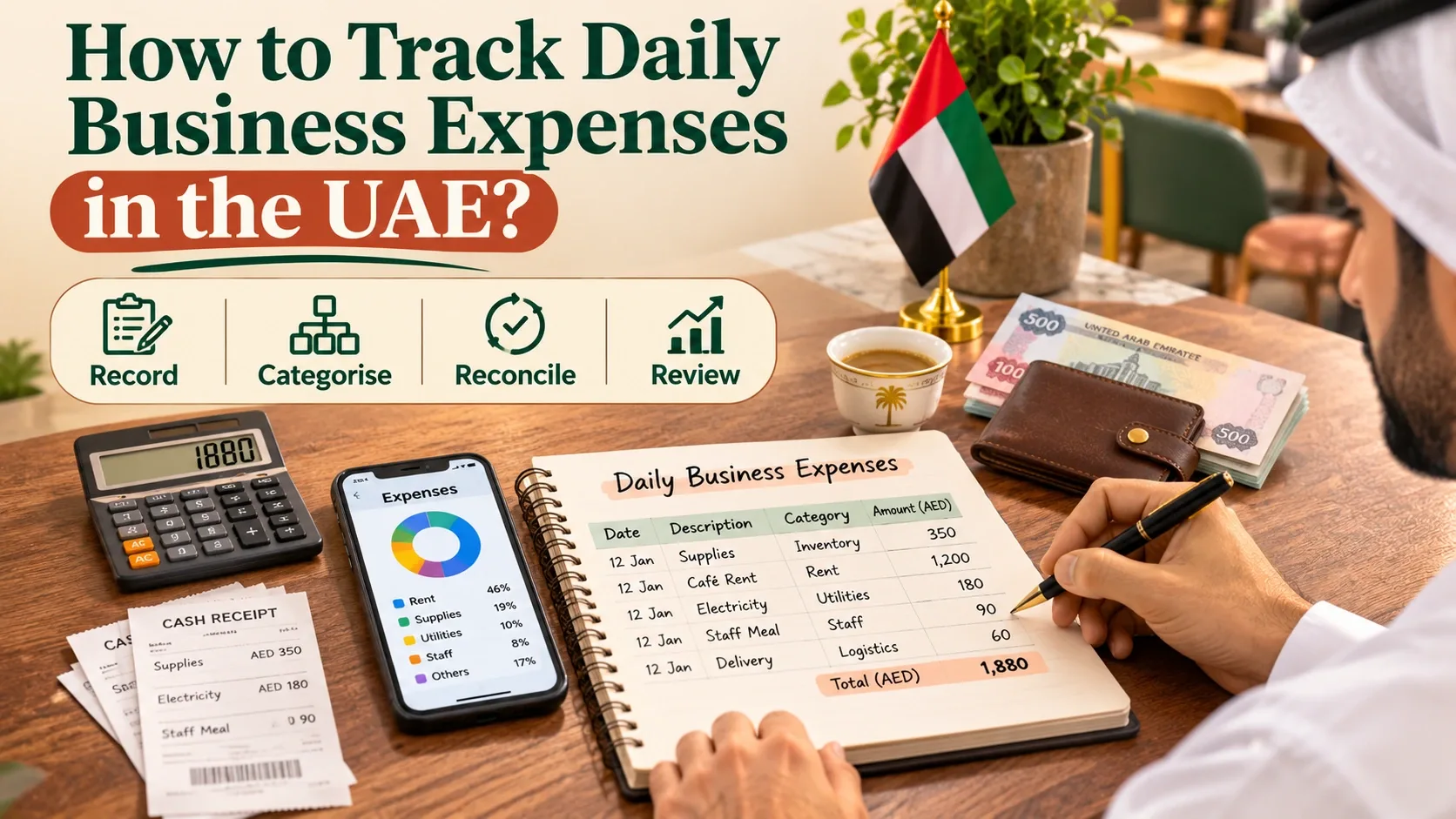
Learn how to track daily business expenses in the UAE, organise receipts, manage petty cash, monitor spending, and maintain accurate VAT and tax records.