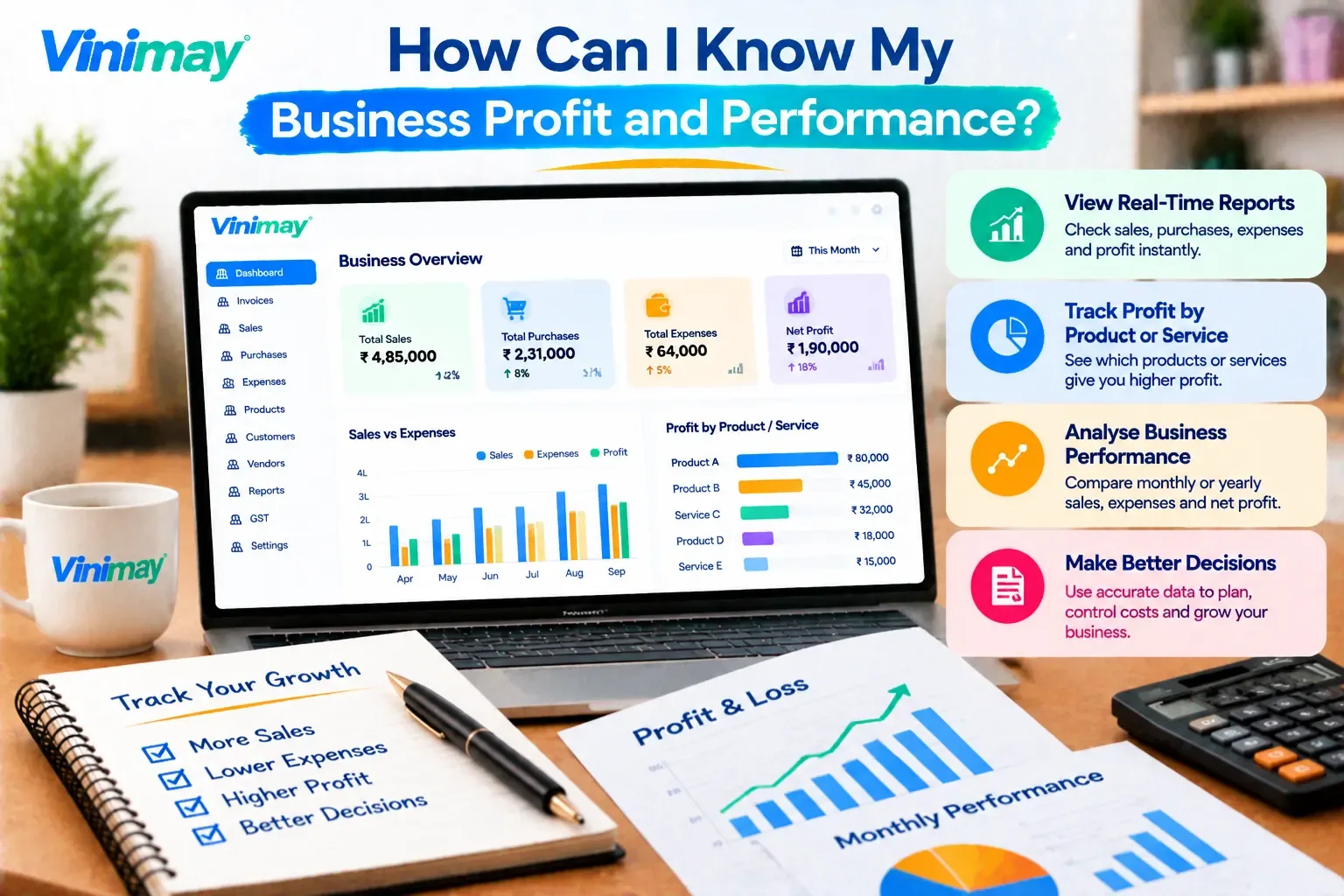
How Can I Know My Business Profit and Performance?
A busy shop with a steady stream of customers can still be quietly losing money — and a quiet business with fewer transactions can be genuinely profitable. Sales volume alone doesn't tell you which one you are, and this is one of the more common blind spots for small business owners who judge their business by how busy it feels rather than what the numbers actually show.
Knowing your business profit and performance means going one step past your sales total—subtracting what it actually cost to generate that revenue and looking at the resulting figure over time rather than as a single snapshot. This isn't a complex accounting exercise; it's a specific calculation you can do with records most businesses already keep.
This guide walks through exactly what profit calculation involves, the difference between gross and net profit, and what records make this calculation reliable rather than a rough guess.
Why Sales Alone Don't Tell You Your Profit
Sales figures show money coming in, but they say nothing about what went out to make those sales happen — the cost of goods, transport, rent, staff wages, and everyday expenses. A business can have rising sales and shrinking profit at the same time, if costs are rising faster than revenue. This is exactly the scenario that catches business owners off guard: everything feels busy and successful, right up until the numbers say otherwise.
What You Actually Need to Calculate Profit
To calculate profit meaningfully, you need three categories of information for the same period: total sales revenue, the direct cost of producing or acquiring what you sold, and your broader operating expenses like rent, salaries and utilities. Without all three, any profit figure you land on is incomplete—a business can look profitable if you only subtract direct costs and unprofitable once operating expenses are factored in too.
Gross Profit vs Net Profit
These two terms get used loosely, but they answer different questions:
Gross profit is your total sales minus the direct cost of the goods or services sold — it tells you how much money is left after covering what it cost to make or acquire what you sold.
Net profit is gross profit minus all remaining operating expenses—rent, salaries, utilities, and other running costs — giving you the actual amount left over after everything.
A business can have healthy gross profit and still show weak or negative net profit if operating expenses are too high relative to sales — which is exactly why checking only one of the two gives an incomplete picture.
A Simple Way to Calculate Both
The calculation itself is straightforward once you have the right figures for a period:
Add up total sales revenue for the period
Subtract the direct cost of goods or services sold — this gives gross profit
Subtract all operating expenses from gross profit — this gives net profit
Divide net profit by total sales and multiply by 100 to get your net profit margin as a percentage
That final percentage is often more useful than the raw number, since it lets you compare performance across different periods regardless of how sales volume itself changes.
What "Performance" Means Beyond Profit
Profit is the clearest single number, but business performance is a slightly broader picture. It also includes how consistently you're getting paid — high sales with a lot of pending customer dues can strain your cash flow even if profit looks fine on paper. It includes how your costs are trending relative to your sales over several months, not just one period. And it includes which products, services, or customers are actually contributing most to your profit, since not every sale contributes equally once costs are accounted for.
How Often You Should Check This
Checking profit and performance monthly is a reasonable rhythm for most small businesses—frequent enough to catch a worrying trend early, but not so frequent that normal day-to-day fluctuation looks alarming. A quarterly deeper review, comparing several months together, helps spot slower-moving trends that a single month's numbers might not reveal on their own.
What Records Make This Calculation Reliable
This calculation is only as accurate as the records behind it. That means sales figures that reflect actual invoices issued, not estimates; purchase and cost records that are complete for the period, not partially remembered; and expenses logged consistently rather than added up from memory at the end of the month. Scattered manual records make this calculation genuinely difficult to trust—not because the math is hard, but because the inputs are often incomplete.
Where Vinimay's Records Support This
Vinimay keeps sales records, purchase records and payment tracking connected in one place, which gives you the accurate sales and cost figures this calculation depends on, without having to reconstruct them from separate books at month-end. Vinimay's reportspull directly from these records, giving you organised sales and purchase totals for any period you choose.
It's worth being clear about scope here: Vinimay's reports provide the organised data — sales totals, purchase totals, outstanding payments — that feeds into a profit calculation, rather than automatically generating a formal profit and loss statement. For that final calculation, or a deeper financial analysis, many small businesses combine these organised records with a CA's review.
Conclusion
Knowing your business's real profit and performance means going past sales volume to calculate what's actually left after costs — both the direct cost of what you sold and your broader operating expenses. Gross profit, net profit and profit margin each tell a slightly different part of the story, and checking them monthly, with a deeper quarterly review, helps catch trends before they become serious problems. Vinimay keeps the underlying sales, purchase and payment records organised and accurate, giving you reliable inputs for this calculation — while the final profit figure and deeper analysis are best combined with a CA's review for full accuracy
Frequently Asked Questions
1. What's the simplest way to know if my business is profitable?
Subtract your total costs (both direct costs and operating expenses) from your total sales for a period — the remainder is your net profit.
2. What's the difference between gross profit and net profit?
Gross profit is sales minus direct costs; net profit is gross profit minus all other operating expenses like rent and salaries.
3. Can a business have high sales but low profit?
Yes, if costs are rising as fast as or faster than revenue — this is one of the most common misleading signals for business owners.
4. How often should I check my profit?
Monthly is a practical rhythm for most small businesses, with a deeper quarterly review to catch slower trends.
5. Does Vinimay calculate my profit automatically?
Vinimay provides organised sales and purchase records and reports; a formal profit and loss calculation typically combines this data with additional review.
6. What records do I need to calculate profit accurately?
Complete sales figures, direct cost of goods or services sold, and consistently logged operating expenses for the same period.
7. Is profit margin more useful than the raw profit number?
Often yes, since it lets you compare performance across periods with different sales volumes.
8. Why does business performance include more than just profit?
Because factors like payment collection speed and cost trends over time also affect the business'sreal health, beyond a single profit figure.
9. Can pending customer payments affect how profitable my business feels?
Yes, strong profit on paper can still strain cash flow if a large portion of sales remain uncollected.
10. Should I involve a CA to calculate profit accurately?
For a formal profit and loss statement or deeper financial analysis, yes — software organises the data, but professional review adds accuracy and context.
Related Topics
Published by Team Vinimay
Our editorial and compliance specialists create practical guides, tax calculation rules, and operational strategies to empower Indian small business owners and accountants.