Inventory Management
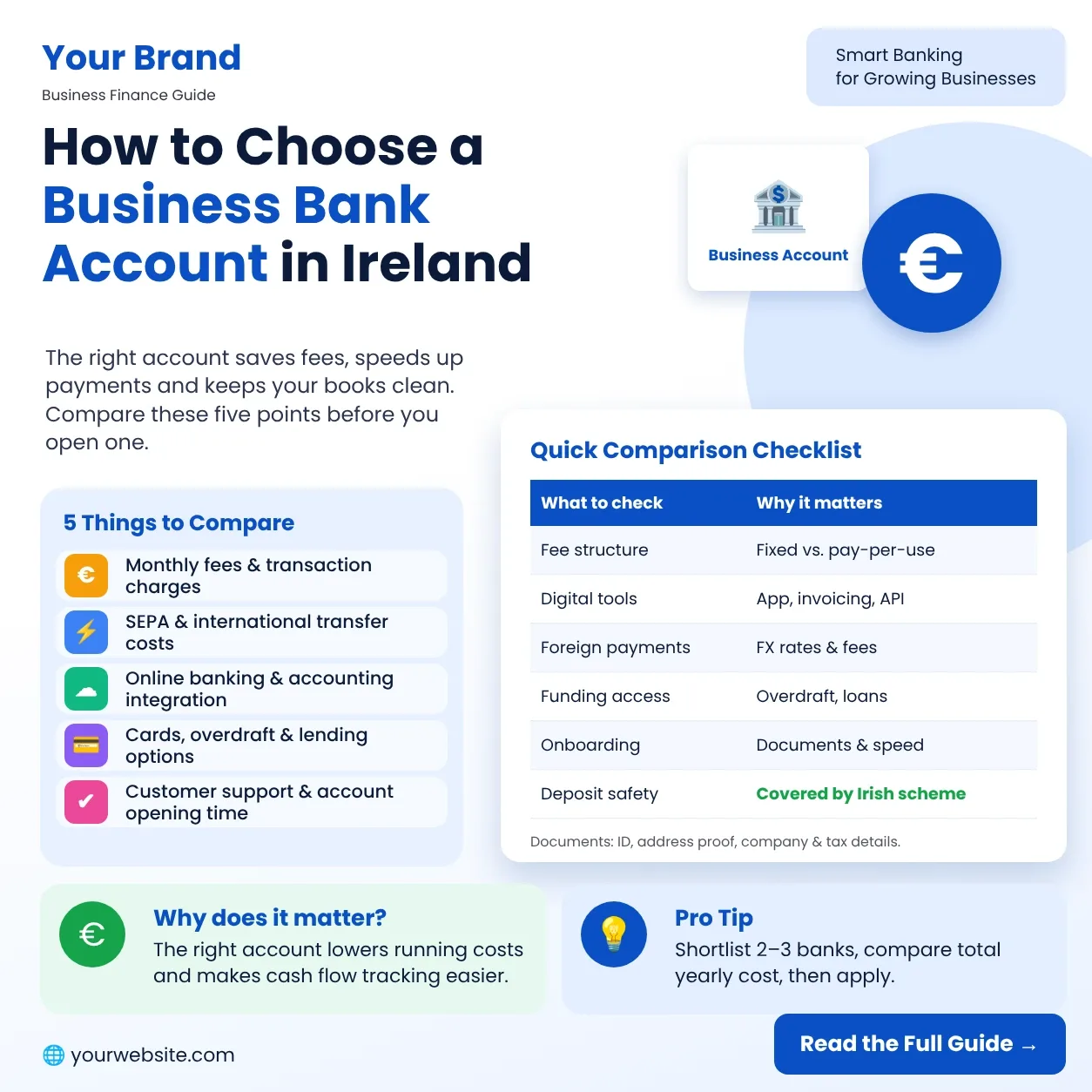
Read post How to Choose a Business Bank Account in Ireland (2026 Guide)
: Learn how to choose a business bank account in Ireland. Compare fees, online banking, payment facilities, cash deposits and features for SMEs.
: Learn how to choose a business bank account in Ireland. Compare fees, online banking, payment facilities, cash deposits and features for SMEs.
Create professional GST-compliant invoices in under 30 seconds, send WhatsApp payment links, and track inventory effortlessly.
Explore business funding options for SMEs in Ireland, including bank loans, Microfinance Ireland, SBCI finance, grants, invoice finance and asset finance.
Business Funding Options for SMEs in Ireland
Small and medium-sized businesses in Ireland may need external finance at different stages of their development. A start-up might need money to purchase equipment, while an established business may require working capital, additional staff, or funding to enter a new market.
There is no single funding option that suits every business. Some finance products provide repayable loans, while others offer grants or allow businesses to access money tied up in unpaid invoices.
Understanding the available options can help business owners choose finance that matches their business needs, repayment capacity, and growth plans.
Irish SMEs can explore several funding routes:
Traditional bank loans and overdrafts.
Microfinance Ireland loans.
SBCI-supported finance through participating lenders.
Local Enterprise Office grants.
Enterprise Ireland supports for eligible businesses.
Invoice financing.
Asset finance and leasing.
Private investment and business angel funding.
Eligibility, funding amounts and application conditions vary across schemes and providers.
A bank loan is one of the common ways an established business can obtain finance.
Businesses may use loans for equipment purchases, expansion, premises improvements, or other planned investments.
The business applies to a bank and explains the amount required, purpose of the loan, and expected repayment source.
The lender assesses financial records, credit history, business performance, and the ability to make repayments.
Established SMEs with trading records.
Businesses planning capital investment.
Companies with a clear repayment strategy.
Banks may request annual accounts, management accounts, bank statements, and cash flow forecasts.
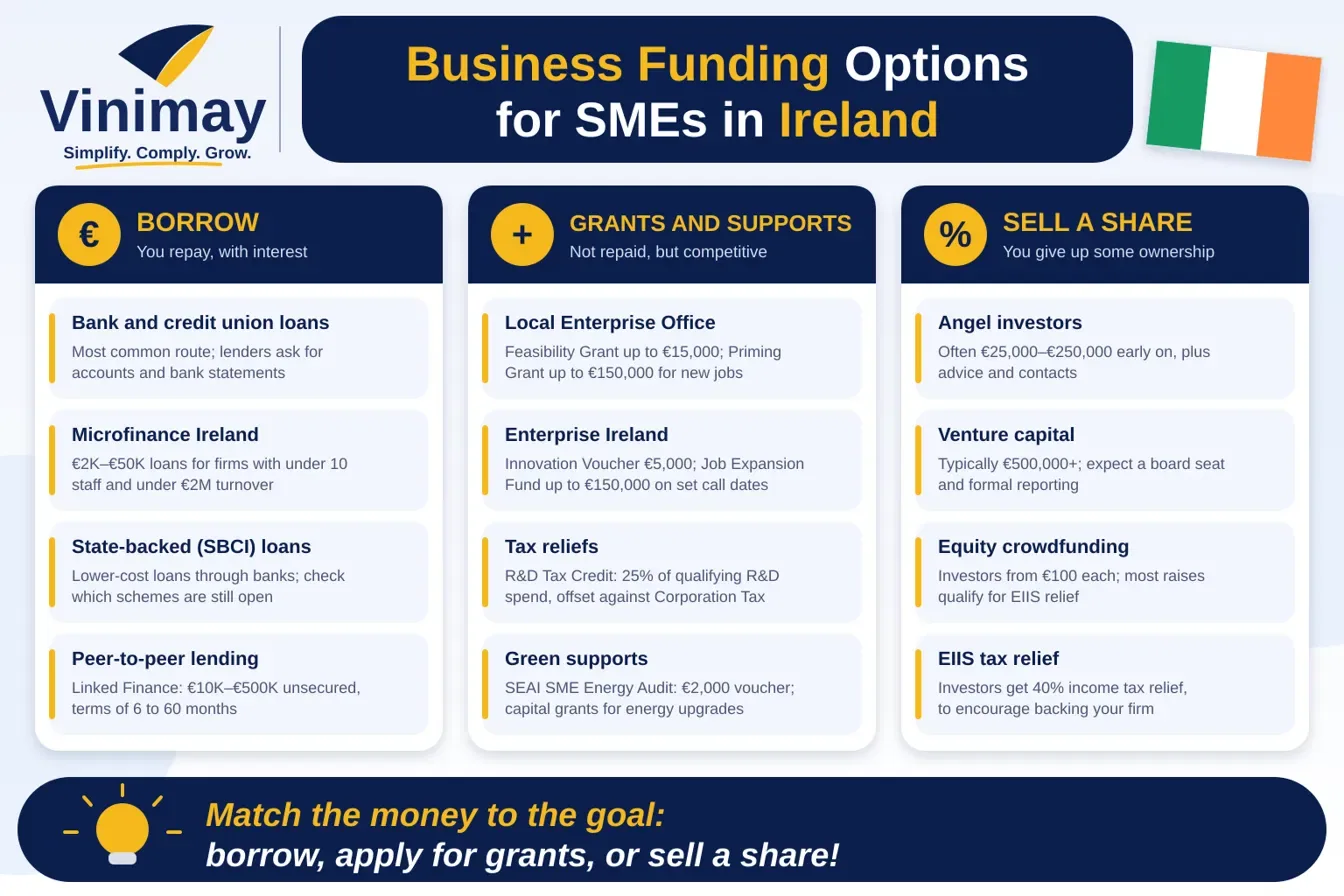
Microfinance Ireland provides loans to eligible small businesses and start-ups that may have difficulty obtaining finance from traditional banks or commercial lenders.
Its loans can support working capital, stock purchases and business development.
Loan amounts from €2,000 to €50,000.
Available to eligible start-ups and established micro-businesses.
Generally aimed at businesses with fewer than 10 full-time employees.
Previous-year turnover must generally be below €2 million for trading businesses.
Business plan and repayment capacity are assessed.
Applications can be made directly or through a Local Enterprise Office. Applying through a participating LEO may provide an interest-rate discount, subject to the applicable conditions.
Suitable for: Micro-businesses and start-ups that cannot obtain suitable finance from commercial lenders.
SBCI-Supported Business Finance
The Strategic Banking Corporation of Ireland (SBCI) supports access to finance for Irish SMEs through participating on-lending partners.
It does not generally operate like a retail bank providing every loan directly to a business. Instead, funding products are made available through participating lenders.
Term loans.
Invoice finance.
Asset finance.
Leasing and hire purchase.
Eligible growth and sustainability finance.
The specific products and conditions depend on the scheme and participating provider.
Suitable for: Businesses looking for finance to support investment, working capital, equipment or growth.
Local Enterprise Office Grants
Local Enterprise Offices (LEOs) provide advice, training, and financial support to eligible small businesses.
Depending on the business activity, development stage, and local eligibility criteria, available supports may include:
Priming Grants.
Business Expansion Grants.
Feasibility Study Grants.
Innovation and development supports.
Market-related supports.
Not every business sector qualifies for grant aid. Retail, personal services, professional services and local services may be excluded from certain grant schemes.
Applicants should contact their local LEO to check eligibility before preparing an application.
Suitable for: Eligible start-ups and small businesses developing or expanding activities with growth potential.
Enterprise Ireland Funding and Supports
Enterprise Ireland provides support to eligible Irish businesses with ambitions to grow internationally, develop new products or improve competitiveness.
Its supports may include funding, innovation assistance, export development and business growth programmes.
Eligibility depends on the business model, sector, employment potential and international growth prospects.
Suitable for: Businesses with export potential, innovation plans or ambitions to scale beyond the domestic market.
Invoice Financing
Invoice financing allows a business to access funding against eligible unpaid customer invoices.
It can help businesses manage cash flow when customers take time to pay.
For example, a company may issue an invoice with a 60-day payment term but need money immediately to pay suppliers or employees. An invoice finance provider may advance an agreed proportion of the invoice value, subject to its assessment and fees.
Improves access to working capital.
Can reduce the impact of delayed customer payments.
Funding may increase as eligible sales increase.
Businesses should compare fees, advance rates, customer notification requirements, and repayment conditions before choosing a provider.
Businesses that need machinery, vehicles, production equipment, or technology may consider asset finance.
Rather than paying the full purchase price immediately, a business can use a finance arrangement to spread the cost over an agreed period.
Common structures include hire purchase, leasing and equipment finance.
Suitable for: Manufacturing companies, transport businesses, construction firms and other SMEs requiring expensive equipment.
Some growing businesses may seek investment from private investors or business angels.
Unlike a conventional loan, equity investment generally involves giving an investor a share of ownership in the business.
Investors may also provide industry experience, contacts and strategic guidance.
However, founders should carefully consider valuation, ownership dilution, investor rights and future decision-making arrangements.
Before applying, consider these questions:
Short-term working capital needs may require a different product from a long-term machinery investment.
Prepare a detailed cost breakdown and avoid borrowing more than the business can reasonably use and repay.
Prepare cash flow projections that include existing debt, operating costs and the proposed new repayments.
Check the criteria for LEO, Enterprise Ireland, Microfinance Ireland and SBCI-related products.
Compare interest, arrangement fees, security requirements, repayment terms and any early repayment charges.
Irish SMEs have several funding options, from traditional bank loans and Microfinance Ireland to SBCI-supported products, grants, invoice finance, and private investment.
The best option depends on what the business wants to finance, how quickly it needs the funds, and whether it can meet the eligibility and repayment conditions.
Before applying, prepare accurate financial records, a clear funding proposal, and realistic cash flow projections. Comparing different providers can help business owners select finance that supports growth without placing unnecessary pressure on cash flo
Our editorial and compliance specialists create practical guides, tax calculation rules, and operational strategies to empower Indian small business owners and accountants.
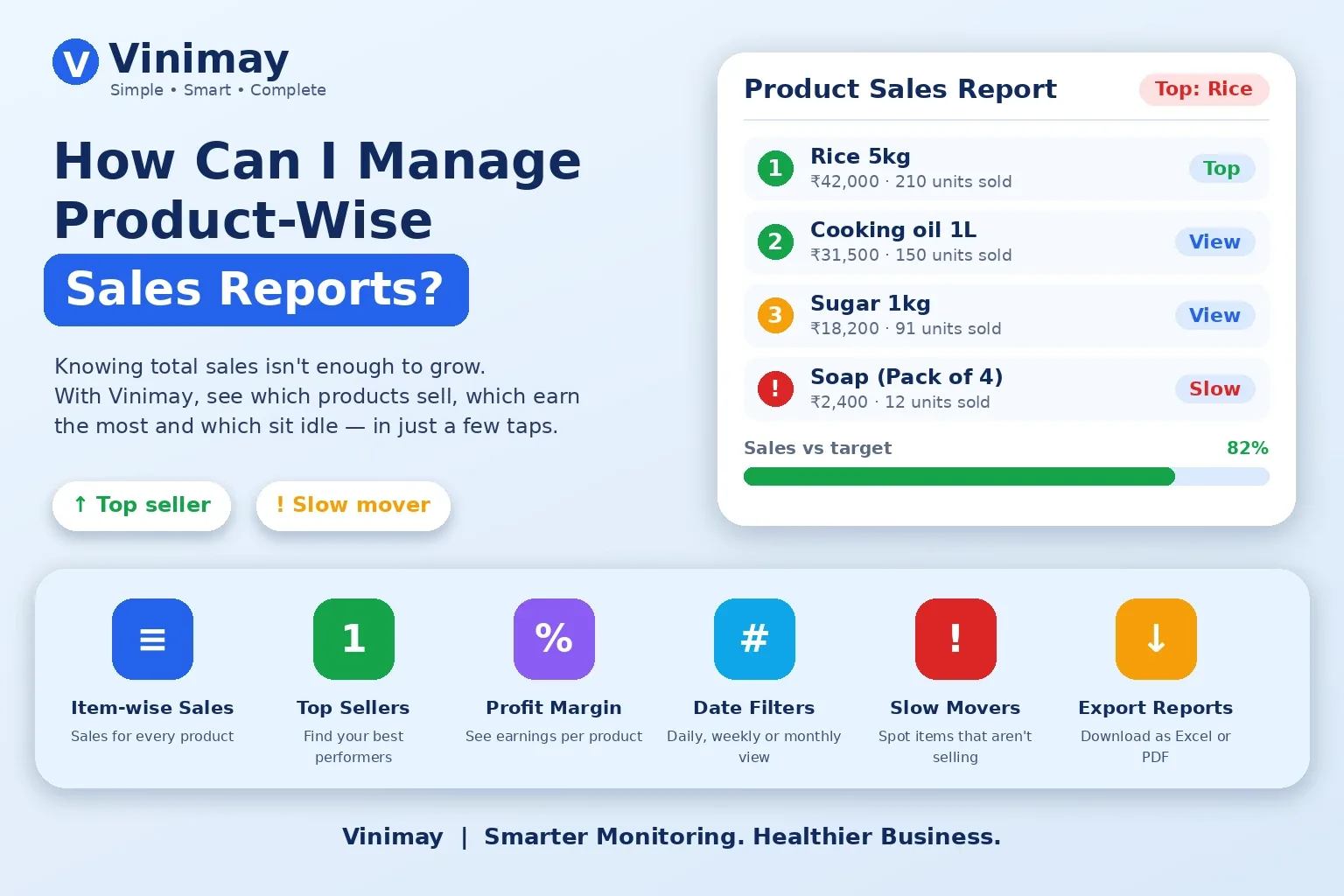
Want to see sales broken down by individual product, not just an overall total? Here's how to generate and actually use product-wise sales reports.
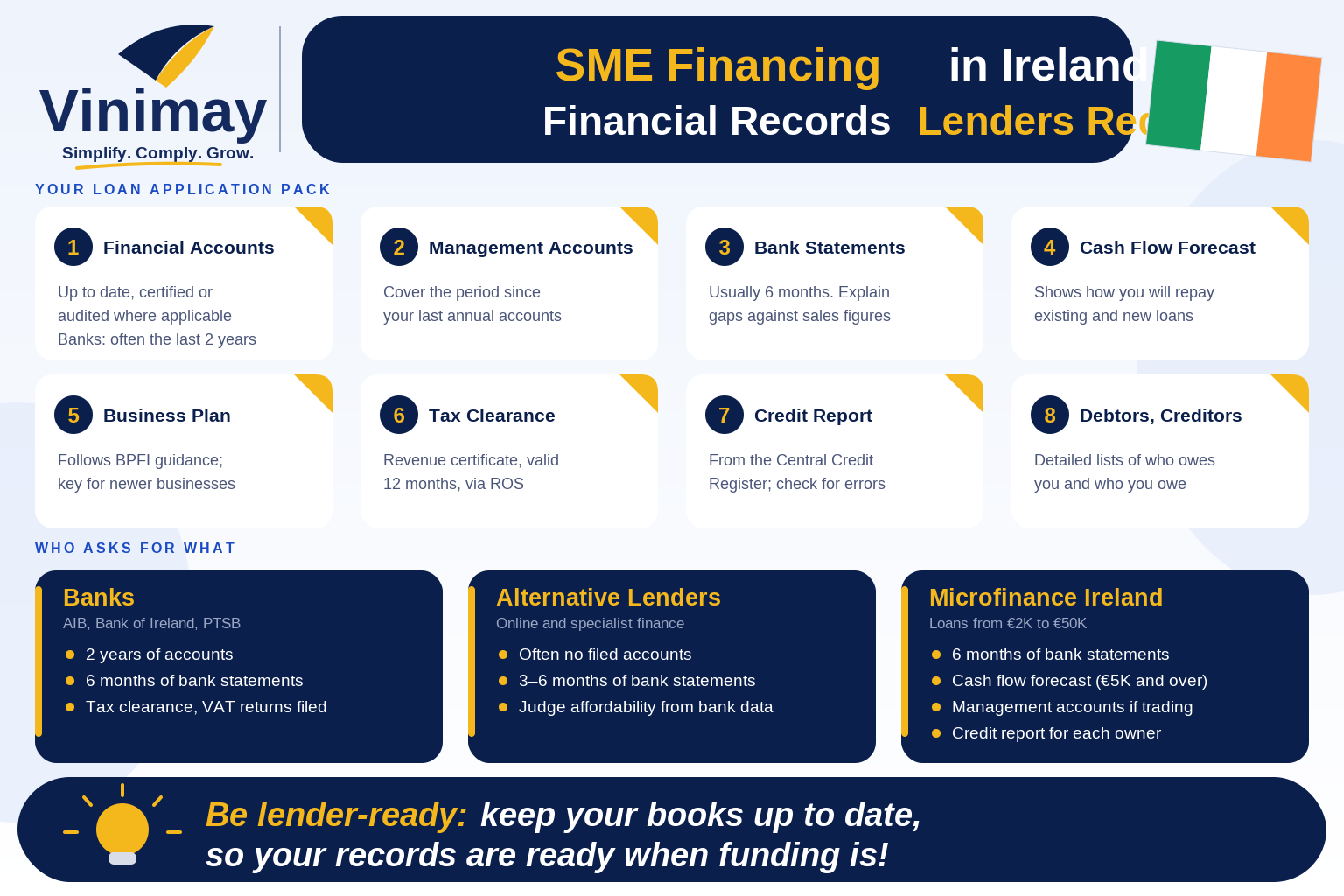
Applying for SME finance in Ireland? Learn which financial records, bank statements, cash flow forecasts and business documents lenders typically require.