UAE E-Invoicing 2026–2027: Deadlines, Rules & Penalties Quick Answer: UAE e-invoicing is a government-mandated system for exchanging structured electronic invoices and reporting tax data to the Federal Tax Authority (FTA). Mandatory implementation begins on 1 January 2027 for larger businesses and 1 July 2027 for smaller businesses, with penalties for non-compliance.
The UAE is introducing electronic invoicing to simplify business transactions, improve tax reporting and reduce manual paperwork.
Under the Ministry of Finance (MoF) framework, businesses must prepare for structured digital invoicing through Accredited Service Providers (ASPs).
Understanding the deadlines, technical requirements and penalties is essential for businesses operating in Dubai, Abu Dhabi and across the UAE.

1. What Is E-Invoicing in the UAE?
UAE e-invoicing is the electronic creation, exchange and reporting of invoices using a structured, machine-readable format.
Unlike traditional PDF invoices, electronic invoices contain standardised data that accounting systems can process automatically.
The UAE uses the Peppol-based five-corner model and the PINT-AE electronic invoice specification.
The five participants are the supplier, supplier's ASP, buyer's ASP, buyer and FTA.
This system enables invoice information to move securely between businesses while prescribed tax information is reported electronically.
2. Who Must Comply With UAE E-Invoicing?
The mandatory system generally applies to businesses conducting qualifying:
Business-to-business (B2B) transactions.
Business-to-government (B2G) transactions.
Businesses registered and operating in the UAE should assess their transaction types and annual revenue.
Business-to-consumer (B2C) transactions are currently outside the mandatory scope.
Certain other transactions are excluded under applicable legislation.
A new amendment also provides a temporary exclusion for transactions between members of the same tax group for 24 months from 1 January 2027.
3. What Are the UAE E-Invoicing Deadlines?
Implementation follows a phased timetable.
The initial ASP appointment deadline for larger businesses was extended from 31 July to 30 October 2026.
The voluntary and pilot rollout began on 1 July 2026.
Important: As of 21 October 2026, larger businesses have an approaching ASP appointment deadline of 30 October 2026.
4. What Information Must an E-Invoice Contain?
Businesses must provide the prescribed information under the PINT-AE specification.
Important data includes:
Supplier and buyer identification.
Relevant tax identification numbers.
Invoice number and issue date.
Goods or services descriptions.
Quantities and prices.
VAT category and applicable rate.
Taxable amounts and VAT totals.
Invoice totals and currency.
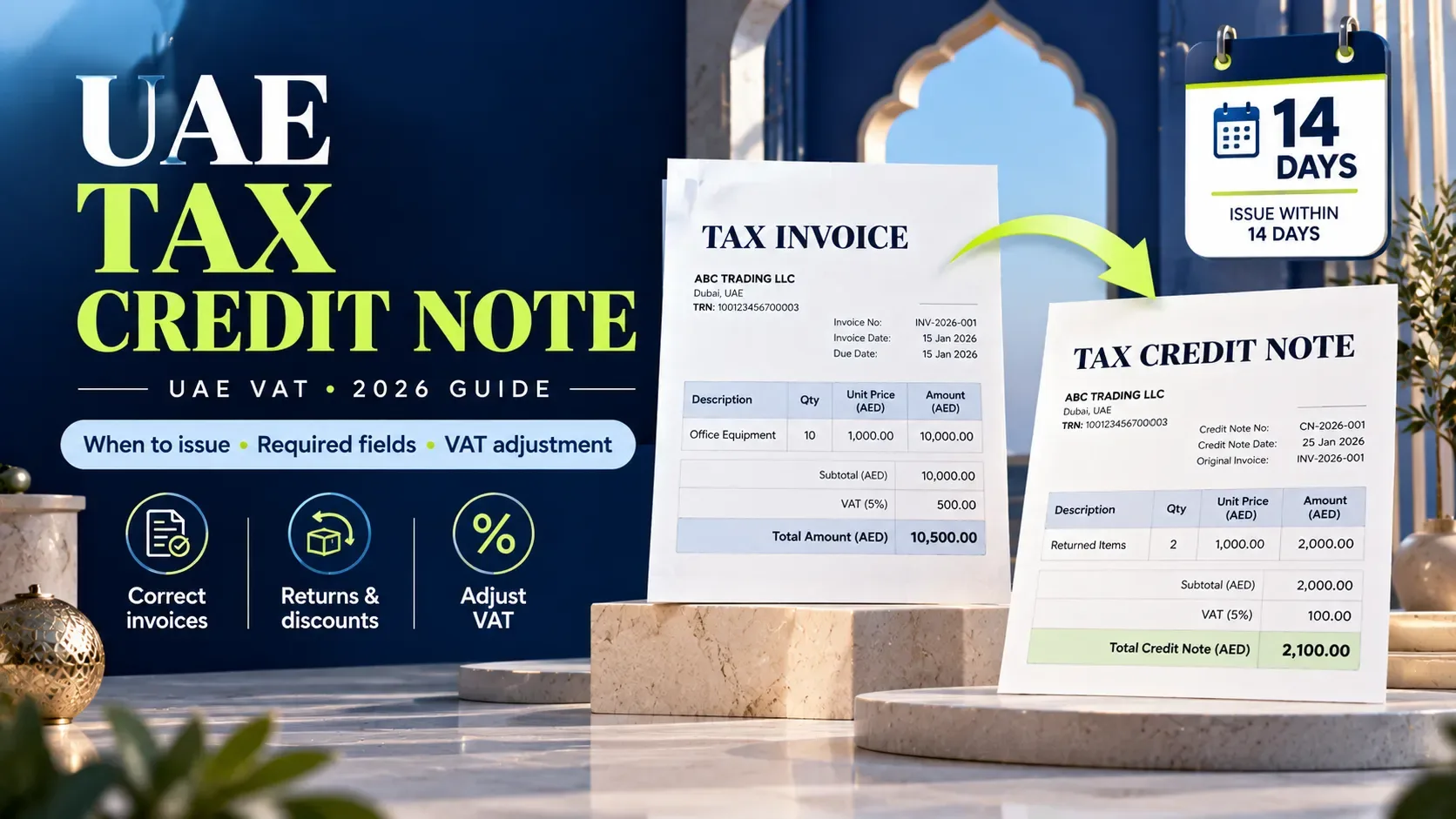
Relevant original invoice references for credit notes.
Technical requirements can vary according to the invoice type.
Businesses should maintain accurate customer and product records to reduce validation errors.
5. Are PDF Invoices Valid Under UAE E-Invoicing?
No. A PDF or emailed invoice alone is not a valid structured e-invoice under the UAE framework.
Businesses must exchange the prescribed electronic data through the approved system.
The difference is straightforward:
A PDF can still be useful as a readable copy, but it does not replace the required structured electronic document.
6. What Are the Penalties for Non-Compliance?
Cabinet Decision No. 106 of 2025 establishes administrative penalties for mandatory e-invoicing violations.
The original penalty decision also addresses failure to notify the FTA of system failures.
However, Ministerial Decision No. 197 of 2026 repealed the corresponding system-failure notification requirement under Ministerial Decision No. 243 of 2025. Businesses should follow the amended legislation when assessing that obligation.
The above mandatory-phase penalties generally do not apply to businesses participating voluntarily before their mandatory implementation date.
7. How Can Businesses Prepare for UAE E-Invoicing?
Businesses should begin preparations before their mandatory start date.
A practical checklist includes:
Determine the correct implementation phase.
Review existing invoices and VAT records.
Verify customer and supplier identification.
Select an MoF-accredited ASP.
Confirm accounting or ERP integration requirements.
Prepare for PINT-AE data exchange.
Test invoices and electronic credit notes.
Establish procedures for rejected documents.
Businesses should also retain electronic invoices and associated data for the prescribed period and make records available to the FTA upon request.
The October 2026 amendments removed the previous general requirement to store those records physically within the UAE.
8. How Can Vinimay Help Businesses Prepare for UAE E-Invoicing?
Businesses preparing for electronic invoicing need accurate invoices, customer information and organised accounting records.
Vinimay provides general invoicing and accounting functionality that can help businesses manage:
Sales invoices and transaction records.
Customer and supplier information.
Purchase and expense records.
Payment tracking and outstanding balances.
Financial reports and business records.
These features can help businesses organise information before implementing a structured e-invoicing workflow.
Important: Vinimay's PINT-AE compatibility, accredited ASP integration, Peppol connectivity and automated FTA reporting capabilities have not been independently verified. Businesses must confirm these capabilities before relying on the software for mandatory UAE e-invoicing.
Frequently Asked Questions
Related Topics
Published by admin
Our editorial and compliance specialists create practical guides, tax calculation rules, and operational strategies to empower Indian small business owners and accountants.