UAE E-Invoicing: ERP & Invoice System Changes in 2026 Quick Answer: UAE businesses must upgrade invoicing and ERP systems to capture mandatory electronic invoice fields, support PINT-AE structured data, connect with an Accredited Service Provider (ASP), validate invoices and process electronic credit notes. Systems must also maintain submission statuses, accurate tax records and required electronic archives.
The UAE's mandatory e-invoicing rollout is changing how businesses create, exchange and manage invoices. Traditional PDF generation alone will no longer satisfy the new requirements for covered transactions.
Businesses in Dubai, Abu Dhabi and other Emirates must assess whether their accounting or ERP software can work with the UAE's Peppol-based electronic invoicing framework.
1. Why Must ERP and Invoicing Systems Change?
Traditional invoicing systems often generate PDFs or print invoices for customers.
The UAE's new framework requires structured electronic invoice data that different software systems can read and exchange automatically.
The main changes include:
Capturing complete invoice information.
Validating mandatory fields.
Supporting prescribed electronic formats.
Connecting to an accredited ASP.
Tracking transmission and rejection statuses.
Maintaining electronic records.
Businesses do not necessarily need to replace their entire ERP. An existing system may be retained if it can integrate with the required services.
2. What Mandatory Invoice Data Must the System Capture?
The Ministry of Finance publishes mandatory electronic invoice field requirements.
ERP systems should maintain accurate master data and transaction details.
The exact fields differ between tax invoices, commercial invoices and other transaction scenarios.
Businesses should use the current official field specifications rather than relying only on fields displayed in a PDF template.
3. What Is PINT-AE and Why Is XML Required?
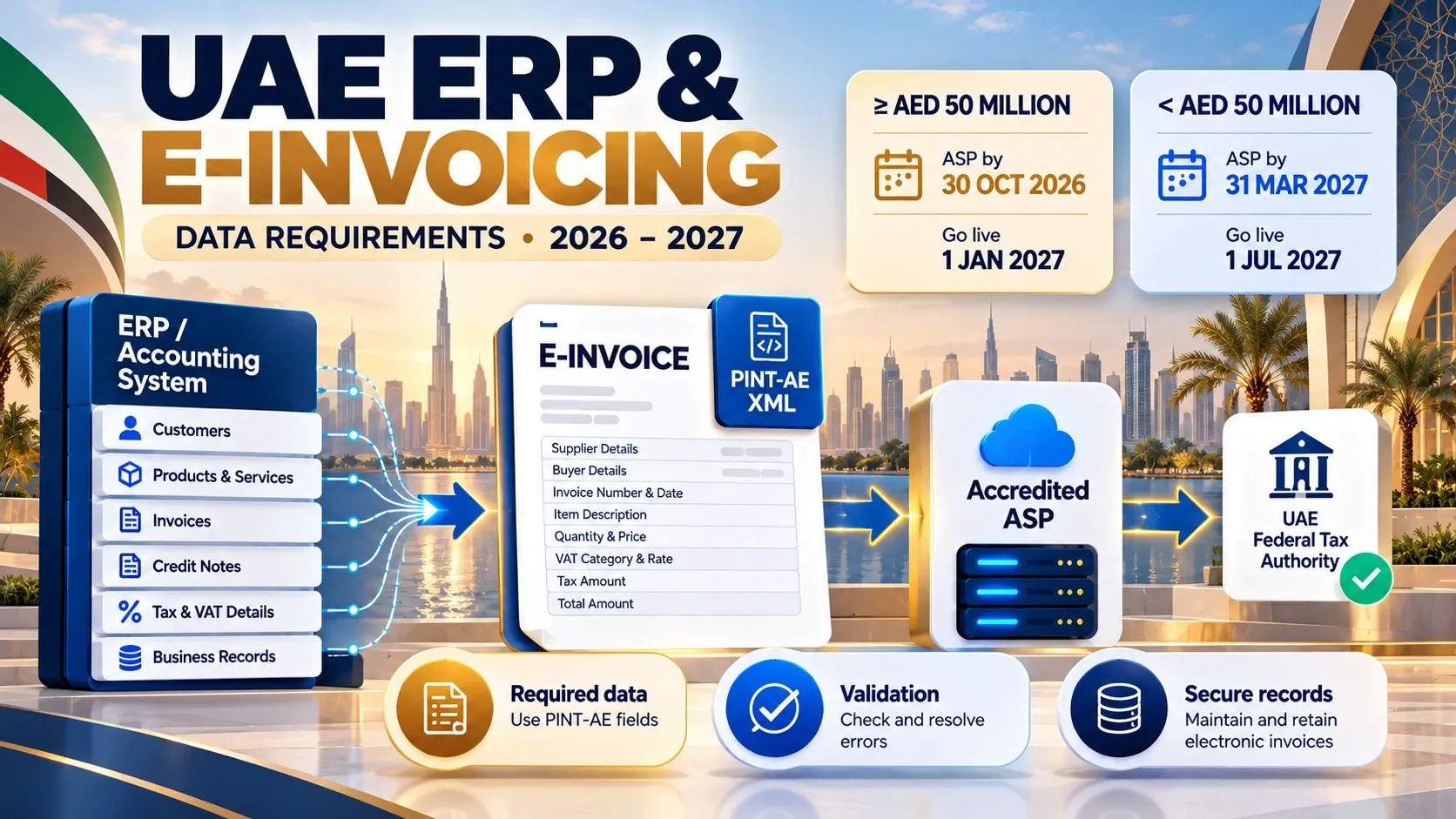
PINT-AE is the UAE-specific structured electronic invoicing specification built on the Peppol international framework.
It enables standardised invoice exchange between compatible business systems.
ERP software may need to generate PINT-AE-compliant XML or provide structured source data that the selected ASP can convert into the required format.
For example, a trading company may create an invoice inside its existing ERP. Its ASP then validates and converts the supplied information before exchanging the electronic document.
A PDF may remain available as a human-readable copy, but it cannot replace the prescribed structured e-invoice.
4. How Should ERP Software Connect With an ASP?
An Accredited Service Provider connects the business to the UAE electronic invoicing network.
The system operates through the Peppol-based five-corner model involving the supplier, supplier's ASP, buyer's ASP, buyer and Federal Tax Authority (FTA).
The integration should support:
Sending invoice information to the ASP.
Receiving validation results.
Exchanging electronic invoices with buyers.
Transmitting prescribed tax data to the FTA through the ASP.
Receiving message-level status updates.
Recording unsuccessful transmissions for correction.
Businesses should confirm which functions are performed by their ERP and which are handled by the ASP.
5. What Validation and Credit Note Changes Are Needed?
ERP systems should check invoice information before submission.
Useful validations include checking required identifiers, invoice numbers, dates, tax categories, quantities and calculated totals.
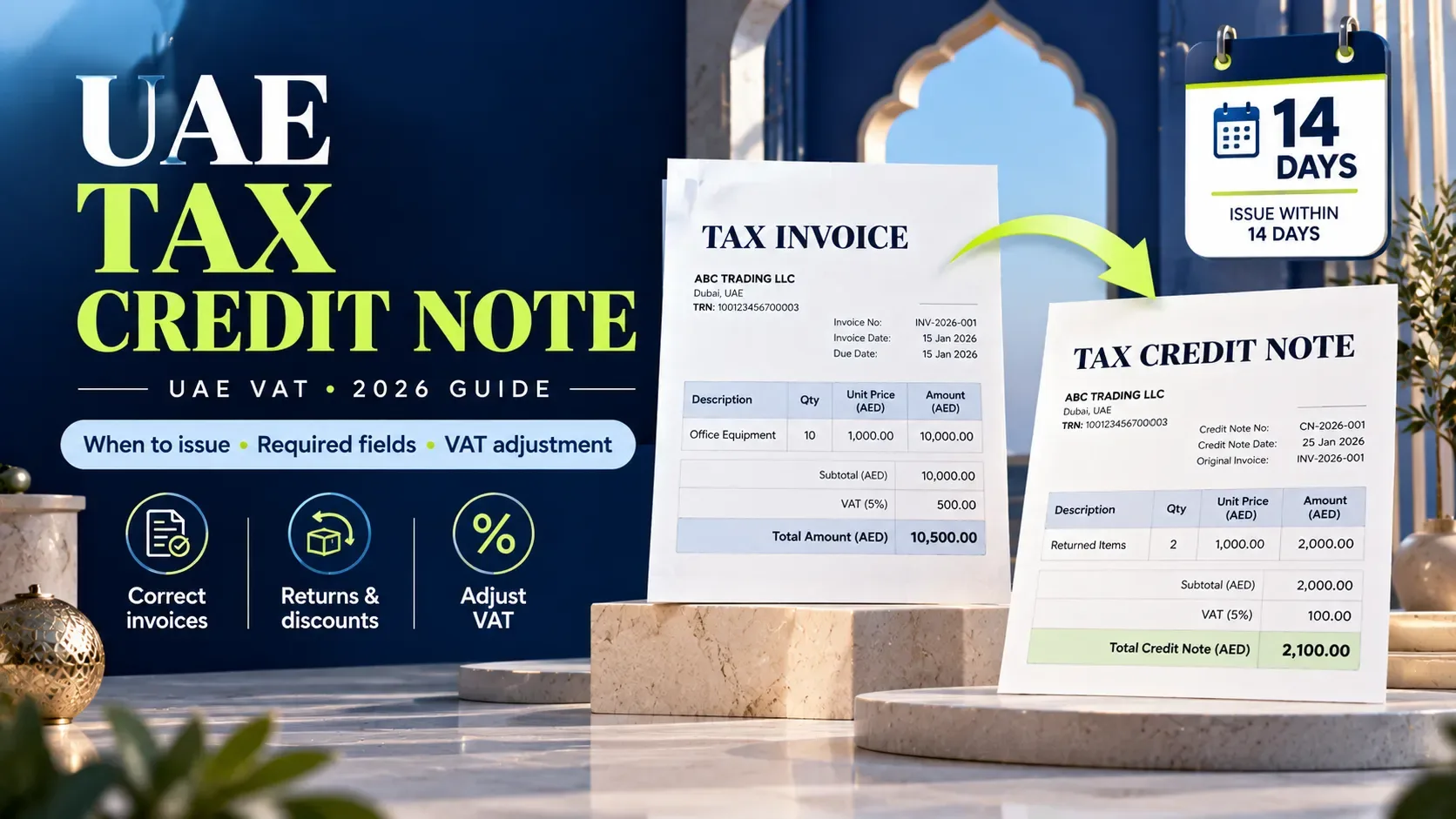
The system should also support electronic credit notes when transactions require adjustments.
For example, if a customer returns goods worth AED 2,000, the business may need to issue an electronic credit note referencing the original invoice.
Businesses should preserve the connection between the original invoice and its adjustment.
A rejected electronic invoice should not simply be marked as successfully delivered. The system must support correction, retransmission and status tracking.
6. What Security and Recordkeeping Changes Are Required?
Electronic invoicing systems should protect business information and preserve transaction history.
Important controls include user permissions, audit logs, backups, secure integrations and reliable record retrieval.
The October 2026 amendments clarified that covered businesses must retain electronic invoices, electronic credit notes and associated data for the period prescribed under the Tax Procedures Law.
They must also make records available to the FTA upon request.
The earlier general requirement to store those records within the UAE has been removed.
Businesses should therefore focus on secure retention, accessibility and applicable data protection obligations.
7. When Must Businesses Complete Their ERP Upgrades?
Implementation depends on the business's annual revenue and category.
Larger businesses should prioritise ASP appointment and integration immediately.
Before going live, test ordinary sales invoices, foreign-currency transactions, VAT classifications, credit notes and rejected submissions.
8. How Can Vinimay Help Businesses Prepare?
Preparing for UAE e-invoicing starts with organised business data.
Vinimay provides general accounting features that can help businesses manage sales invoices, customer information, products, purchases, payments, inventory and financial reports.
These capabilities can support internal invoice data preparation and transaction reconciliation before an ASP integration project.
However, Vinimay's PINT-AE XML support, direct ASP integration, Peppol connectivity and automated FTA reporting have not been independently verified. Businesses should confirm these capabilities before using the platform for mandatory UAE e-invoicing.
The most effective approach is to review the existing system, identify missing data and integration features, and complete testing before the mandatory deadline.
Frequently Asked Questions
Related Topics
Published by admin
Our editorial and compliance specialists create practical guides, tax calculation rules, and operational strategies to empower Indian small business owners and accountants.