What Is Ledger Management, and Why Does It Matter for Small Businesses?
"Ledger management" tends to sound like a feature meant for accountants, which is why many business owners skim past it in a software feature list without understanding why it actually matters to them directly. In practical terms, a ledger is simply the running, organised record of every account in a business — customers, vendors, cash, bank — showing exactly what's happened over time and where things currently stand.
Without accurate ledger management, everything built on top of it — reports, receivables tracking, profitability checks — becomes less reliable, because those all depend on the underlying ledger being correct. A wrong or outdated ledger doesn't just create one bad number; it quietly distorts every summary and report pulled from it, which is exactly why this "accountant's feature" is actually a foundational piece of running a business accurately.
This guide explains what ledger management practically involves, why it underpins everything else in a business's financial records, and what signs suggest it isn't being managed well.
What Is a Ledger, in Practical Terms?
Direct answer: A ledger is an organised, running record of all transactions related to a specific account — a customer, a vendor, cash, or the business overall—showing every entry over time and the current, accurate balance for that account.
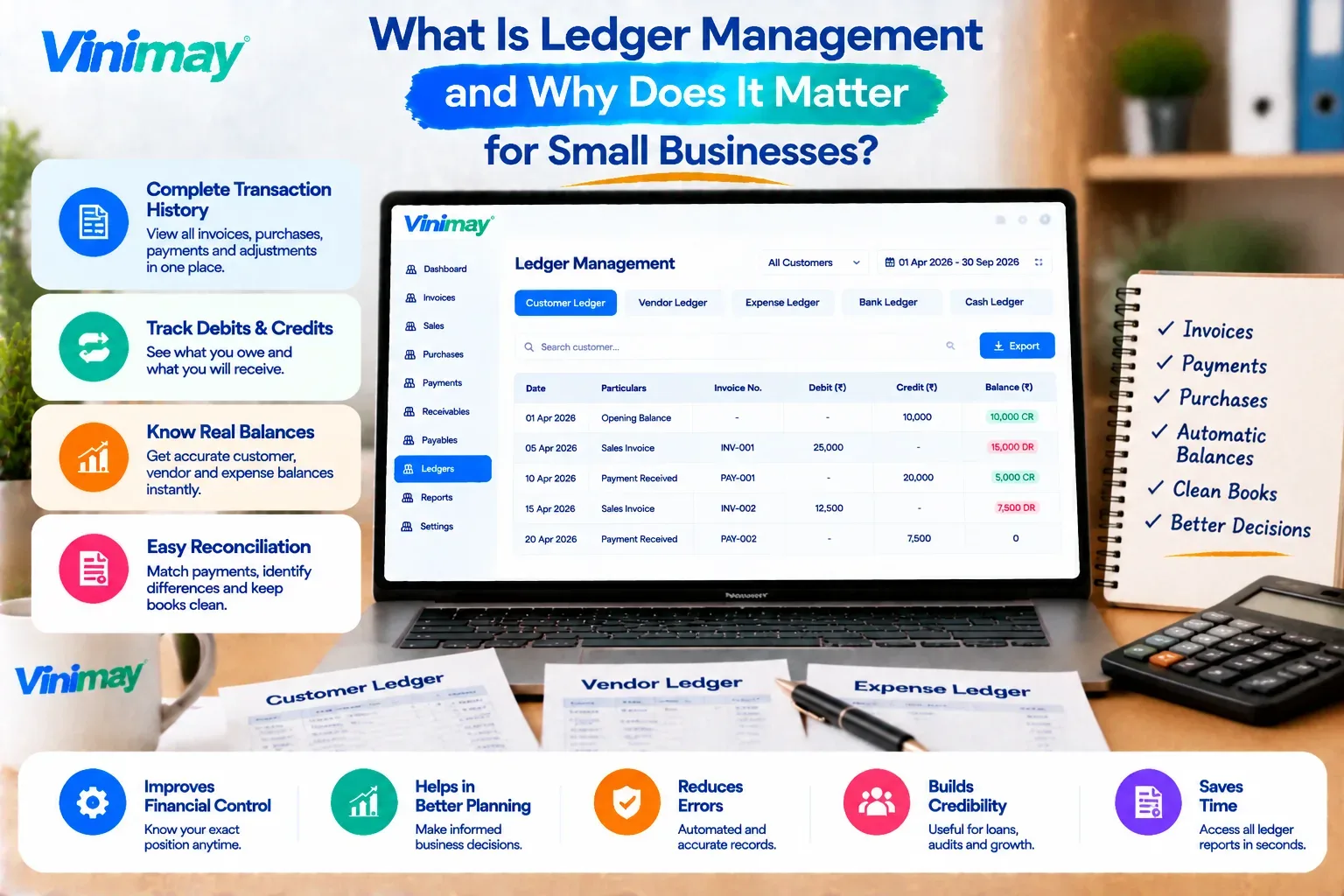
Each customer or vendor typically has their own ledger, showing their transaction history and current balance
A general ledger brings together all these individual accounts into an overall picture of the business
Ledger management is the process of keeping these records accurate and current as transactions happen
Why a Disorganized Ledger Quietly Undermines Everything Else
The ledger sits underneath almost every other financial view a business relies on, which is exactly why problems here don't stay contained — they quietly spread. A sales report is really just a summary pulled from the ledger; if an entry is missing or miscategorised there, the report built on top of it is wrong too, even though the report itself looks perfectly clean. The same is true for receivables: a customer's outstanding balance is only as accurate as their ledger entries are. This is why a business can have polished-looking reports and dashboards while still operating on genuinely unreliable numbers underneath — the problem isn't visible in the summary, it's buried in the ledger the summary was built from, and it tends to stay invisible until a specific discrepancy forces a closer look.
What Good Ledger Management Actually Provides
Signs Your Ledger Isn't Being Managed Well
Reports or balances don't match what you'd expect based on recent transactions
You've found a discrepancy that took significant time to trace back to its source
Customer or vendor balances feel like estimates rather than confirmed figures
Your CA has flagged inconsistencies or asked for clarification on entries more than once
You avoid checking certain reports because you're not confident they're accurate
How Vinimay Powers Your Ledger
Maintains an accurate, connected ledger for every customer, vendor, and account, updated as transactions are recorded
Keeps invoicing, payments, and purchase records flowing directly into the ledger, rather than requiring separate manual entry
Supports accurate receivables and payables by keeping ledger entries current for every party
Provides reports built directly from ledger data, so summaries reflect what's actually recorded, not a separate reconstruction
Keeps ledger records organised per business through multiple company management, for businesses managing more than one entity
Conclusion
A ledger is simply the organised, running record behind every account in a business—not just an accountant's concern
Ledger accuracy underpins every report and balance built on top of it, so problems here quietly spread elsewhere
Good ledger management provides accurate balances, traceable history, and audit-ready records
Vinimay keeps ledgers accurate and connected, so reports and balances built from them stay reliable
FAQs
What is ledger management?
It's the process of keeping an organised, accurate, running record of transactions for every account — customers, vendors, cash — so balances and history stay current and reliable.
Why does ledger management matter for a small business, not just accountants?
Because every report, balance, and receivables figure a business relies on is ultimately built from the ledger — if it's inaccurate, everything on top of it is too.
How is a ledger different from an invoice or a report?
An invoice records a single transaction; a report summarises data; a ledger is the ongoing, detailed record that both invoices feed into and reports are built from.
What are the signs my ledger isn't being managed accurately?
Mismatched balances, discrepancies that take a long time to trace, and reports you're not confident reflect reality are common signs.
Does every customer and vendor have their own ledger?
Typically yes, each customer or vendor has an individual account ledger, which feeds into the business's overall general ledger.
Can ledger errors affect GST filing?
Yes, since GST reports and reconciliation often rely on accurate ledger entries for sales, purchases, and payments.
How can I tell if my reports are actually reliable?
Reports are only as reliable as the ledger data behind them — if you can trace a report figure back to specific, accurate ledger entries, it's likely trustworthy.
Does software automate ledger management, or do I need to do it manually?
Reliable software updates the ledger automatically as invoices, payments, and purchases are recorded, removing the need for separate manual ledger entry.
Why do CAs care so much about ledger accuracy?
Because a clean, accurate ledger makes it far easier and faster to review, audit, and prepare financial statements or tax filings.
What's the risk of ignoring ledger management?
Errors accumulate quietly, distorting reports and balances without an obvious warning sign, until a specific discrepancy forces a difficult reconciliation.
Related Topics
Published by Team Vinimay
Our editorial and compliance specialists create practical guides, tax calculation rules, and operational strategies to empower Indian small business owners and accountants.