What Is the Best Software for Financial Management?
"Financial management" sounds like one thing, but it's actually a bundle of separate activities—budgeting, cash flow forecasting, expense tracking, billing, and reporting—and very few tools, free or paid, do all of them equally well. Asking for "the best" without specifying which part of financial management you actually need help with is a bit likeasking for the best vehicle without saying whether you need a delivery van or a motorcycle; the answer depends entirely on the job.
For most small businesses, the financial management pain isn't budgeting or forecasting — it's the more basic layer underneath: knowing what's been billed, what's been paid, what's owed, and what's been spent. Software that handles this layer accurately gives you the foundation any further financial management — whether done by you or an accountant — actually depends on.
This piece breaks financial management into its real components, explains which slice most small businesses need first, and where Vinimay specifically fits into that picture.
What "Financial Management" Actually Includes
Why Most Small Businesses Need the Bottom of This List First
Budgeting and forecasting tools are genuinely useful, but they're built on top of accurate billing and transaction data. A budgeting tool fed inconsistent or incomplete transaction records produces unreliable forecasts—garbage in, garbage out. This is why, for most small businesses just starting to formalize their financial management, the highest-leverage fix is getting invoicing, transactions, and outstanding tracking accurate and connected, before layering on budgeting or forecasting tools.
Where Vinimay Fits in the Financial Management Picture
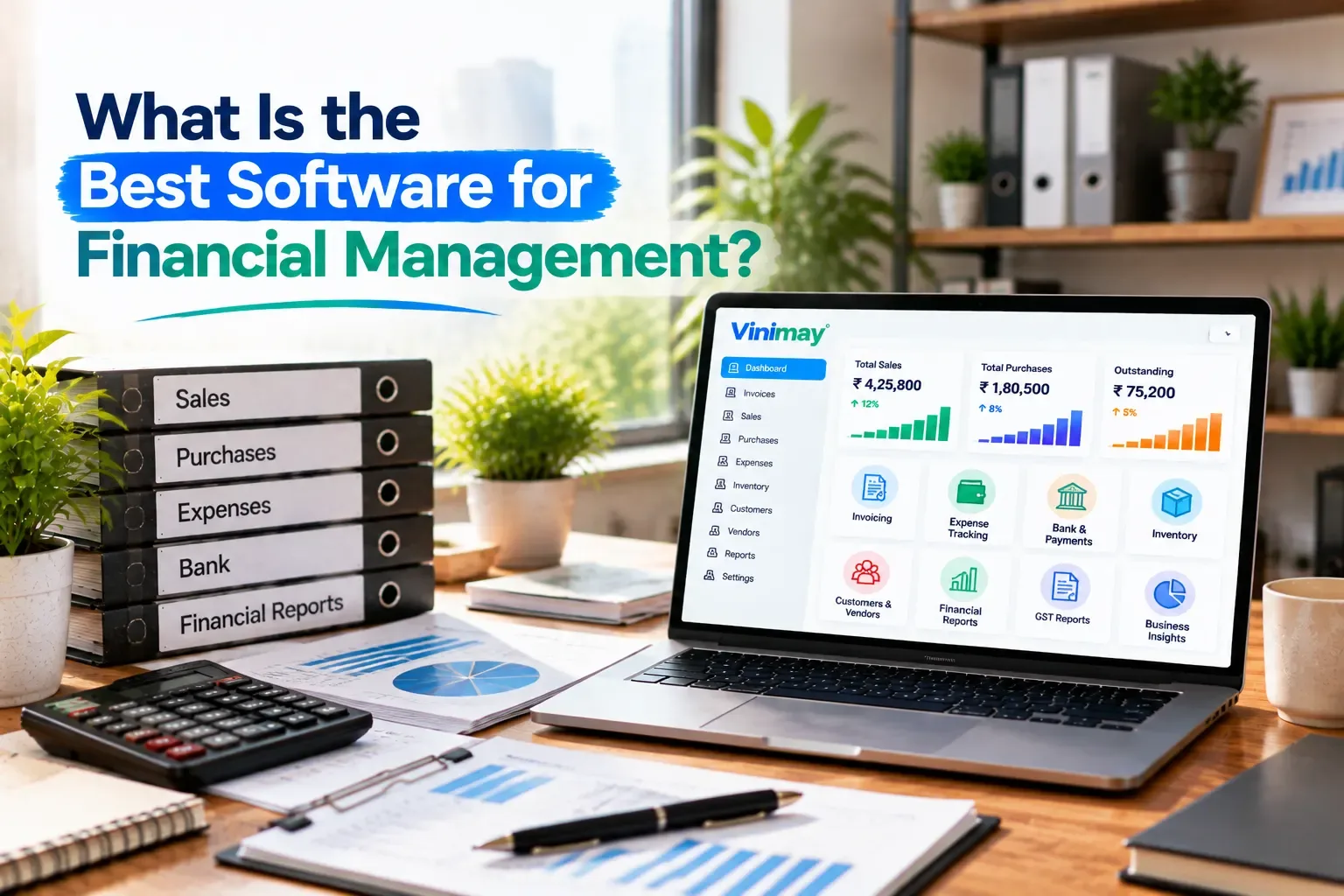
Vinimay covers the billing and transaction layer specifically: GST-compliant invoicing with CGST, SGST, or IGST applied correctly, sales and purchase records tied to customer/vendor accounts, and a payment ledger tracking outstanding balances from that same connected data. This is the foundation most small businesses actually need day to day, and it's confirmed and accurate rather than a broad, unverified promise.
Budgeting, cash flow forecasting, and formal financial statement generation aren't part of what's currently confirmed for Vinimay. If your business specifically needs these—for instance, preparing for a loan application or investor conversation—that level of financial management typically still involves working with an accountant using clean data from your billing system or a separate tool built specifically for forecasting.
[Create Your First Invoice Free with Vinimay]
Conclusion
There's no single "best" financial management software because financial management itself isn't one task. Most small businesses benefit most from getting the billing and transaction layer accurate first—invoicing, payments, and outstanding tracking—since everything else in financial management, from budgeting to formal statements, depends on that data being reliable in the first place.
FAQs
What's included under "financial management" software?
Billing, transaction recording, outstanding tracking, budgeting, forecasting, and financial statement generation — a broad set of activities, not one single feature.
Which part of financial management should a small business prioritize first?
Accurate billing and transaction recording, since budgeting and forecasting are only as reliable as the underlying data they're built from.
Does financial management software always include budgeting tools?
No — many tools focus specifically on billing and transactions without budgeting or forecasting features. Confirm this specifically for whichever software you're evaluating.
Do I need a separate tool for cash flow forecasting?
Often yes, unless your billing software specifically includes forecasting features. Many small business tools handle billing and transactions without extending into forecasting.
Does Vinimay offer budgeting or forecasting tools?
Not currently confirmed. Vinimay's confirmed scope isGST-compliant invoicing, transaction recording, and outstanding tracking through its payment ledger.
Is billing software the same as full financial management software?
Not exactly — billing software is one component of financial management. Full financial management can extend into budgeting, forecasting, and formal statements.
Related Topics
Published by Team Vinimay
Our editorial and compliance specialists create practical guides, tax calculation rules, and operational strategies to empower Indian small business owners and accountants.