What Is the Best Software for Bookkeeping?
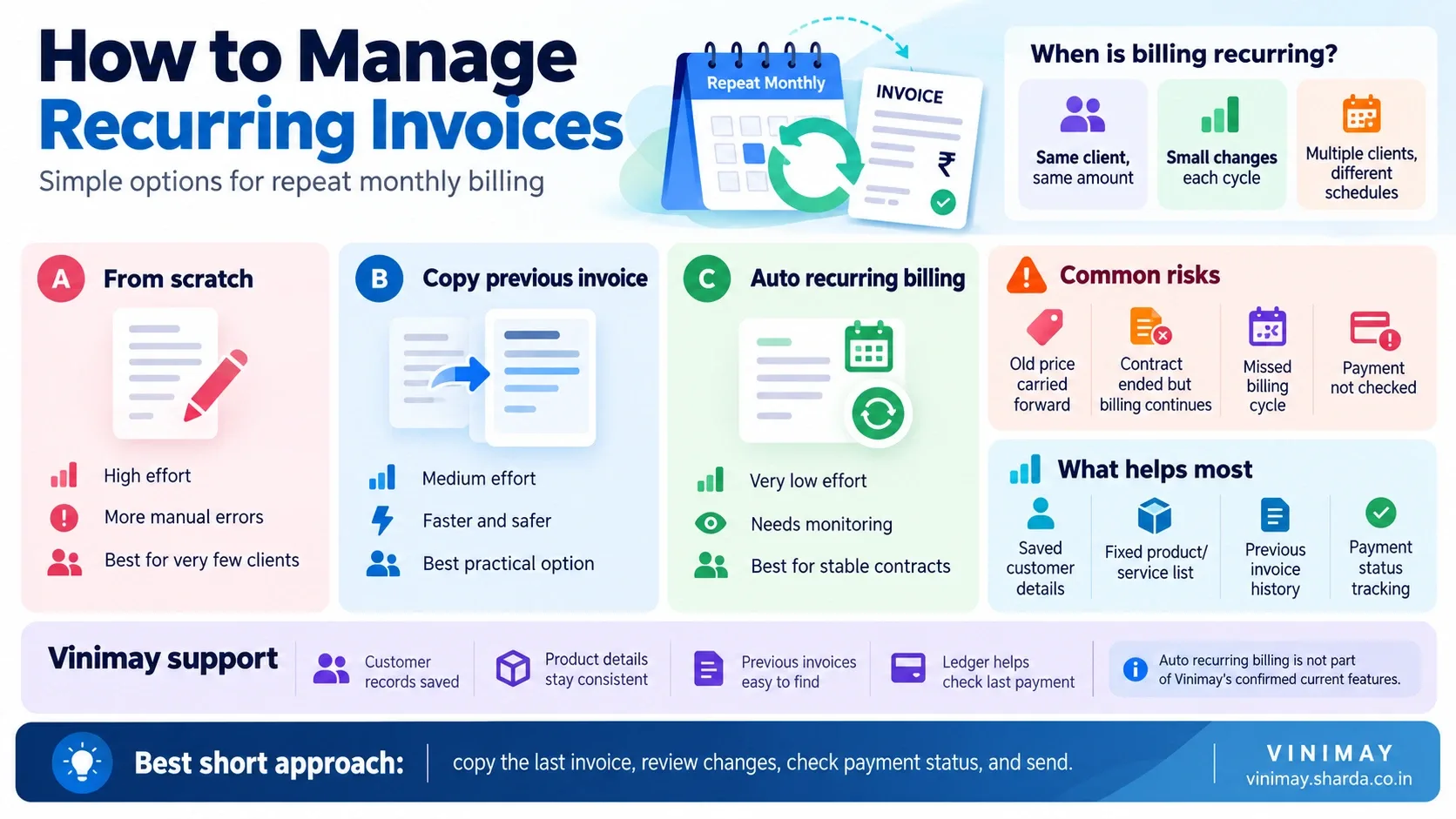
Bookkeeping, at its core, is simply the ongoing recording of financial transactions—sales, purchases, payments, receipts—in an organized, retrievable way. It sounds simple, and for a small business it genuinely can be, but the term gets tangled up with more advanced accounting concepts like double-entry ledgers and trial balances, which makes people assume they need something far more complex than they actually do.
Most small businesses don't need formal double-entry bookkeeping software to stay organized. What they need is consistent, connected recording of transactions as they happen so that at any point they can answer basic questions: what did we sell, what did we buy, who's paid, and who hasn't. That's the practical core of bookkeeping for a small business, and it's a solvable problem without needing accountant-level software.
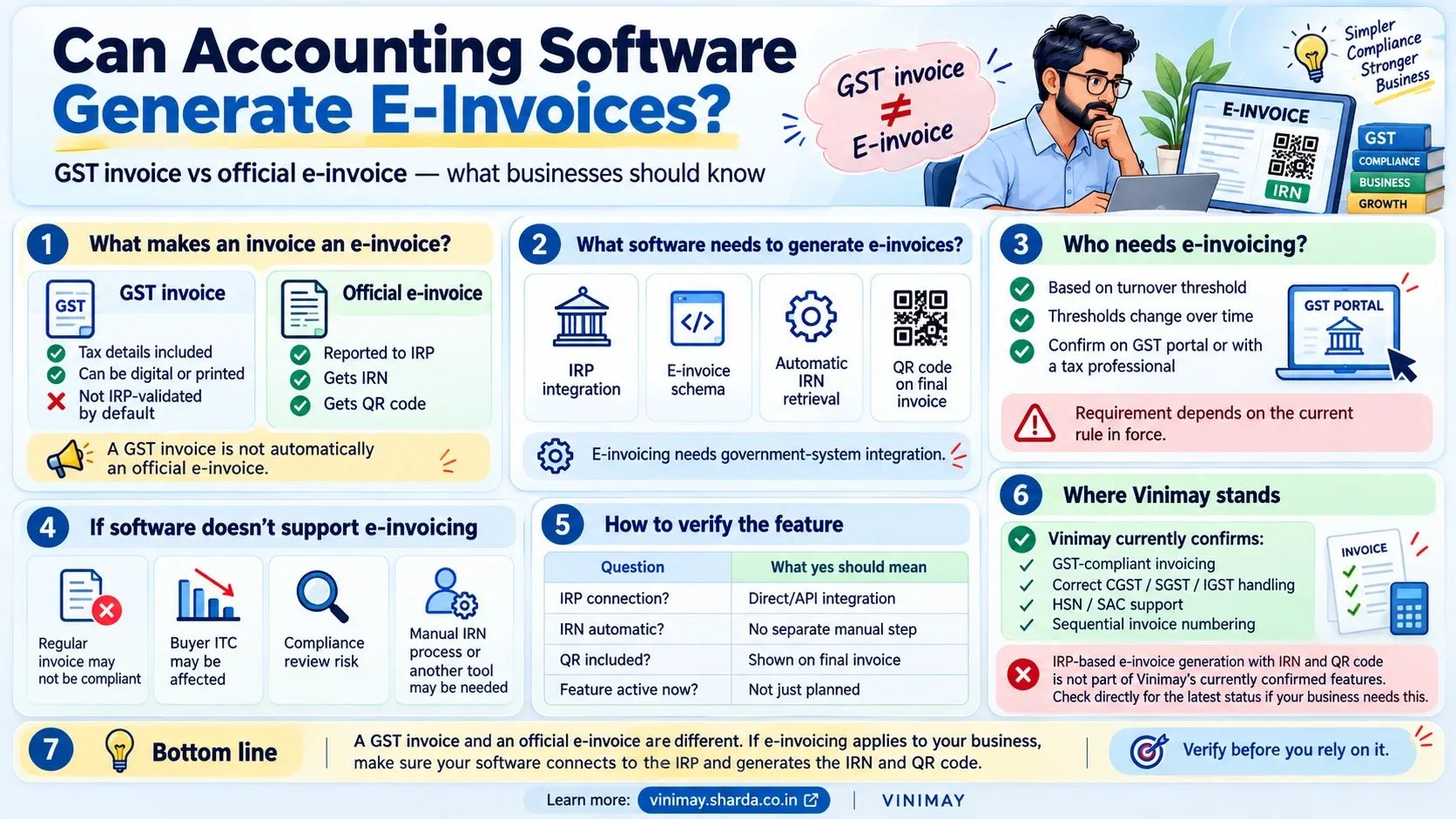
This piece explains what bookkeeping software should actually do at a basic level, where it gets more complex, and how Vinimay fits specifically into the basic, transaction-recording layer.
What Basic Bookkeeping Actually Requires
Where Bookkeeping Gets More Complex
Formal bookkeeping, in the fuller accounting sense, extends into double-entry ledgers, trial balances, and reconciliation against bank statements—concepts more relevant once a business is preparing formal financial statements, working closely with a CA on filings, or reaching a size where an internal accounts team manages the books directly. Most small businesses don't need this complexity for daily operations, even if their CA eventually needs some of this data for annual filing.
The Practical Difference for a Small Business
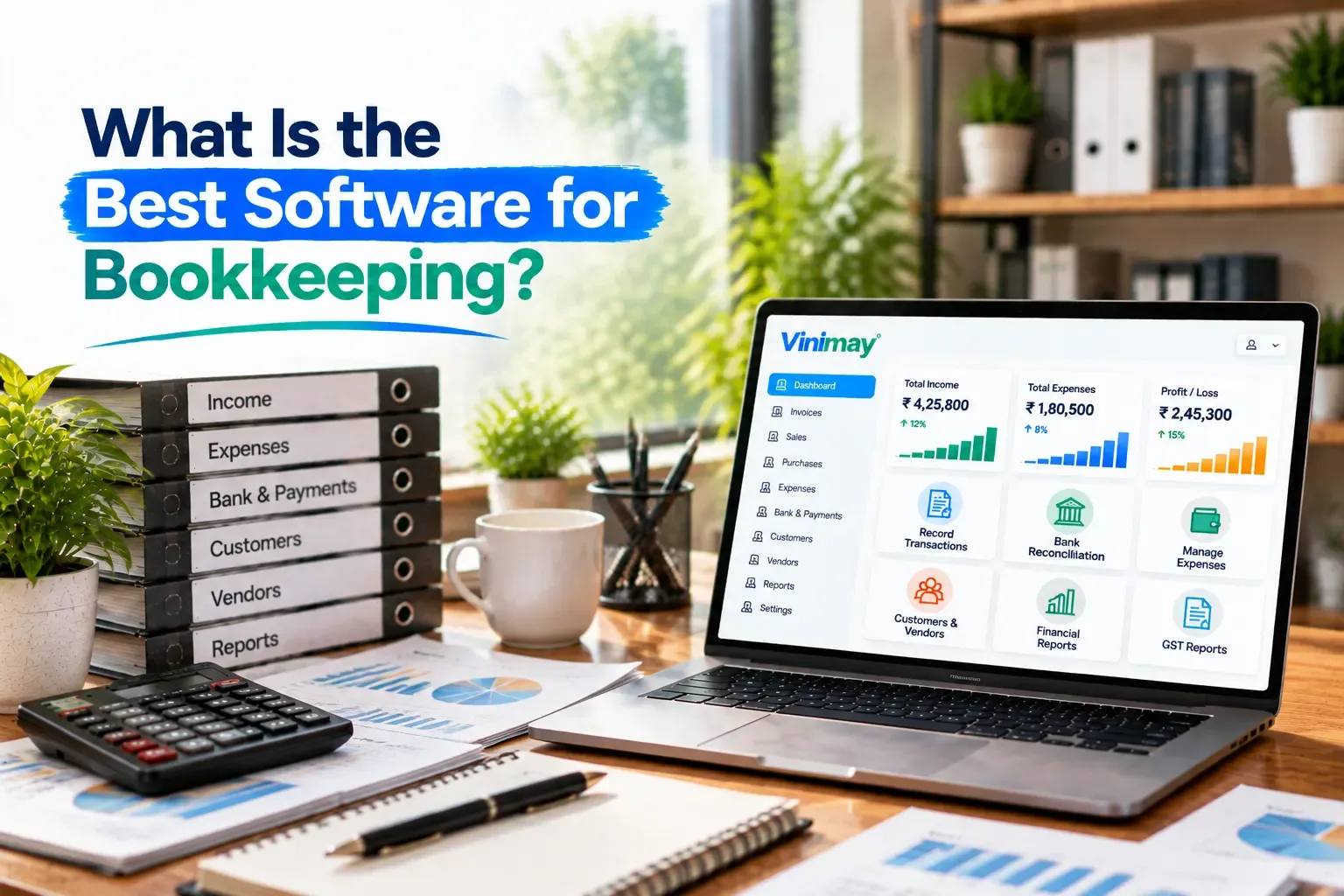
A small business's real bookkeeping need is usually satisfied by three things done consistently: every transaction recorded as it happens, records organized by customer and vendor rather than scattered, and GST details correct from the start. Software that nails these three basics is doing genuine bookkeeping work, even without touching trial balances or formal ledgers.
How Vinimay Handles the Basic Layer
Vinimay records sales, purchases, receipts, and payments against customer and vendor accounts as transactions happen, applying GST correctly (CGST, SGST, or IGST)on every invoice. Because payments are recorded against the same accounts as the invoices they belong to, outstanding balances build accurately without separate manual tracking—covering the practical core of small business bookkeeping described above.
Formal double-entry ledger functionality, trial balance generation, and bank reconciliation aren't part of what's currently confirmed for Vinimay. If your bookkeeping needs extend into these more formal areas—often because your CA specifically requests this format—that level of bookkeeping typically still involves your accountant working from the transaction data your billing software provides.
[Create Your First Invoice Free with Vinimay]
Conclusion
Bookkeeping doesn't have to mean complex accounting concepts for most small businesses—it means consistently recording sales, purchases, and payments in a connected, retrievable way.Software that does this well covers the practical need, even without formal double-entry features, which typically only become relevant once a CA or a more formal filing process needs that specific structure.
FAQs
Does bookkeeping software require double-entry accounting?
Not necessarily for a small business's daily needs — basic bookkeeping (recording sales, purchases, payments accurately) covers most operational needs. Double-entry becomes more relevant for formal financial statements.
What's the practical difference between bookkeeping and accounting?
Bookkeeping is the ongoing recording of transactions. Accounting builds on that recorded data to produce formal statements, analysis, and compliance filings—usually involving a CA.
Do I need a trial balance for my small business?
Only if you're preparing formal financial statements or your CA specifically requires it for filing. Day-to-day operations usually don't need this.
What are the basics good bookkeeping software should cover?
Recording every sale and purchase, tracking payments against invoices, organizing records by customer/vendor, and applying GST correctly.
Can I do proper bookkeeping without a CA if I use software?
For daily transaction tracking, yes. For formal statements, filings, and compliance work, a CA typically still needs to be involved, using data from your bookkeeping software.
Does Vinimay offer trial balance or double-entry ledger features?
Not currently confirmed.Vinimay's confirmed strength is recording transactions accurately against customer/vendor accounts with correct GST application.
Related Topics
Published by admin
Our editorial and compliance specialists create practical guides, tax calculation rules, and operational strategies to empower Indian small business owners and accountants.