Reconciliation is the point where many small businesses discover, often at the worst time, that their billing records and their GST return figures don't quite agree. The good news is that this mismatch usually traces back to a handful of common, fixable causes—not a mysterious accounting error. Reconciling sales invoices with GST returns means systematically comparing every invoice you've issued in a period against what's been reported in your return, confirming both the totals and the tax details match, and investigating any discrepancy until its cause is identified. This is a process you run periodically, not a one-time check, and it becomes significantly faster when your underlying invoice records are already organized and complete.
This guide walks through the reconciliation process step by step, the most common causes of mismatches, and how organised record-keeping—which Vinimay supports through connected GST invoicing and sales records—makes this process considerably less painful.
Step 1: Confirm Your Invoice Records Are Complete
Before comparing anything, make sure every invoice issued during the period is actually in your records—no missing bills, no gaps in sequential numbering. A single missing invoice throws off every total that follows, so this first step is worth doing carefully rather than assuming completeness.
Step 2: Match Invoice Totals to Return Figures
Once your invoice records are confirmed complete, compare the total sales value from your invoices against what's reflected in the relevant GST return figures for that period. This comparison should be done at the aggregate level first—does the total match—before drilling into individual invoices if it doesn't.
Step 3: Check Tax Type and Rate Consistency
Beyond the total value, check that the tax breakdown is consistent too—that CGST/SGST and IGST amounts from your invoices match what's reflected in the return, and that the rates applied are consistent across similar transactions. A total can match by coincidence even when individual tax splits don't, so this step catches errors the first one might miss.
Step 4: Investigate and Resolve Mismatches
If a mismatch is found, trace it back to the specific invoice or invoices causing it, rather than adjusting the total figure to force a match. Common resolution paths include correcting an invoice that had an entry error, accounting for a return or credit note that wasn't properly recorded, or identifying a duplicate or missing entry.

What Usually Causes Mismatches
Most reconciliation issues fall into one of these five categories, which is why working through them systematically is faster than reviewing every invoice individually without a starting hypothesis.
Making This Easier With Organized Records
Reconciliation is dramatically easier when invoice records are complete, sequentially numbered, and tagged with consistent tax details from the start—because most of the work then becomes confirming, rather than reconstructing, what happened during the period. Businesses relying on scattered manual records typically spend far longer on this step simply because completeness and consistency have to be established before any actual comparison can begin.
Where Vinimay Fits Into This Process
Vinimay supports the reconciliation process by keeping sales records organized, sequentially numbered, and tagged with accurate tax details from the point of billing—directly addressing steps 1 through 3 above, since the underlying data is already complete and consistent by the time reconciliation begins.
Vinimay does not perform GST return filing or automated reconciliation against the GST portal itself—its role is to ensure the sales-side records feeding into that process are accurate and complete, whether the actual reconciliation and filing is done by you or by a CA.
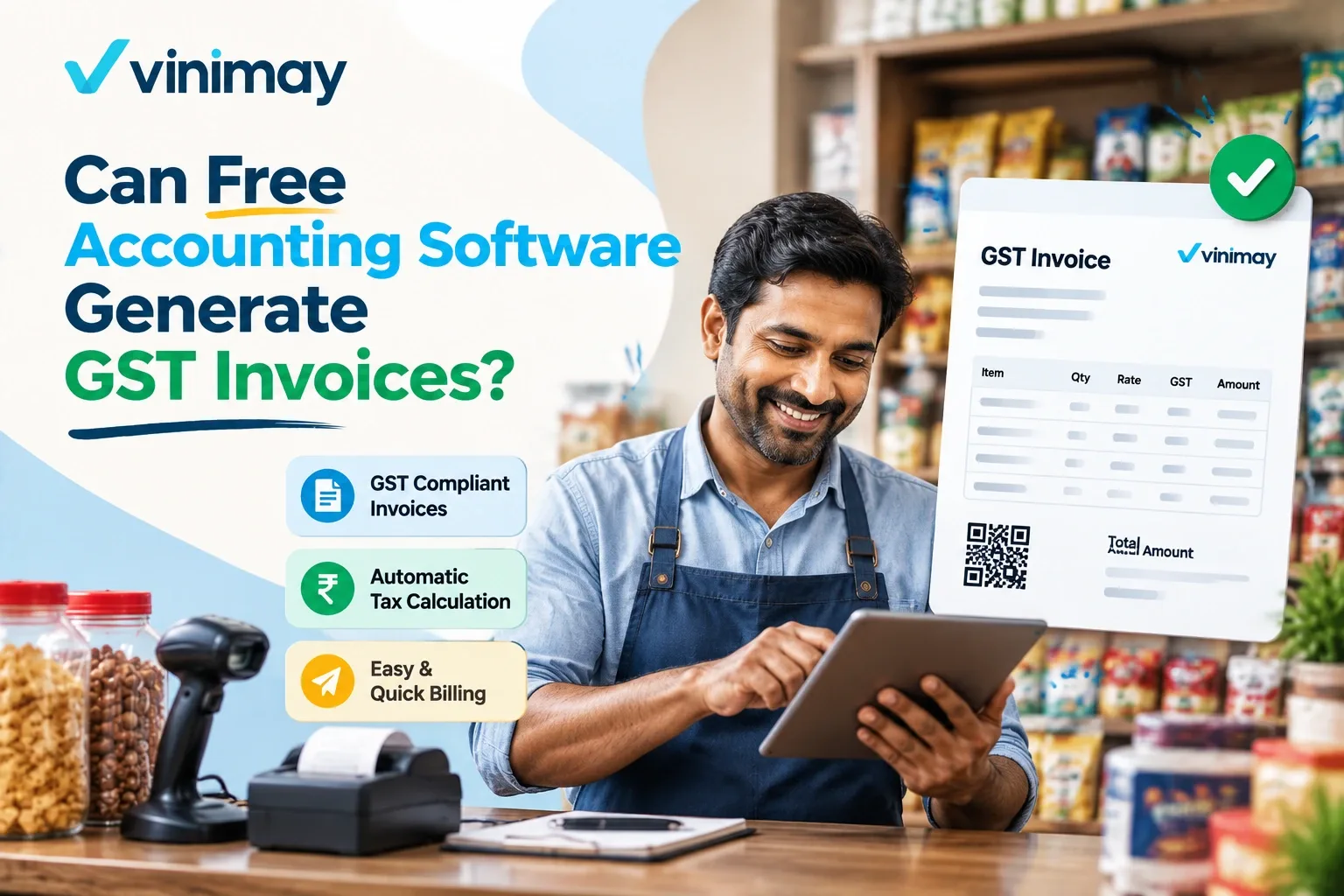
To see how records stay organized from the point of billing, Vinimay's free tool lets you generate up to 5 GST invoices free, with sequential numbering and correct tax details applied automatically.
Conclusion
Reconciling sales invoices with GST returns is a systematic process—confirming completeness, matching totals, checking tax consistency, and resolving specific discrepancies—rather than a vague end-of-period scramble. Most mismatches trace back to one of a handful of common causes: missing invoices, duplicates, incorrect tax type, or unrecorded adjustments. Keeping sales records organized and consistent from the point of billing, which Vinimay supports through its GST invoicing and record-keeping features, makes this process considerably faster, though the actual reconciliation and return filing remain a step you or your CA handle separately.
Frequently Asked Questions
1. What is GST reconciliation?
It's the process of comparing your sales invoice records against your GST return figures to confirm they match and resolving any discrepancies found.
2. How often should reconciliation be done?
Ideally aligned with your GST return filing frequency, rather than only when an issue is discovered.
3. What's the most common cause of a mismatch?
Missing invoices in records, duplicate entries, or incorrect tax type applied due to an inaccurate customer address.
4. Can accounting software automate GST reconciliation?
Some tools support this to varying degrees, though direct reconciliation against the GST portal often still requires manual review or a CA's involvement.
5. Does Vinimay handle GST return filing directly?
No, Vinimay maintains accurate, organized sales records that support reconciliation, but filing itself is a separate step.
6. What should I check first if totals don't match?
Confirm your invoice records are complete and none are missing or duplicated before investigating individual tax details.
7. How can organized invoice numbering help with reconciliation?
Sequential numbering makes it immediately visible if an invoice is missing from your records.
8. What role do credit notes play in reconciliation mismatches?
Unrecorded or improperly logged credit and debit notes are a common, often overlooked cause of totals not matching.
9. Does Vinimay apply consistent tax details across invoices?
Yes, Vinimay applies CGST, SGST, and IGST automatically based on customer and product setup, supporting consistency during reconciliation.
10. Should I reconcile before or after filing my GST return?
Ideally before, so discrepancies can be resolved before submission rather than requiring a correction afterward.
Related Topics
Published by admin
Our editorial and compliance specialists create practical guides, tax calculation rules, and operational strategies to empower Indian small business owners and accountants.