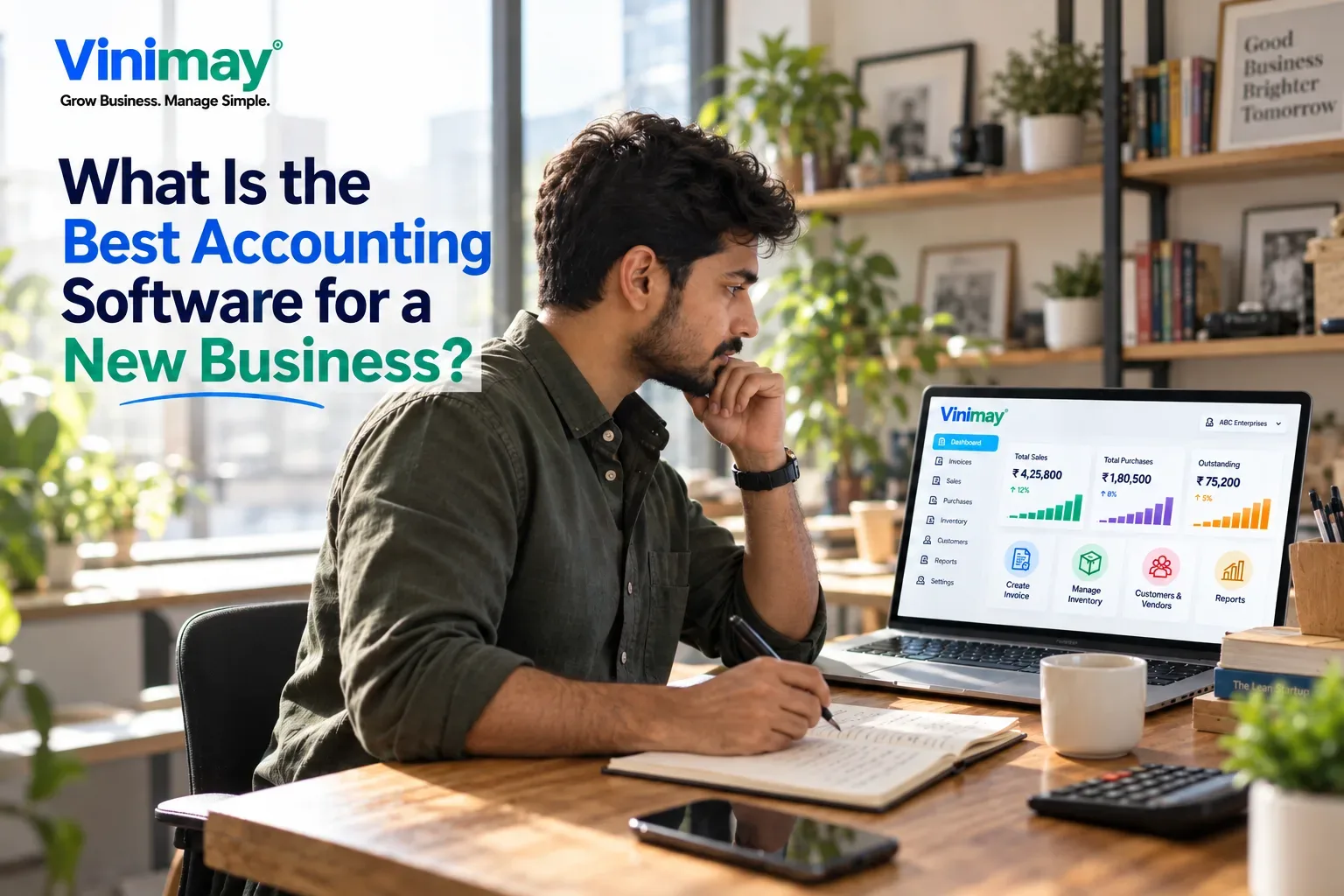
What Is the Best Accounting Software for a New Business?
Starting a business comes with a long list of first-time decisions, and accounting software is usually one of the ones people rush through—pick something quickly, figure it out later, and move on to the next task. That approach often backfires, not because the wrong software is disastrous, but because habits set in the first few months tend to stick, and undoing a messy invoicing habit six months in is harder than setting it up correctly on day one.
A new business doesn't need the same thing from accounting software that an established one does. An established business often already knows its transaction volume, has staff trained on a process, and may need deeper reports. A new business is still figuring out its own rhythm—how many invoices it'll actually generate, whether GST registration is required yet, and whether it needs one person handling billing or several. The right software for this stage prioritizes simplicity and low commitment over depth of features.
What Actually Matters When You're Just Starting Out
Ask three questions before anything else:
Do you need GST registration yet? Registration under GST becomes mandatory once your turnover crosses the applicable threshold (₹40 lakh for most goods suppliers, ₹20 lakh for services, with lower thresholds in certain special category states)—until then, you may not need GST-compliant invoicing at all, though many new businesses register early anyway to build credibility with customers or suppliers. If you're below the threshold and unregistered, your software needs are simpler than someone who's already GST-registered.
How many invoices will you realistically create in month one? New businesses consistently overestimate this. If you're expecting five customers in your first month, you don't need software built for a hundred invoices a day—you need something that won't feel like overkill for low volume.
Will it just be you, or will someone else help with billing soon? If you're planning to bring on staff within the first year, it's worth checking whether the software you pick now supports more than one user later, even if you don't need that immediately.
Why Overcommitting Early Causes Problems
New businesses that jump straight into feature-heavy, paid accounting software often end up using a fraction of what they're paying for, while still manually figuring out the parts that matter most—customer outstanding, basic GST invoicing, and simple purchase tracking. The complexity doesn't help; it just adds a learning curve on top of everything else a new business owner is already juggling.
The opposite mistake is just as common—sticking with a notebook or Excel far longer than necessary, assuming "we're too small for software yet." This usually catches up the moment a second customer's payment gets confused with a third's, or an invoice number gets duplicated because two people ended up billing on the same day.
Testing Before Committing Makes Sense at This Stage
For a new business specifically, there's a strong case for testing software with real invoices before deciding on anything long-term—you genuinely don't know yet what your invoice volume or complexity will look like three months in, so committing to a paid plan immediately is often premature.
This is exactly the situation Vinimay's free tool is built for. It lets you generate up to 5 GST-compliant invoices, with CGST, SGST, or IGST applied correctly based on the transaction, without creating an account first. For a new business trying to figure out whether GST-compliant digital invoicing fits their workflow at all, this removes the pressure of picking "the right software" before you even have enough data to know what right looks like.
If your invoicing needs turn out to be ongoing, Vinimay's fuller platform keeps sales, purchases, receipts, and payments recorded against shared customer and vendor records, so your outstanding balances and transaction hitory build up correctly from the start rather than needing to be reconstructed later. Inventory adjusts automatically as invoices are created, if that applies to your business. Full accounting features like formal financial statement generation, payroll, or GST return filing aren't part of what's currently confirmed for Vinimay — if any of these is something you'll need soon, it's worth checking directly rather than assuming.
[Create Your First Invoice Free with Vinimay]
Conclusion
A new business doesn't need the most feature-rich accounting software available — it needs something simple enough to not add friction in the first few months, accurate enough on GST to avoid building bad habits, and flexible enough to grow with you once you actually know your real invoice volume and staffing needs. Testing before committing is a reasonable approach at this stage, since a business three months old genuinely doesn't have enough data yet to know what it will need a year from now.
Ready to connect billing and stock? Try Vinimay free: create up to 20 GST invoices, track inventory in real time, and download professional PDFs in seconds. Have questions? Chat with us on WhatsApp.
Frequently Asked Questions
Do I need GST-compliant software if I haven't registered for GST yet?
Not necessarily—if your turnover is below the applicable registration threshold, you may not need GST-compliant invoicing yet. Once you register, or if you register voluntarily, GST-correct invoicing becomes necessary.
What's the GST registration threshold for a new business in India?
Generally ₹40 lakh annual turnover for most goods suppliers and ₹20 lakh for services, with lower thresholds in certain special category states. Confirm the current threshold for your state and business type on the GST portal.
Should a new business start with free software or pay for something more capable right away?
Starting with a free tool or low-commitment option is usually more sensible, since a new business often doesn't yet know its real invoice volume or feature needs—overcommitting early can mean paying for capacity you're not using.
How many invoices does a typical new business create in its first month?
This varies widely, but new businesses often overestimate their early volume. It's worth tracking your actual numbers for a month or two before assuming you need a high-capacity plan.
What's the biggest mistake new businesses make with accounting software?
Either overcommitting to complex, paid software before knowing their real needs, or delaying software adoption too long with manual records, which often leads to duplicate invoices or missed customer payments once volume picks up even slightly.
Can I switch accounting software later if my first choice doesn't fit?
Yes, though switching is easier the earlier you do it — before large amounts of transaction history build up in a system you plan to leave. This is part of why testing early with low commitment makes sense.
Does a new business need multi-user accounting software from day one?
Not usually, if it's just one person handling billing initially. It's worth checking whether your chosen software supports adding users later, even if you don't need that immediately.
Is Vinimay's free tool suitable for a business that's still figuring out its invoicing needs?
Yes—generating up to 5 GST-compliant invoices without signing up is well suited to testing whether GST-correct invoicing fits your workflow before committing to ongoing use.
Does Vinimay support GST return filing for a newly registered business?
Not currently confirmed. Vinimay's verified scope covers GST-compliant invoicing, transactions, customer/vendor records, inventory, and a payment ledger—confirm directly if return filing is a near-term requirement.
Related Topics
Published by Team Vinimay
Our editorial and compliance specialists create practical guides, tax calculation rules, and operational strategies to empower Indian small business owners and accountants.