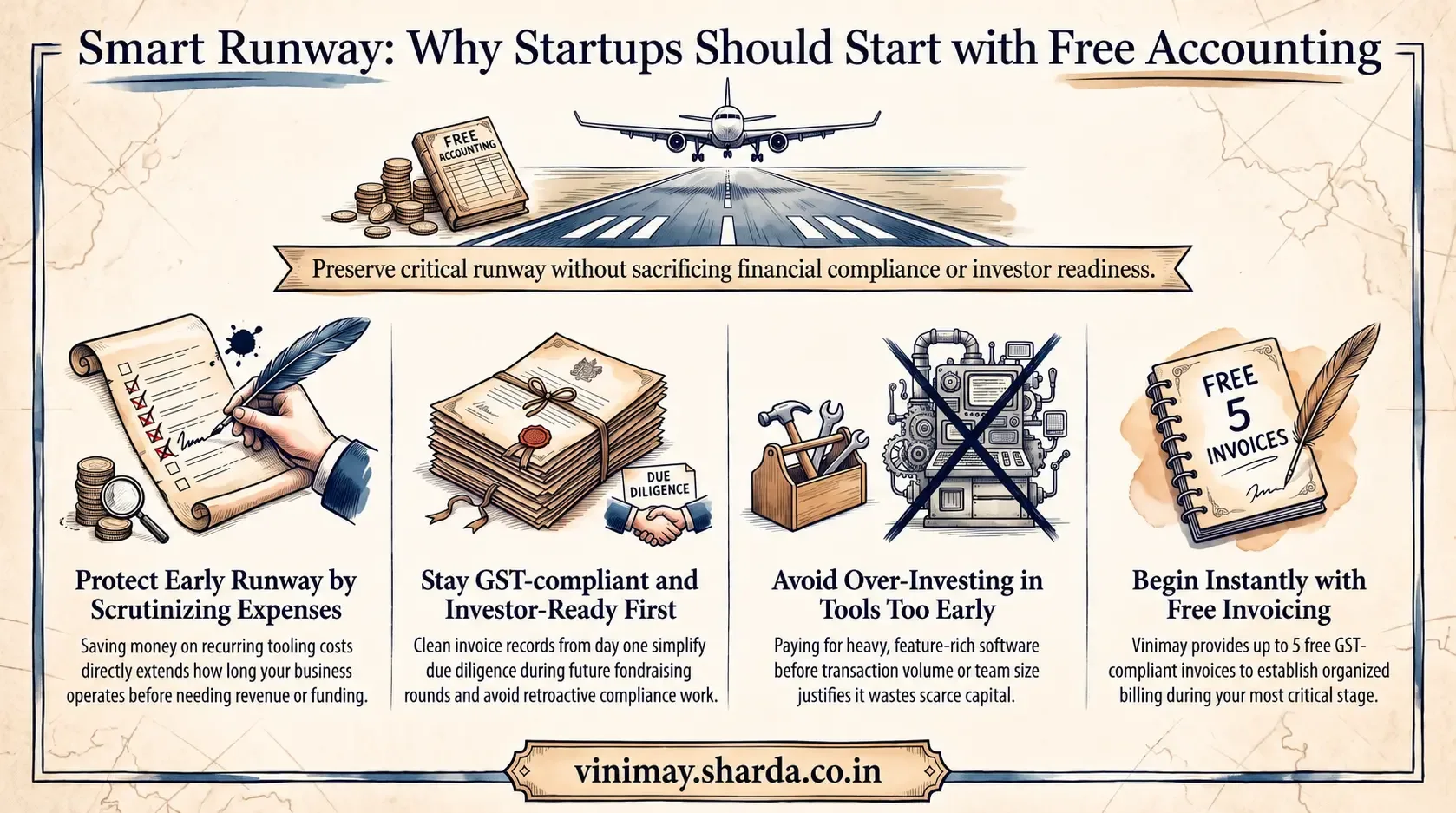
A startup in its first six months is usually optimising for one thing above all else: making the limited cash it has last as long as possible. Every recurring expense gets scrutinised, and accounting software subscriptions are no exception — which makes the free tier question less about convenience and more about runway. Yes, startups can and often should use free accounting software in their earliest stage, since the transaction volume is typically low, the team is small, and the core need—GST-compliant invoicing and basic record organisation—is exactly what free tools are built to handle. The bigger question isn't whether it's allowed, but for how long it remains the right choice as the startup grows.
Why This Matters More for Startups Than Established Businesses
An established business choosing free software is optimising for cost efficiency on top of stable revenue. A startup choosing free software is often preserving runway during a period with little or no revenue at all — every rupee not spent on tooling is a rupee that extends how long the business can operate before needing more funding or reaching profitability.
What a Pre-Revenue or Early Startup Actually Needs
Professional invoicing for the first paying customers, however few
A record of exactly what's been billed and collected for future fundraising conversations
GST compliance from the first transaction, since retrofitting compliance later is more work
Minimal time spent on tooling, since founder time is the scarcest resource at this stage
The Fundraising Angle Nobody Mentions
Investors and even early hires often ask to see basic financial records during due diligence — having organised, even if simple, invoice and revenue records from day one avoids a scramble to reconstruct this history later. Free software that produces clean, exportable invoices supports this need just as well as an expensive system would at this specific stage.
Why Startups Consider Free Accounting Software
Startups often consider free accounting software because they usually want to control operating costs while building their business. In the early stage, transaction volumes may be relatively low, so paying for advanced accounting features may not always be necessary.
Free accounting software can help startups manage essential activities such as creating invoices, recording sales and expenses, tracking customer payments, and maintaining basic financial records without adding another regular software expense.
Another advantage is that startups can test an accounting system before committing to a paid plan. This allows founders to understand whether the software is easy to use and whether its invoicing, GST, payment tracking, and reporting features match their requirements.
However, startups should not choose software based only on price. They should also consider GST support, invoice limits, user access, reporting features, data management, and future scalability. As the business grows, its accounting requirements may also increase, making a more advanced plan or solution appropriate.
When a Startup Should Reconsider
The Risk of Over-Investing in Tooling Too Early
It's worth naming the opposite mistake too — some early founders invest in an expensive, feature-heavy accounting system before they have the transaction volume or team size to justify it, spending scarce early capital on capability they won't use for months or years.
Where Vinimay Fits Startup Needs
Vinimay's free invoice tool lets a new startup begin billing customers with correct GST details from day one, at no cost during the critical early runway period. Up to 5 free invoices provide a genuine way to establish organised, professional billing before deciding whether the business has grown into needing more.
Frequently Asked Questions
Q1. Why does free software matter more for startups than established businesses?
Because startups are often preserving limited runway, and every recurring cost extends or shortens how long the business can operate.
Q2. Do investors care about early invoicing records?
Yes, organised financial records, even simple ones, are often reviewed during fundraising due diligence.
Q3. When should a startup move beyond free accounting software?
Typically when a second person needs billing access, invoice volume grows significantly, or more detailed reporting becomes necessary.
Q4. Is it a mistake to invest in expensive software too early?
It can be, if the transaction volume and team size don't yet justify the additional capability being paid for.
Q5. Does Vinimay support GST compliance from a startup's very first invoice?
Yes, GST fields are applied correctly from the first transaction, without requiring deep tax expertise.
Q6. How many free invoices can a startup create with Vinimay?
Up to 5 GST invoices are free, useful for establishing organised billing in the earliest stage.
Q7. Can free accounting software help startups maintain organised financial records?
Yes, it can help startups record sales, expenses, invoices, payments, and customer transactions in one organised system from the beginning.
Q8. Can startups use free accounting software before hiring an accountant?
Yes, founders can use free accounting software for basic invoicing and transaction records, while an accountant or CA can assist with more complex tax and financial requirements.
Q9. Can free accounting software help startups track unpaid customer invoices?
Yes, where payment tracking is available, startups can monitor pending invoices, identify outstanding amounts, and follow up with customers more systematically.
Q10. What should startups check before choosing free accounting software?
Startups should check GST support, invoice limits, payment tracking, reporting features, ease of use, data access, and whether the software can support their expected growth.
Related Topics
Published by Team Vinimay
Our editorial and compliance specialists create practical guides, tax calculation rules, and operational strategies to empower Indian small business owners and accountants.