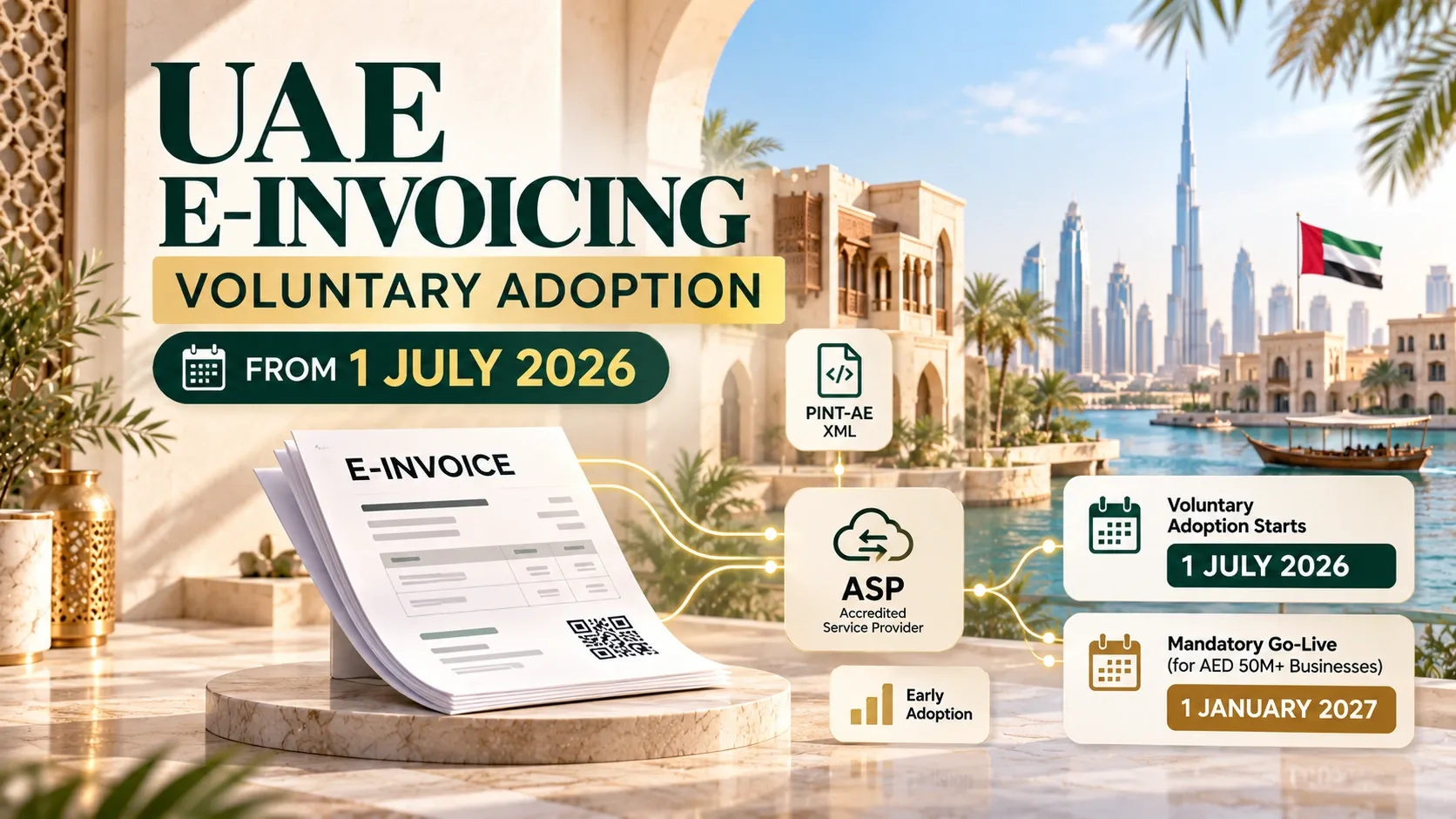
UAE businesses can use electronic invoicing on a voluntary basis from 1 July 2026, regardless of annual revenue. Voluntary use still requires following the prescribed technical rules, including exchanging structured invoices through an Accredited Service Provider. The specific e-invoicing penalties are exempt until mandatory implementation applies.
The voluntary phase gives businesses time to prepare before the national system becomes mandatory in 2027.
For companies in Dubai, Abu Dhabi and the other Emirates, early voluntary use is a chance to test their software, improve financial records and get employees used to the new process.
However, voluntary use does not mean businesses can ignore the technical requirements. Anyone who opts in must meet the UAE’s prescribed standards.
1. When Did Voluntary E-Invoicing Start in the UAE?
Voluntary implementation officially began on 1 July 2026, under Ministerial Decision No. 244 of 2025.
The UAE also launched a pilot programme on the same date.
Although these initiatives began together, they have different participation arrangements.
Businesses do not need to wait until their mandatory deadline to begin adopting the prescribed electronic invoicing framework.
However, they should confirm technical readiness and Accredited Service Provider availability before implementation.
2. Who Can Join UAE Voluntary E-Invoicing?
Ministerial Decision No. 244 of 2025 allows persons to implement electronic invoicing voluntarily from 1 July 2026.
Participation is not restricted to companies earning AED 50 million or more.
Businesses that may consider early adoption include:
Small trading and wholesale companies
Manufacturing businesses
Professional service providers
Logistics and transportation companies
Free-zone businesses
Startups preparing for structured invoicing
Companies processing significant B2B invoice volumes
Even businesses with relatively low revenue can evaluate voluntary adoption.
The important consideration is whether they have suitable systems and can satisfy the applicable electronic invoicing requirements.
3. What Are the Requirements for Voluntary E-Invoicing?
Businesses adopting the system voluntarily must meet the prescribed technical standards.
The UAE framework uses structured electronic invoices based on the Peppol PINT-AE specification.
Key requirements include:
Creating invoices in the required structured format.
Using an Accredited Service Provider (ASP).
Maintaining accurate supplier and buyer information.
Including mandatory invoice data fields.
Exchanging invoices through the prescribed network.
Reporting relevant invoice information to the FTA.
Following applicable electronic credit note procedures.
Ordinary PDFs, Word documents, scanned invoices and email attachments do not qualify as structured electronic invoices on their own.
Businesses should review the official requirements with their ASP before participating.
4. Are There Penalties During Voluntary UAE E-Invoicing?
Businesses participating voluntarily are exempt from the specific electronic invoicing administrative penalties under Cabinet Decision No. 106 of 2025 until they become mandatorily subject to the system.
For example, those specific penalties include:
Important: The voluntary-phase exemption does not remove existing VAT, tax invoice or financial recordkeeping obligations.
Businesses remain responsible for meeting applicable tax requirements, even while testing the new electronic invoicing system.
5. When Does Voluntary E-Invoicing Become Mandatory?
The UAE government has established different implementation phases based on annual revenue and entity category.
For example, a Dubai consultancy earning AED 3 million annually generally falls within the July 2027 implementation phase if it conducts covered transactions.
However, it can choose to adopt electronic invoicing voluntarily before that date.
Businesses should distinguish voluntary participation from mandatory obligations and confirm their applicable implementation deadline.
6. What Are the Benefits of Adopting UAE E-Invoicing Early?
Voluntary adoption can help businesses identify problems before mandatory implementation.
Potential benefits include:
Early identification of missing invoice information.
Improved customer and supplier records.
Testing of electronic invoice validation.
Reduced manual invoice processing.
Employee familiarity with new procedures.
Better understanding of ASP integration costs.
For example, a Dubai wholesaler issuing hundreds of monthly invoices can test whether its software correctly transfers customer details, product information and VAT amounts.
Finding these problems during preparation may reduce disruption when mandatory implementation begins.
However, businesses should evaluate implementation costs against their transaction volumes and operational needs.
7. How Can Businesses Start Voluntary E-Invoicing in the UAE?
A business considering voluntary implementation should begin by reviewing its existing invoicing system.
A practical process includes:
Check whether existing accounting software supports UAE PINT-AE requirements.
Review the official Ministry of Finance ASP register.
Select an accredited provider offering suitable integration.
Verify customer and supplier tax identifiers.
Prepare structured invoice data.
Complete system configuration and onboarding.
Test invoices and electronic credit notes.
Monitor processing statuses and reporting results.
The Ministry of Finance publishes technical guidelines and ASP information to support implementation.
Businesses should confirm the applicable onboarding arrangements with their chosen provider and follow official FTA procedures.
8. Should Small Businesses in Dubai Adopt E-Invoicing Voluntarily?
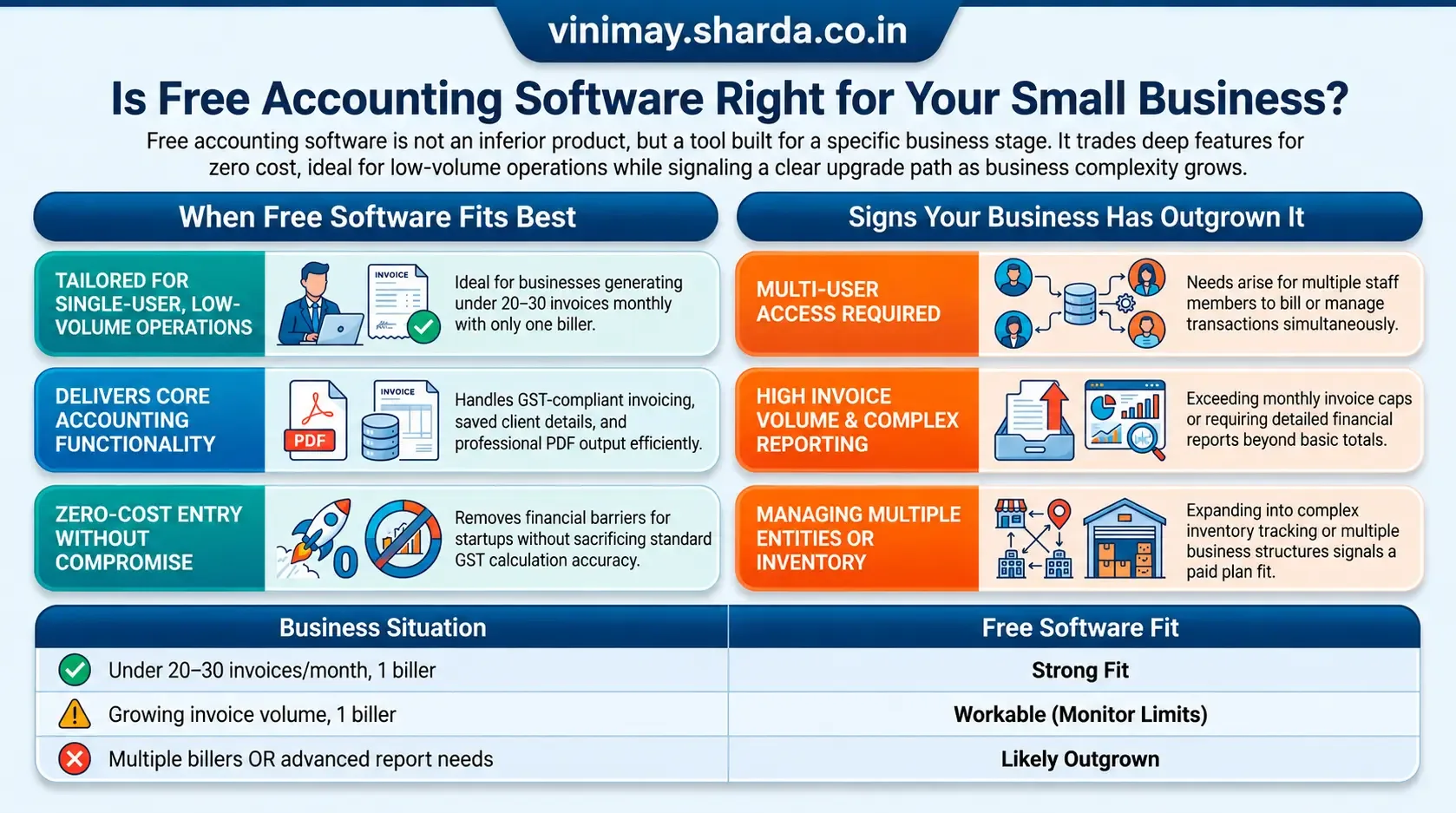
Voluntary adoption may be useful for SMEs processing frequent B2B transactions or planning to modernise their invoicing operations.
However, businesses with limited transaction volumes should first assess software costs, provider charges and integration requirements.
Accurate accounting records are an important starting point.
For example, Vinimay provides general invoice management, sales and purchase records, customer information and payment tracking features that can help organise business finances.
Vinimay's UAE PINT-AE compatibility and ASP integration have not been independently verified. Businesses should confirm these capabilities before relying on it for voluntary or mandatory UAE electronic invoicing.
The decision to adopt early should depend on business readiness, available technical support and the practical benefits of implementing the system before the mandatory deadline.
Frequently Asked Questions About UAE Voluntary E-Invoicing
1. Is voluntary e-invoicing allowed in the UAE?
Yes. Ministerial Decision No. 244 of 2025 permits voluntary electronic invoicing from 1 July 2026.
2. When did the voluntary phase begin?
The voluntary implementation phase officially began on 1 July 2026, alongside the selected-participant pilot programme.
3. Can small businesses voluntarily use UAE e-invoicing?
Yes. Voluntary implementation is not limited to large businesses. SMEs can participate if they follow the applicable technical requirements.
4. Is there a penalty for voluntary e-invoicing errors?
The specific administrative penalties under Cabinet Decision No. 106 of 2025 do not apply to voluntary participation before mandatory implementation. Existing tax compliance obligations remain applicable.
5. Does voluntary e-invoicing require an Accredited Service Provider?
Businesses implementing the UAE Electronic Invoicing System must follow the prescribed technical and provider requirements, including using an ASP.
6. Can a business voluntarily send PDF invoices through the system?
A PDF alone is not a compliant structured electronic invoice. The prescribed system requires machine-readable electronic invoice data.
7. What is the difference between the UAE pilot and voluntary programmes?
The pilot involves selected participants who agree in writing. Voluntary implementation allows other persons to adopt the prescribed system before their mandatory deadline.
8. When does it become mandatory for UAE SMEs?
Covered businesses with annual revenue below AED 50 million generally must implement e-invoicing from 1 July 2027.
9. Are B2C transactions included in voluntary e-invoicing?
Businesses may voluntarily exchange electronic invoices for transactions otherwise excluded from mandatory scope, subject to applicable rules. B2C transactions remain outside the initial mandatory mandate.
10. Where can I find UAE voluntary adoption guidelines?
The UAE Ministry of Finance publishes Ministerial Decisions, electronic invoicing guidelines and ASP information on its official e-invoicing portal.
Related Topics
Published by admin
Our editorial and compliance specialists create practical guides, tax calculation rules, and operational strategies to empower Indian small business owners and accountants.