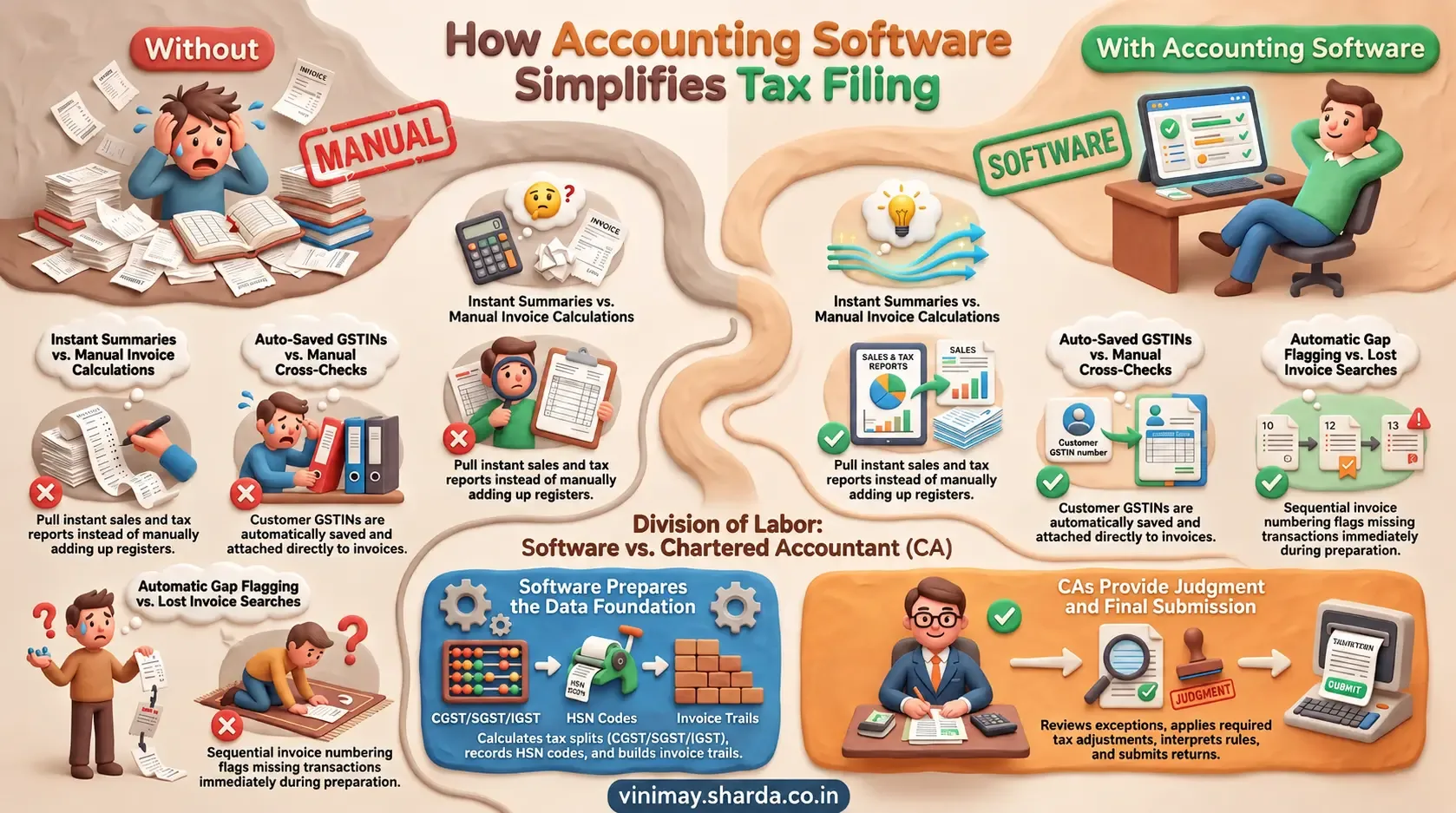
A business that starts selling to customers outside India or opens an office in another country runs into a question that most India-focused billing software simply isn't built to answer: can the same tool handle GST here and a completely different tax system somewhere else at the same time? Managing taxes for multiple countries in one software requires that tool to be built specifically for multi-country tax logic — different tax structures, different rates, different compliance rules per country — which is a fundamentally different technical requirement than being GST-compliant for India. Most tools built specifically around India's GST framework, Vinimay included, are not designed to also handle an entirely separate country's tax system simultaneously.
Why This Is Harder Than It Sounds
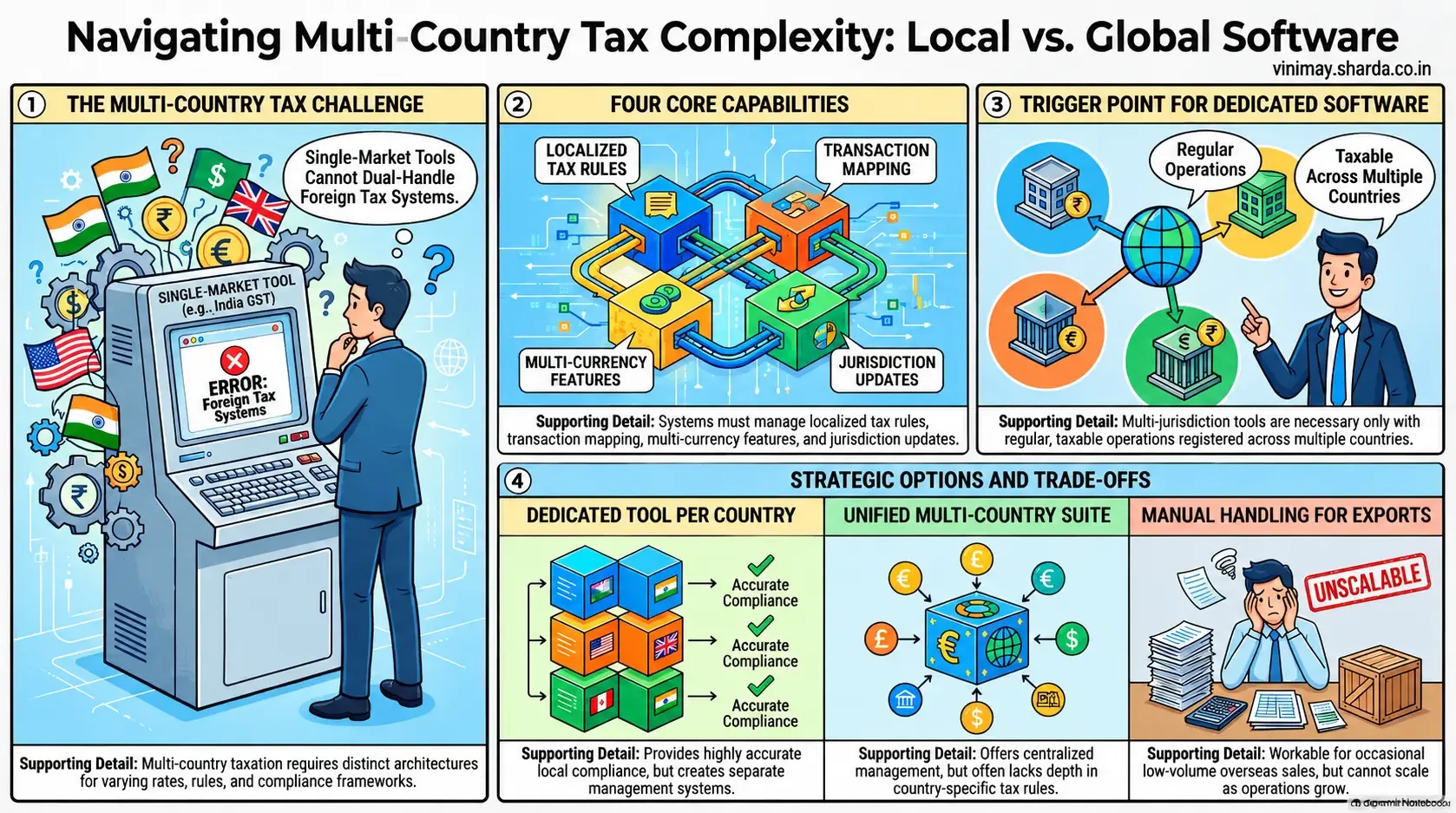
India's GST — CGST, SGST, IGST, and HSN codes — is already a specific, structured system. A tool built to handle this well is, by design, built around these particular rules. Handling a second country's tax system means supporting an entirely different structure (a flat VAT, a sales tax, different classification codes) alongside the first, which most single-market tools simply weren't architected to do.
What Multi-Country Tax Software Actually Requires
Separate tax rule sets for each country, since rates, structures, and compliance requirements differ entirely
The ability to correctly identify which country's rules apply to a given transaction
Currency handling alongside tax handling, since cross-border transactions usually involve both
Compliance updates tracked separately for each jurisdiction, since tax rules change independently across countries
What Businesses in This Situation Typically Do Instead
Rather than expecting one tool to handle every country, many businesses operating across borders use separate, dedicated software per major market — a GST-focused tool for Indian operations and a different tool built specifically for another country's tax requirements — rather than searching for a single universal solution.
When This Actually Matters vs When It Doesn't
If your business occasionally sells to an overseas customer but is otherwise entirely India-based, dedicated multi-country tax software is likely unnecessary complexity — a good India-focused GST tool, combined with occasional manual attention to any specific export requirements, covers most of this. It becomes a genuine requirement only once a business has substantial, regular operations actually registered or taxable in more than one country.
Where Vinimay Stands on This
Vinimay is built specifically around India's GST framework—CGST, SGST, IGST, and India-specific document types like proforma invoices and delivery challans. Multi-country tax management is not part of Vinimay's confirmed scope, and businesses with genuine multi-jurisdiction tax requirements should evaluate dedicated multi-country software or maintain separate systems per market.
For the India-based side of a business's operations, Vinimay's free invoice tool lets you generate up to 5 GST invoices free with accurate Indian tax handling.
Frequently Asked Questions
1. Can accounting software manage taxes for multiple countries?
Some accounting software supports multiple countries and tax systems, while others are designed for a single country's requirements. Check the software's supported regions before choosing it.
2. Can one software handle different tax rates for different countries?
Yes, some multi-country accounting systems allow separate tax rates and configurations for different countries.
3. Can accounting software handle GST and VAT together?
Certain international accounting platforms can support GST, VAT, sales tax, or other tax systems. Availability depends on the software and supported jurisdictions.
4. Can software manage transactions in different currencies?
Many multi-country accounting systems support multiple currencies and can record transactions using the relevant currency.
5. Can accounting software handle international sales?
Some software can record international sales and apply the relevant tax configuration based on the transaction and jurisdiction. Businesses should verify the applicable tax rules separately.
6. Can businesses manage tax reports for different countries?
Some platforms can generate separate tax reports based on country, entity, or tax configuration. The available reports vary by software.
7. Can one account manage multiple business entities in different countries?
Certain accounting systems support multiple companies or entities, allowing each entity to maintain its own financial and tax records.
8. Does free accounting software support multiple countries?
Some free plans may offer basic multi-country functionality, but advanced tax configurations, currencies, entities, or compliance features may be restricted to paid plans.
9. Can software automatically keep international tax rules updated?
Some providers update tax rates or compliance settings, but coverage varies by country. Businesses should verify whether the software supports current requirements for each jurisdiction.
10. What should I check before using accounting software across countries?
Check supported countries, tax systems, currencies, tax reports, multi-entity support, international transactions, compliance updates, and whether these features are included in your chosen plan.
Related Topics
Published by Team Vinimay
Our editorial and compliance specialists create practical guides, tax calculation rules, and operational strategies to empower Indian small business owners and accountants.