Managing purchase orders efficiently helps businesses keep track of supplier requirements, expected deliveries, and purchasing decisions. When purchase details are maintained manually through registers or spreadsheets, it can become difficult to monitor pending orders, compare purchases, and maintain accurate records.
Accounting software with purchase order features allows businesses to create, track, and organize purchase-related information in a structured manner. It helps connect purchase activities with supplier records, inventory, and financial data. This guide explains how purchase order management works through accounting software, what features to look for, and how it can improve the overall purchasing process.
Two Different Things That Sound Similar
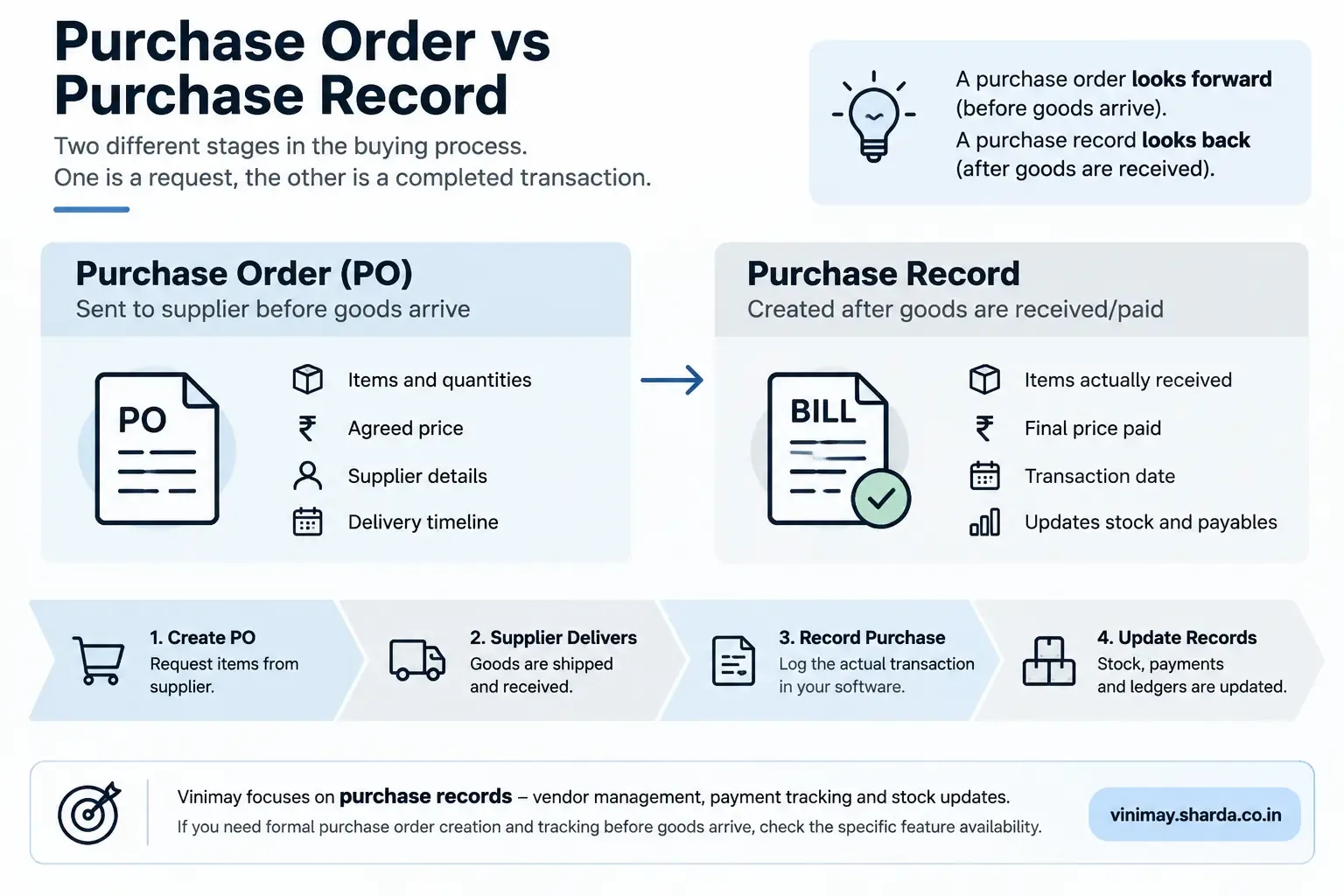
A purchase order is sent before you receive goods—it's a request or commitment to a supplier, specifying what you want, how much, and at what agreed price. A purchase record is created after the transaction happens—it documents what was actually bought, received, and paid for. One looks forward; the other looks back.
What a Purchase Order Actually Is
A purchase order (PO) typically includes:
The items or services being requested
Quantities and agreed pricing
The supplier it's being sent to
Delivery expectations or timelines
It functions as a formal request, often used in businesses that want a documented commitment before goods are shipped, especially for larger or recurring orders.
What a Purchase Record Actually Is
A purchase record, by contrast, documents a completed transaction:
What was actually received from the supplier
The final price paid
The date of the transaction
How it connects to stock levels and payment tracking
This is the transactional history that feeds into your accounts—receivables and payables, ledgers, and reports.
Why This Distinction Matters When Choosing Software
If a business is specifically looking for purchase order management—creating, sending, and tracking formal POs before goods arrive—that's a more specificprocurement-oriented capability, distinct from the purchase records most accounting and billing software focuses on. Assuming "purchase tracking" automatically means "purchase order management" can lead to disappointment if a tool only supports one of the two.
Where Each One Fits in the Buying Process
In a typical buying cycle, a purchase order is sent to formalize a request, the supplier fulfills it, and once the goods and invoice arrive, that transaction gets logged as a purchase record—the version accounting software most commonly works with. Some businesses skip the formal PO stage entirely, especially smaller ones with straightforward, trust-based supplier relationships, and go directly to recording the purchase once it happens.
What to Do If You Specifically Need Purchase Order Management
If your business genuinely needs to issue and track formal purchase orders before goods arrive — for example, for internal approval processes or supplier commitments — it's worth checking any software's specific capabilities here directly, since this can vary significantly between general accounting tools and more procurement-focused systems. Don't assume "purchase management" in a feature list automatically includes formal PO creation and tracking; confirm what stage of the buying process it actually covers.
What Vinimay Handles in This Process
Vinimay's confirmed features are focused on the purchase record side of this process—documenting what was actually bought, received, and paid for—rather than formal, pre-delivery purchase order creation:
Purchase records capture completed transactions with suppliers, including price and date
Vendor management organizes each supplier's transaction history
Payment tracking logs what's been paid against each purchase
Stock tracking connects purchases to actual inventory levels once goods are received
For businesses whose buying process specifically requires generating and tracking formal purchase orders before goods arrive, that's a distinct need worth confirming directly against Vinimay's current capabilities, since it's a different stage of the process from the purchase records described above.
Frequently Asked Questions
1. Is a purchase order the same as a purchase record?
No—a purchase order is sent before goods arrive as a request, while a purchase record documents the completed transaction afterward.
2. Does accounting software typically handle purchase orders?
General accounting and billing software more commonly focuses on purchase records; formal purchase order creation and tracking is a more specific, often separate capability.
3. What information does a purchase order usually include?
Requested items, quantities, agreed pricing, the supplier, and delivery expectations.
4. What information does a purchase record usually include?
The actual items received, the final price paid, the transaction date, and its connection to stock and payment tracking.
5. Do all businesses need formal purchase orders?
No—many smaller businesses, especially those with straightforward supplier relationships, skip the formal PO stage and go directly to recording purchases.
6. Why does this distinction matter when choosing software?
Because assuming "purchase tracking" includes purchase order management can lead to disappointment if a tool only supports purchase records.
7. Can a business use purchase records without ever creating formal purchase orders?
Yes—this is common for businesses that don't require a formal pre-delivery request process with their suppliers.
8. What should I check if I specifically need purchase order support?
Confirm directly with any software whether it supports creating and tracking formal purchase orders, rather than assuming based on general purchase-related features.
9. Does a purchase record connect to inventory automatically?
In systems with stock tracking, yes—a purchase record typically updates stock levels once goods are received.
10. Is purchase order management more common in larger businesses?
It's more commonly used by businesses with formal procurement or approval processes, though this varies regardless of business size.
Related Topics
Published by Team Vinimay
Our editorial and compliance specialists create practical guides, tax calculation rules, and operational strategies to empower Indian small business owners and accountants.