Walk into most small retail shops, and the accounting system, if it exists at all, is a mix of a cash register receipt roll and a notebook for tracking what's owed. Whether a shift to actual accounting software makes sense depends on what specifically the shop is trying to solve—and retail has a particular requirement that many other business types don't: inventory.
Yes, retail shops can and generally benefit significantly from accounting software, specifically because retail billing is almost always tied to physical stock—a connection that manual systems handle poorly and that software is specifically built to manage well, linking every sale directly to a corresponding stock reduction.
The Specific Problem Retail Faces
Unlike a service business, a retail shop's biggest recurring headache usually isn't the invoice itself—it's the gap between what the register says was sold and what the shelf actually shows. This gap grows quietly over weeks of manual tracking until a stock count reveals a mismatch nobody can fully explain.
What Retail-Specific Software Should Handle Well
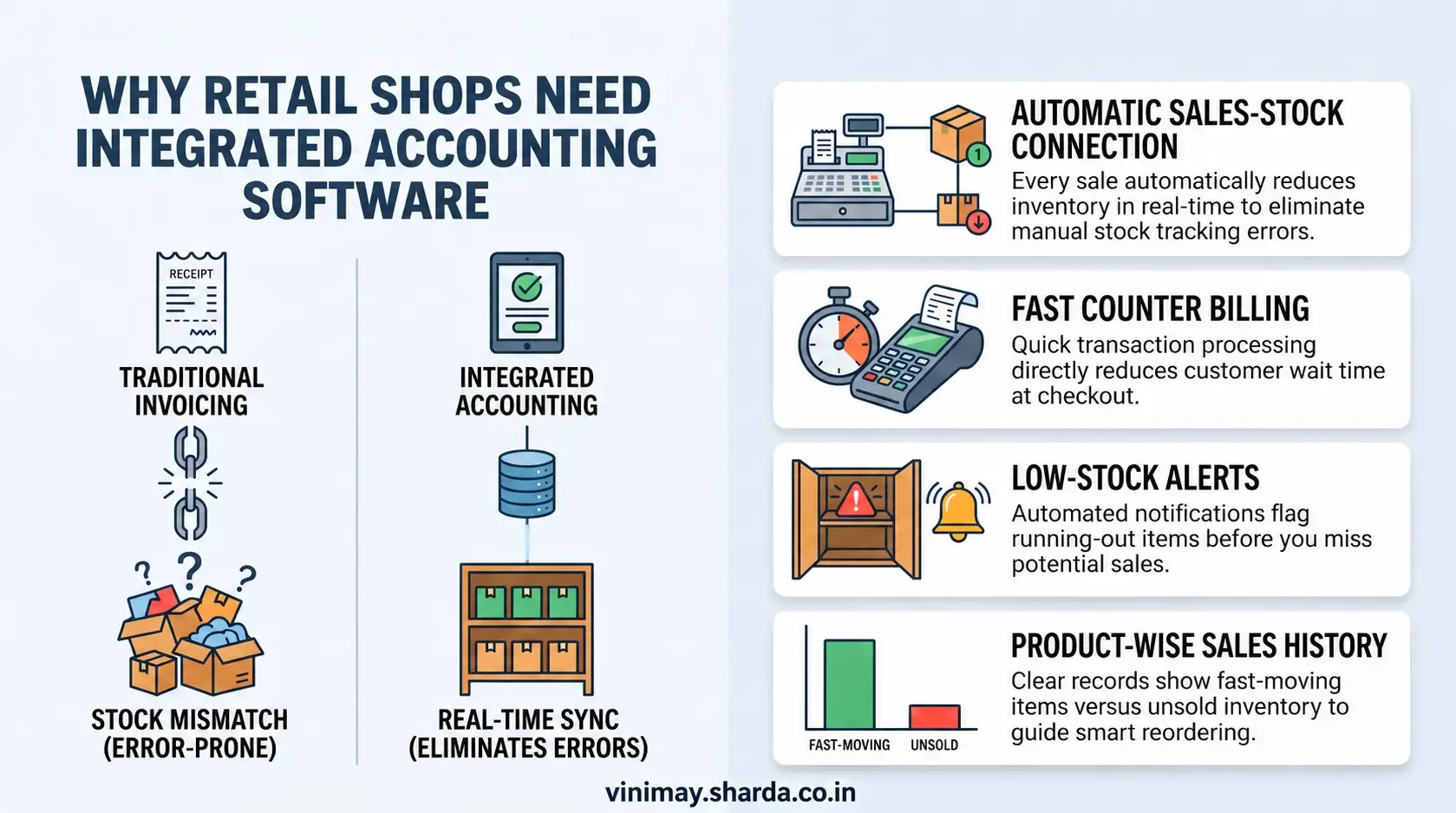
Automatic stock reduction tied directly to each sale
Fast bill creation suited to counter transactions
Low-stock visibility, flagging items before they run out entirely
Product-wise sales history, showing what's actually moving versus sitting unsold
Why Retail Benefits More From Inventory Integration Than Most Business Types
A consultant or freelancer has no stock to track—their accounting needs center entirely on invoicing and payments. A retail shop's accounting needs are inseparable from inventory, which is why evaluating software for retail specifically means prioritizing the sales-stock connection above almost everything else.
What Happens Without This Integration
A retail shop using invoicing software without inventory connection still gets a clean bill but still faces the exact manual reconciliation problem accounting software is meant to solve—stock tracked in one place, sales in another, requiring the same error-prone manual cross-checking a notebook system would.
Where Vinimay Fits Retail Needs
Vinimay connects inventory directly to sales and purchase records, meaning a retail sale automatically reduces stock as part of the same transaction, addressing the specific gap retail businesses face most often. Testing this with the free invoice tool shows the invoicing side directly, with the full inventory connection available as part of Vinimay's broader system.
Frequently Asked Questions
Q1. Why does inventory matter more for retail than other business types?
Because retail sales are directly tied to physical stock, disconnecting the two creates the specific reconciliation problem retail shops face most often.
Q2. Can a small retail shop function with just invoicing software, no inventory link?
It can, but the sales-stock mismatch problem that inventory tracking is meant to solve will persist regardless.
Q3. What's the biggest sign a retail shop needs better accounting software?
Regular discrepancies between recorded sales and actual stock counts during physical inventory checks.
Q4. Does Vinimay automatically update stock with each sale?
Yes, a sale recorded through Vinimay reduces the relevant product's stock as part of the same entry.
Q5. Is fast billing important for retail specifically?
Yes, since counter transactions directly affect customer wait time in a way many other business types don't experience.
Q6. How many free invoices can a retail shop test on Vinimay?
Up to 5 GST invoices are free, with the full inventory connection available in Vinimay's broader system.
Q7. Can retail billing software track product-wise sales?
Yes, product-wise sales tracking helps retailers identify which items sell frequently, review sales performance, and maintain more organized product records.
Q8. Can retail shops manage customer details through billing software?
Yes, customer management features can store customer information and transaction history, making repeat billing and customer-wise record keeping easier.
Q9. Can retail billing software track pending customer payments?
Yes, payment tracking can help retailers identify unpaid or partially paid invoices and monitor outstanding customer balances.
Q10. Can retail shops manage purchases and sales in the same software?
Yes, accounting software with purchase, sales, and inventory features can connect incoming stock with outgoing sales and provide a clearer view of available inventory.
Because retail sales are directly tied to physical stock, disconnecting the two creates the specific reconciliation problem retail shops face most often.
It can, but the sales-stock mismatch problem that inventory tracking is meant to solve will persist regardless.
Regular discrepancies between recorded sales and actual stock counts during physical inventory checks.
Yes, a sale recorded through Vinimay reduces the relevant product's stock as part of the same entry.
Yes, since counter transactions directly affect customer wait time in a way many other business types don't experience.
Up to 5 GST invoices are free, with the full inventory connection available in Vinimay's broader system.
Yes, product-wise sales tracking helps retailers identify which items sell frequently, review sales performance, and maintain more organized product records.
Yes, customer management features can store customer information and transaction history, making repeat billing and customer-wise record keeping easier.
Yes, payment tracking can help retailers identify unpaid or partially paid invoices and monitor outstanding customer balances.
Yes, accounting software with purchase, sales, and inventory features can connect incoming stock with outgoing sales and provide a clearer view of available inventory.
Related Topics
Published by Team Vinimay
Our editorial and compliance specialists create practical guides, tax calculation rules, and operational strategies to empower Indian small business owners and accountants.