Every business has some sales that are settled immediately through cash, UPI, cards, or bank transfers, while other sales are made on credit, where payment is received later. The challenge is that many business owners do not track the ratio between these two types of sales. As a result, they may not have a clear picture of how much of their revenue is immediately available as cash and how much is expected to be collected in the future. Pasted markdown
This is particularly important for businesses involved in B2B or wholesale transactions, where credit sales are common. If the proportion of credit sales increases without proper monitoring, a business may feel that sales are performing well while its available cash is actually declining. This can create a silent cash-flow problem. Pasted markdown
Direct Answer
To track the cash vs credit ratio, each sales transaction should first be tagged according to its payment type—Cash/Immediate Payment or Credit. For a fixed period, such as a month, calculate the total value of cash sales and credit sales and then calculate their percentage of total sales.
Cash Sales Ratio = (Total Cash Sales ÷ Total Sales) × 100
Credit Sales Ratio = (Total Credit Sales ÷ Total Sales) × 100
This can be calculated manually in Excel, but an accounting system can make the process easier when the payment type is recorded along with each sales transaction. Pasted markdown
Tracking this ratio helps businesses understand their actual liquidity position and exposure to credit sales rather than looking only at total sales. Pasted markdown
Cash Sales vs Credit Sales: What Is the Difference?
| Type | What It Means |
|---|---|
| Cash Sales | Payment is received immediately through cash, UPI, card, or bank transfer at the time of sale |
| Credit Sales | Goods or services are provided immediately, but payment is received later according to agreed terms |
Both are valid business practices, but they have different effects on cash flow. Pasted markdown
Why Is It Important to Track the Cash vs Credit Ratio?
Tracking this ratio can help a business:
- Understand its actual liquidity or immediately available cash
- Identify excessive dependence on credit sales
- Review customer-wise credit terms
- Improve working capital planning
- Focus more on receivables management if the credit sales ratio is increasing Pasted markdown
How to Track the Cash vs Credit Sales Ratio
1. Tag Every Sale by Payment Type
When creating an invoice, specify whether payment was received immediately through cash, UPI, card, or bank transfer, or whether the sale was made on credit. Pasted markdown
2. Compile Data for a Fixed Period
Choose a fixed period, such as a month or quarter, and calculate the total cash sales and credit sales for that period. Pasted markdown
3. Calculate the Ratio
Use these formulas:
Cash Sales % = (Cash Sales ÷ Total Sales) × 100
Credit Sales % = (Credit Sales ÷ Total Sales) × 100 Pasted markdown
4. Track the Trend
Looking at only one month may not provide enough information. Comparing multiple months can show whether the cash and credit sales ratio is stable, increasing, or decreasing. Pasted markdown
Practical Example
Suppose a business has the following sales during September:
| Sale Type | Amount (₹) |
|---|---|
| Cash Sales | ₹3,00,000 |
| Credit Sales | ₹2,00,000 |
| Total Sales | ₹5,00,000 |
Cash Sales Ratio = (₹3,00,000 ÷ ₹5,00,000) × 100 = 60%
Credit Sales Ratio = (₹2,00,000 ÷ ₹5,00,000) × 100 = 40%
This means 40% of the business's sales have not yet been converted into cash and represent receivables that will need to be collected in the future. Pasted markdown
Multi-Month Trend Example
| Month | Cash Sales % | Credit Sales % |
|---|---|---|
| July | 65% | 35% |
| August | 58% | 42% |
| September | 60% | 40% |
This trend shows that the credit sales share has increased from 35% to around 40–42%. If this trend continues, the business may need to monitor its liquidity and receivables more closely. Pasted markdown
What Is a Healthy Cash vs Credit Sales Ratio?
There is no universal ideal ratio because the appropriate mix depends on the type of business.
| Business Type | Typical Pattern |
|---|---|
| Retail / Walk-in Customers | Generally higher cash sales |
| B2B / Wholesale | Generally higher credit sales because business customers often operate on credit terms |
| Manufacturing / Bulk Orders | Often credit-heavy, particularly with established customer relationships |
Instead of focusing on a universal target, businesses should track their own historical trend. If the credit sales ratio increases unexpectedly, the reason should be reviewed. Pasted markdown
Common Mistakes Businesses Make
Businesses commonly make the following mistakes:
- Not recording the payment type when entering a sale
- Looking only at total sales and ignoring the cash vs credit breakup
- Allowing credit sales to increase without reviewing customer-wise credit limits
- Treating cash sales and receivable collections as the same thing
- Making decisions based on only one month's data without reviewing the trend Pasted markdown
How Does the Ratio Help in Business Decisions?
| Observation | Possible Action |
|---|---|
| Credit sales ratio is consistently high | Review customer-wise credit limits and strengthen collection processes |
| Credit sales ratio suddenly increases | Investigate whether a new large customer or increased credit demand is responsible |
| Cash sales ratio is high | Review liquidity position while considering whether suitable credit terms could support growth |
| Ratio is significantly different from the industry pattern | Review the business's credit policy against relevant industry practices |
These observations can help business owners connect their sales mix with cash-flow and credit-management decisions. Pasted markdown
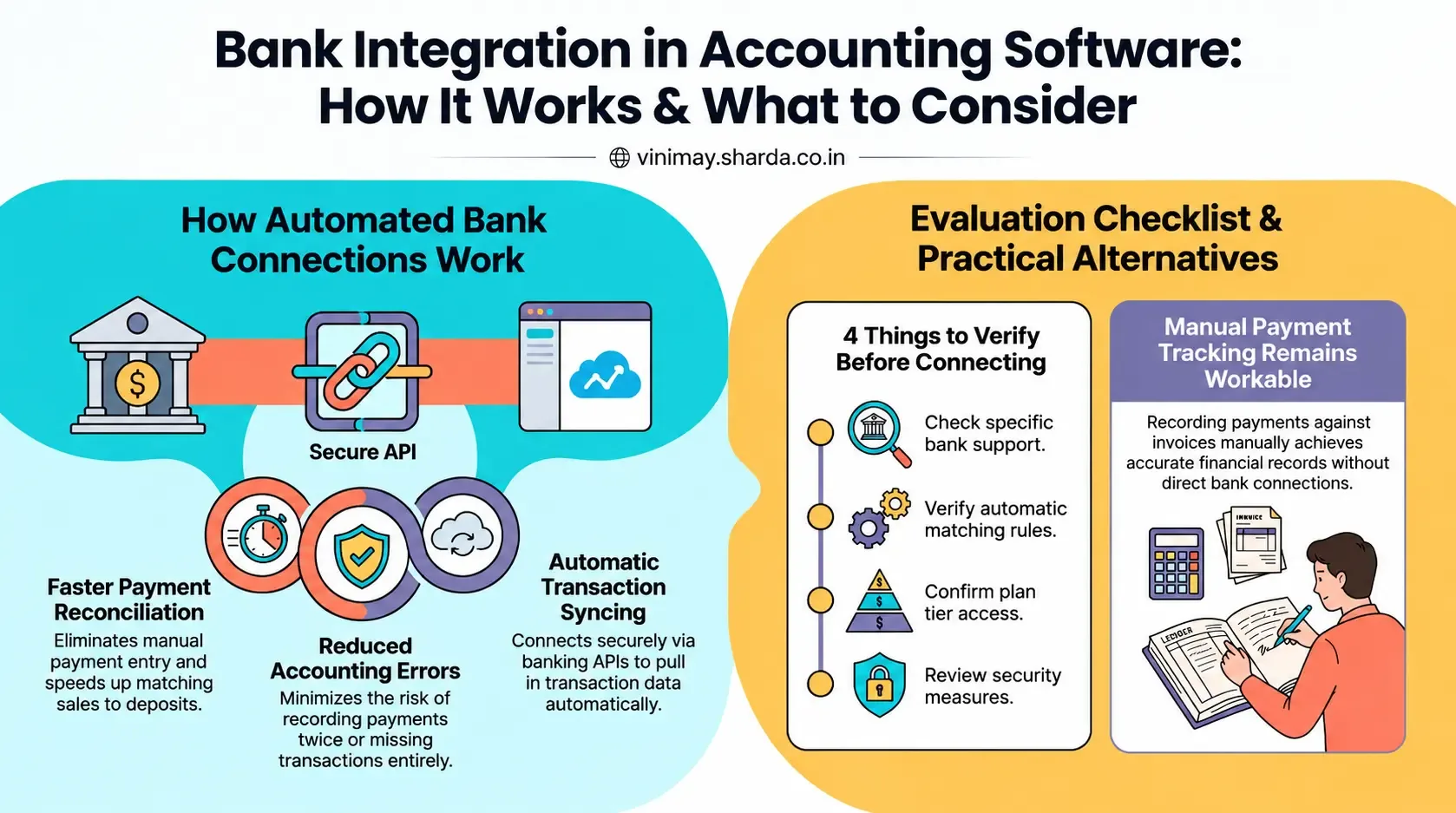
How Vinimay Helps
Vinimay's Sales Management and Payments & Receipts features help businesses organize the payment type associated with sales transactions, which provides the basic information needed for cash vs credit analysis. Pasted markdown
Sales Management
Sales transactions can be recorded with their payment status or type, helping businesses distinguish between immediate and credit sales. Pasted markdown
Payments & Receipts
Cash, UPI, bank transfers, and credit-based transactions can be maintained according to their respective payment modes. Pasted markdown
Customer Management
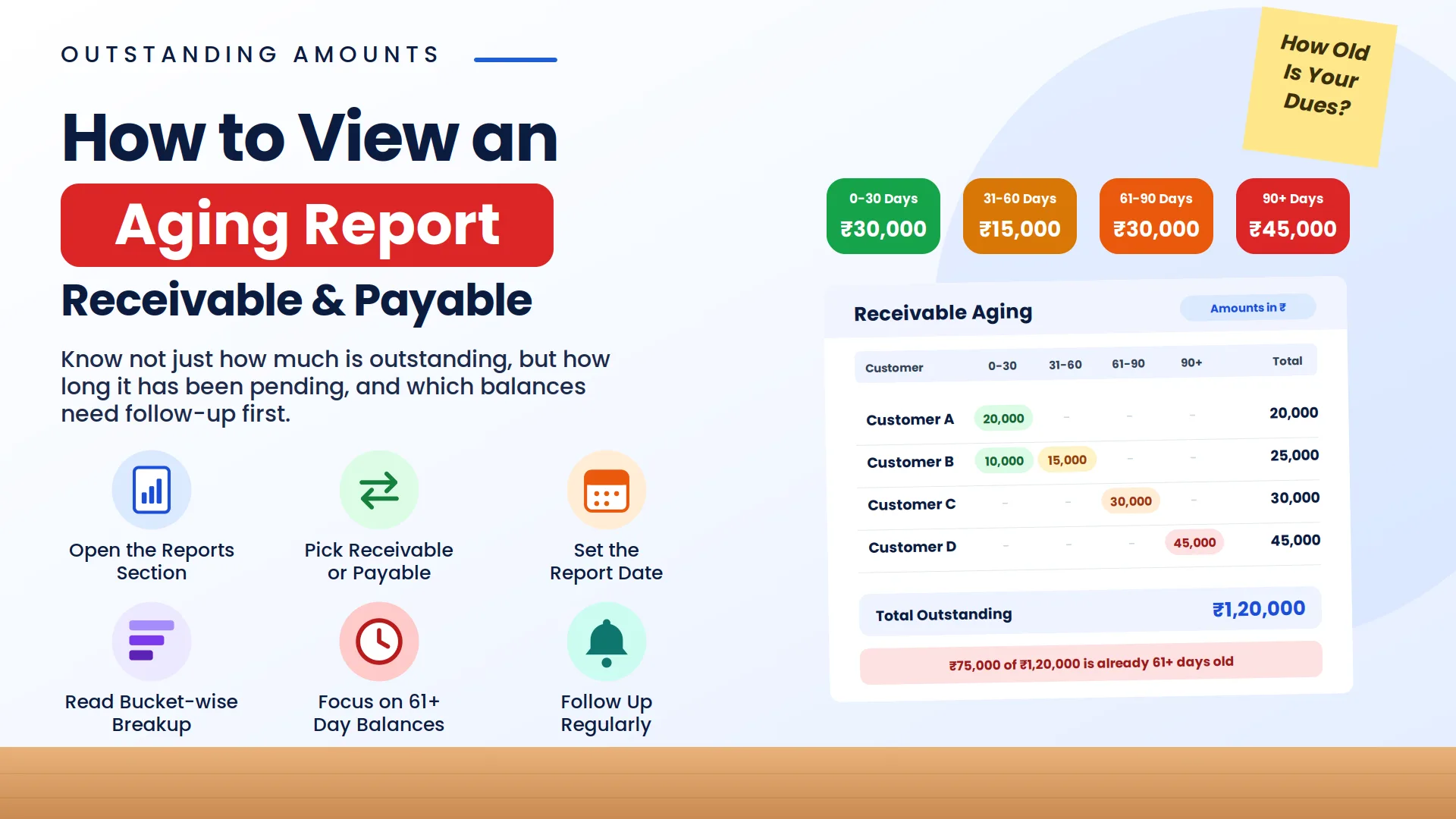
Credit-based sales can be tracked customer-wise through outstanding records, which is useful for receivables management. Pasted markdown
Reports
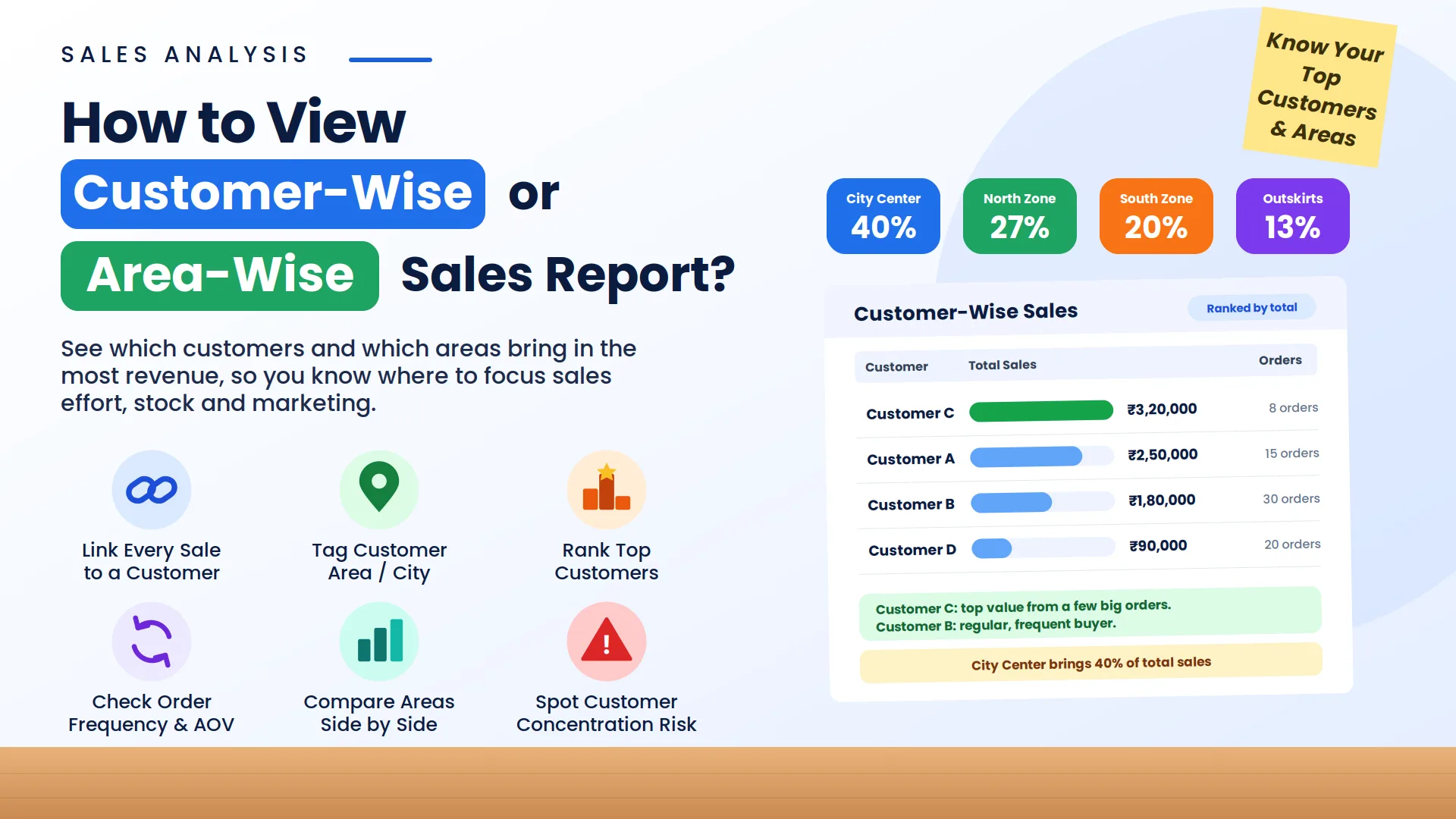
Vinimay's Reports section allows businesses to review their sales data, making it easier to understand the cash and credit sales breakup. Pasted markdown
The exact availability of a dedicated automatic Cash vs Credit Ratio report depends on the capabilities of the current software version. Businesses should confirm this specific feature through Vinimay's documentation or support team. Pasted markdown
Frequently Asked Questions (FAQs)
1. How can I track the cash vs credit sales ratio?
Tag every sale according to its payment type, such as cash or credit. Then calculate the total cash and credit sales for a specific period and determine their percentage of total sales.
How Vinimay Helps: Vinimay allows sales transactions to be recorded with payment status, making the sales breakup easier to review. Pasted markdown
2. Is a high credit sales ratio bad?
Not necessarily. It depends on the type of business. Credit sales are common in B2B businesses, but an unexpected increase in the ratio can indicate a need for closer cash-flow and receivables monitoring.
How Vinimay Helps: Vinimay reports can help businesses review historical sales information and identify changes in their sales pattern. Pasted markdown
3. What is the ideal cash-to-credit sales ratio?
There is no universal ideal ratio. It depends on the business type, industry, and customer base. Tracking the business's own historical trend can be more useful.
How Vinimay Helps: Businesses can review their sales data over different periods to understand their own trends. Pasted markdown
4. Can the cash vs credit ratio help with cash-flow planning?
Yes. The ratio shows how much of the business's sales are immediately available as cash and how much depends on future collection. This can provide useful information for cash-flow planning.
How Vinimay Helps: Vinimay maintains payment and receivable information in an organized manner, supporting better cash-flow visibility. Pasted markdown
5. Can I calculate the ratio manually?
Yes. For a small number of transactions, the ratio can be calculated using Excel. As transaction volume increases, an organized accounting system can make the process faster and more consistent.
How Vinimay Helps: Vinimay organizes sales data according to payment type, reducing the need to compile the information manually. Pasted markdown
6. What should I do if the credit sales ratio is increasing?
Review customer-wise credit limits, strengthen the collection process, and identify why credit sales are increasing. The change could be related to a new large customer or existing customers requesting longer credit terms.
How Vinimay Helps: Vinimay's Customer Management features help businesses track credit-based outstanding amounts customer-wise. Pasted markdown
7. Should I check the cash vs credit ratio every month?
Regular monthly monitoring can be useful because it helps businesses identify sudden changes in the sales mix at an earlier stage.
How Vinimay Helps: Vinimay reports can be reviewed for selected periods, allowing businesses to monitor changes over time. Pasted markdown
Conclusion
Tracking the cash vs credit sales ratio helps a business move beyond simply asking, “How much did we sell?” and understand “How much money did we receive immediately, and how much will be collected later?” This information can be useful for liquidity planning, working capital management, and monitoring credit exposure. Pasted markdown
An organized sales and payment-tracking workflow, such as the one supported by Vinimay, helps businesses maintain payment-type-wise sales data systematically, making it easier to analyze cash and credit sales and use that information for business decisions.
Related Topics
Published by admin
Our editorial and compliance specialists create practical guides, tax calculation rules, and operational strategies to empower Indian small business owners and accountants.