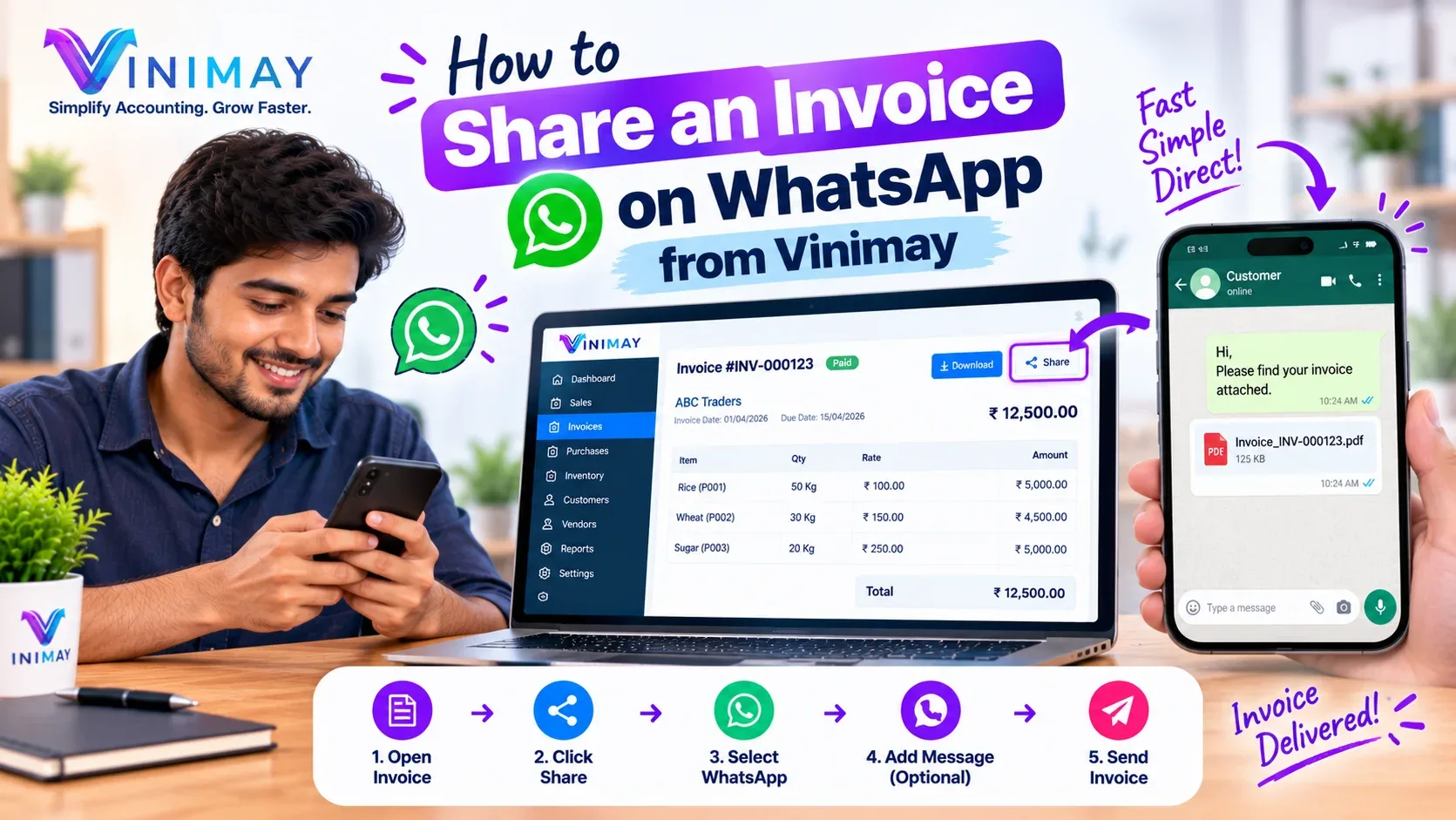
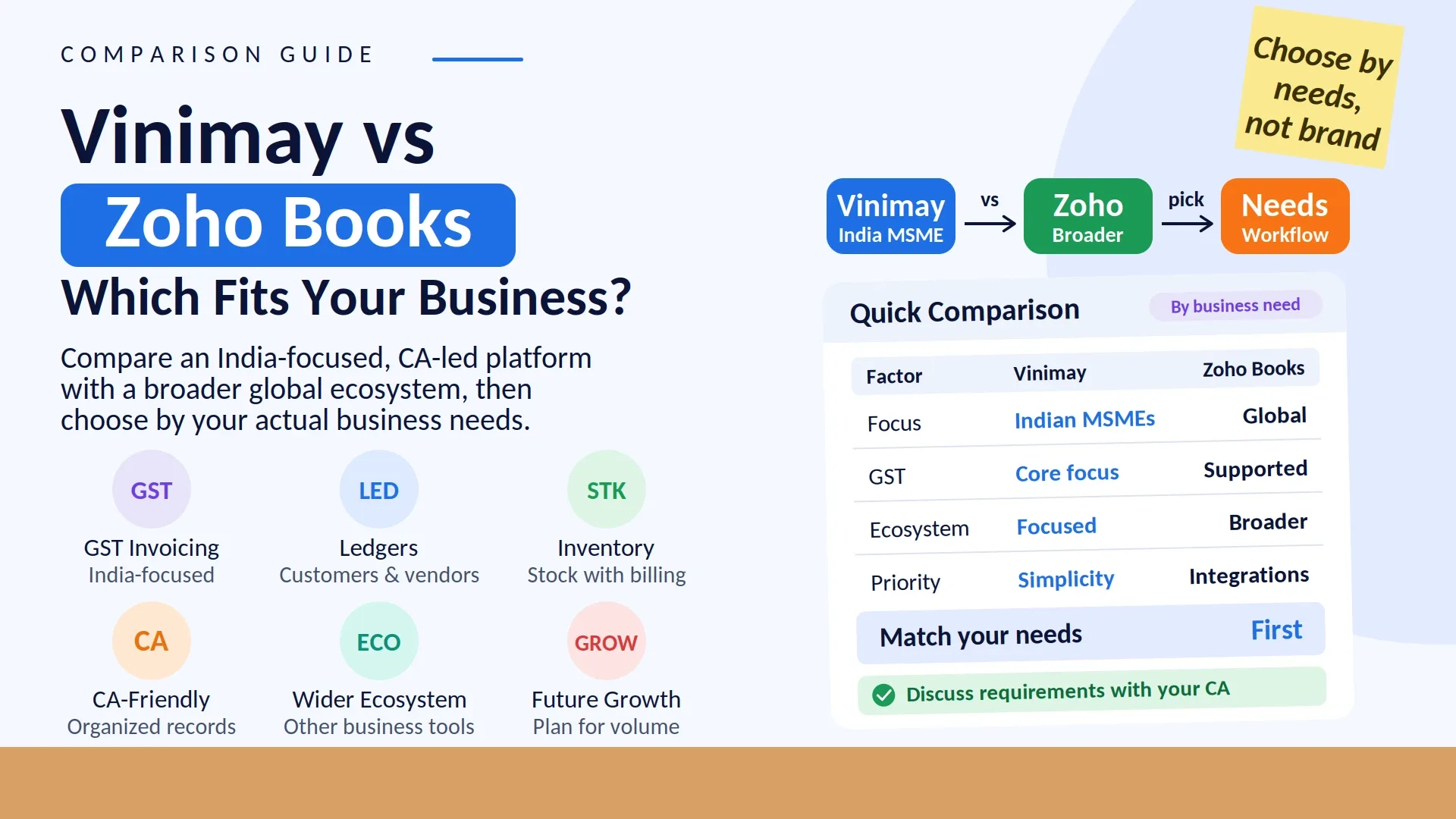
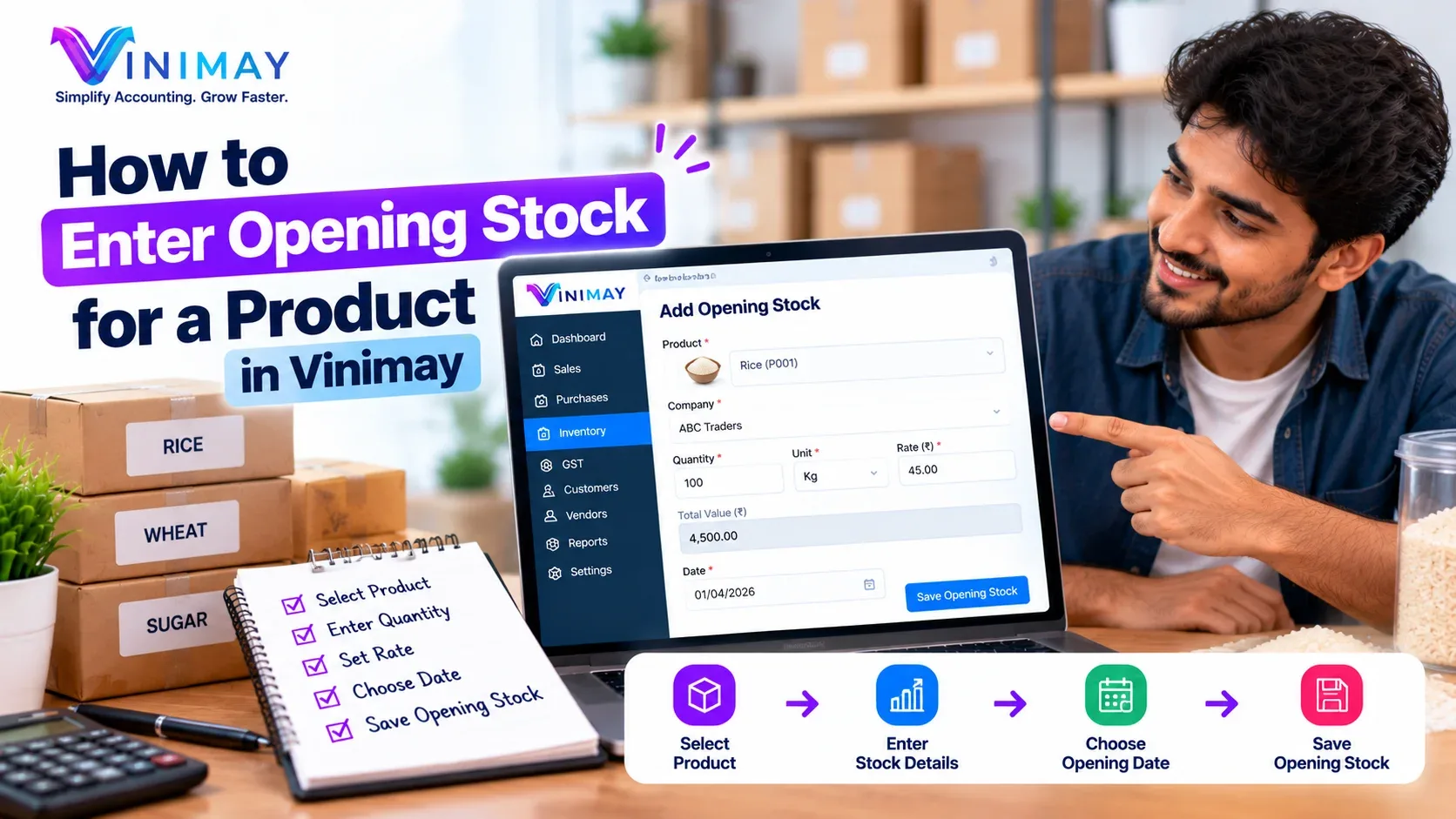
If you are looking for a Vinimay alternative to myBillBook, it is important to compare more than just billing and invoice generation. Businesses should also consider customer ledgers, vendor management, inventory, payment tracking, accounting records, reports, staff access, and the information required by their accountant or CA. The right accounting software depends on the size of the business, transaction volume, workflow, and specific accounting requirements. myBillBook works well for businesses whose primary need is quick, mobile billing with minimal setup. But as transaction volume grows and vendor relationships become more complex, the lack of structured accounting behind the billing starts to create friction — missed dues, unclear balances, and manual work before every CA meeting.
The right move is to check whether your current pain points are about billing speed (which myBillBook already handles) or about the accounting depth behind it (which is where a switch would actually help).
When Vinimay Is A Better Fit Than myBillBook
You need organized, vendor-wise purchase and payment tracking
Your CA regularly needs data you currently have to compile manually
Customer credit balances aren't clearly visible at a glance
Your reports need to go beyond basic sales totals
You're scaling and want an accounting system that grows with the business, not just a billing tool
What Vinimay Offers
Before You Switch
1. Identify What's Actually Missing
Be specific about what myBillBook isn't giving you — is it vendor tracking, ledger detail, or reporting depth?
2. Plan Your Data Migration
Customer and vendor balances need to be carried forward accurately as opening balances in the new system.
3. Check With Your CA
Ask your accountant what data format works best for them — this often clarifies whether a switch is worth it.
Common Mistakes Businesses Make
Switching without a clear list of missing features
Skipping proper data migration and losing continuity
Not training staff on the new system before going live
How Vinimay Helps
Vinimay is built for businesses that want to move past basic billing into complete, organized accounting:
GST Invoice Management: Consistent, compliant invoicing
Customer and Vendor Management: Organized, detailed records on both sides
Ledgers: Auto-updating balances
Reports: A comprehensive business overview
Digital Invoice Records: CA-ready, organized data
FAQs
1. Will switching from myBillBook mean losing my old data?
Answer: No, if migration is planned properly, past customer and vendor balances can be carried forward accurately as opening balances.
How Vinimay Helps: Vinimay has a structured process for setting up opening balances during onboarding.
2. Is myBillBook enough for a very small business?
Answer: For businesses with simple, low-volume billing needs, it can be sufficient — the need for something more comes with growth.
How Vinimay Helps: Vinimay scales with the business once vendor management and detailed reporting become necessary.
3. How do I know if I actually need to switch?
Answer: If billing speed is fine but vendor tracking, ledgers, or CA data-sharing are consistent pain points, that's a sign your accounting needs have outgrown a pure billing tool.
How Vinimay Helps: Vinimay is designed specifically to close those gaps without adding unnecessary complexity.
Conclusion
Vinimay makes sense as an alternative to myBillBook when your business needs have moved beyond fast billing into proper vendor management, detailed ledgers, and CA-ready records. Before switching, get clear on what's actually missing, plan your data migration carefully, and check in with your accountant on what would make their work easier.
Related Topics
Published by admin
Our editorial and compliance specialists create practical guides, tax calculation rules, and operational strategies to empower Indian small business owners and accountants.